
Reginald Wingate
British general and administrator in Egypt and the Sudan
1861 CE to 1953 CE
General Sir Francis Reginald Wingate, 1st Baronet, GCB, GCVO, GBE, KCMG, DSO, DL, TD (June 25, 1861 –January 29, 1953) is a British general and administrator in Egypt and the Sudan.
He earns the nom de guerre Wingate of the Sudan.
World
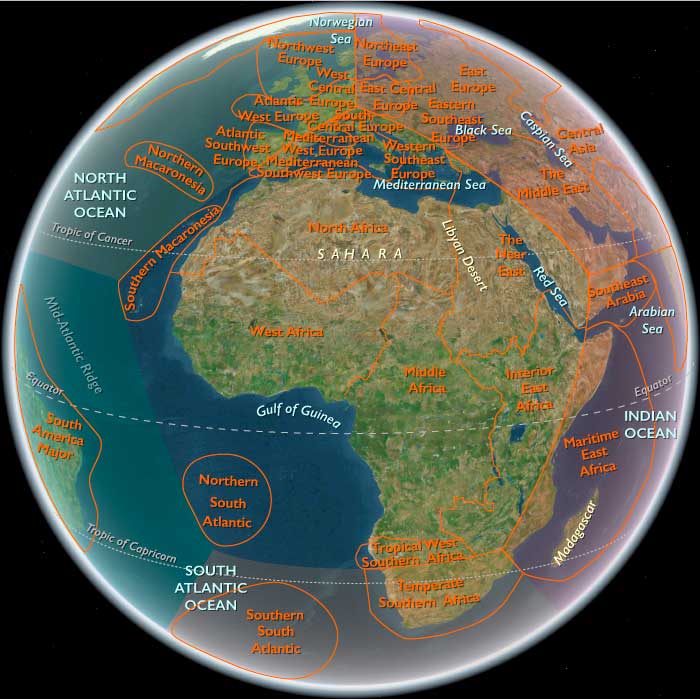
The Middle of The Earth
View →Related Events
Showing 10 events out of 18 total
The Near East, 1888 to 1899 CE: British Reconquest of Sudan and Social Transformation in Egypt
Reconquest of Sudan and Defeat of the Mahdiyyah
Following the capture of Khartoum and the death of General Charles Gordon, the Mahdist regime (Mahdiyyah) under Khalifa Abdallahi ibn Muhammad consolidates control in Sudan, enforcing strict Islamic laws and establishing a centralized administration. However, the regime soon encounters economic collapse, famine, and widespread discontent.
In 1892, Herbert Kitchener (later Lord Kitchener) assumes command of the Egyptian army and begins preparations for the reconquest of Sudan, driven by British interests in securing control of the Nile waters and safeguarding Egypt’s irrigation infrastructure, particularly the proposed Aswan dam. By 1896, Kitchener launches the campaign, systematically defeating Mahdist forces at strategic locations, notably at Dongola, Atbarah, and eventually at the decisive Battle of Omdurman on September 2, 1898. The battle is overwhelmingly one-sided: about eleven thousand Mahdists perish compared to fewer than five hundred Anglo-Egyptian casualties.
Organized resistance in Sudan collapses completely following the Khalifa’s death at Umm Diwaykarat in November 1899. Sudan’s economy and population had already been devastated by warfare, famine, and disease during Mahdist rule, leaving the country severely weakened and its traditional social institutions disrupted.
Establishment of the Anglo-Egyptian Condominium
In January 1899, the Anglo-Egyptian Agreement formally establishes joint British-Egyptian authority, known as the Condominium, over Sudan. Although the agreement ostensibly shares governance between Britain and Egypt, in practice, Britain holds dominant authority, appointing the Governor-General of Sudan and controlling critical administrative decisions. The first Governor-General under this arrangement, following Kitchener, is Sir Reginald Wingate.
British officials hold top administrative positions, Egyptian officials assume middle ranks, and Sudanese gradually occupy lower administrative posts. The Condominium structure allows Britain to maintain strategic control over Sudan and its resources while nominally preserving Egypt’s administrative involvement.
Societal Transformations and Urbanization in Egypt
At the close of the nineteenth century, Egypt undergoes significant urbanization and demographic changes. The urban population grows dramatically, driven primarily by rural-to-urban migration. Cities like Alexandria expand significantly due to their roles as commercial and financial hubs, particularly in cotton trading. New urban centers such as Az Zaqaziq and Port Said also emerge.
This urban growth coincides with the rise of a new, secularly educated middle class known as the effendiyah, who staff an expanding government bureaucracy. The effendiyah often come from families of rural notables (umada), transitioning to urban life and benefiting from educational and employment opportunities. Conversely, the traditional middle class, including the ulama (religious scholars) and merchants, declines due to the erosion of their economic foundations and the shift toward secular, Western-influenced institutions.
Changing Social Structures and Foreign Influence
The influx of European settlers and merchants, drawn by Egypt’s booming cotton economy, profoundly reshapes the social and economic landscape. Foreign residents benefit disproportionately from trade privileges under the Ottoman-era capitulations, dominating key economic sectors such as cotton exports, banking, and finance. This marginalizes Egyptian merchants, restricting them largely to domestic trade.
Simultaneously, Egypt’s artisan class declines sharply under competition from cheaper European manufactured imports. Traditional crafts and urban guild structures deteriorate significantly, with artisans frequently forced into poverty or unemployment.
Regional Dynamics and Emerging Tensions
Elsewhere in the region, the Ottoman Empire establishes small colonies of Circassian refugees in present-day Jordan, reflecting broader demographic shifts and imperial strategies. Concurrently, attempts at Jewish colonization in Palestine, notably backed by Baron Rothschild beginning in 1894, meet strong resistance from the local Arab population and restrictive Ottoman land laws.
Legacy of the Era: Imperial Consolidation and Social Upheaval
The era from 1888 to 1899 witnesses critical British imperial consolidation in Sudan through military reconquest and strategic administrative control under the Condominium arrangement. Concurrently, Egypt experiences profound socioeconomic transformations, including significant urbanization, the rise of a new bureaucratic middle class, and increasing foreign economic dominance. These developments lay the foundations for future nationalistic resistance and sociopolitical movements across the Near East.
Interior East Africa (1900–1911 CE): Consolidation of Colonial Rule and Emergence of New Socio-Political Orders
From 1900 to 1911, Interior East Africa became firmly entrenched under European colonial domination. British, German, Italian, Belgian, and French colonial administrations solidified their grip, imposing new political systems, stimulating profound social changes, and triggering varying degrees of indigenous resistance.
Ethiopia and Eritrea: Sovereignty Affirmed, Boundaries Defined
Under Emperor Menelik II (1889–1913), Ethiopia successfully defended its independence against Italian colonial aggression. The landmark Battle of Adwa (1896) had confirmed Ethiopian sovereignty, forcing Italy to acknowledge Ethiopia’s independence formally in 1900. Menelik then pursued internal consolidation, extending his authority southward, particularly into Oromo territories, while modernizing the army and administration.
However, Italy retained Eritrea, officially establishing it as an Italian colony separate from Ethiopia. Boundaries established during these years would continue shaping Ethiopia’s geopolitical realities into the late twentieth century.
The Anglo-Egyptian Sudan: Establishment and Stabilization
Following the defeat of Mahdist forces in 1898, Britain and Egypt firmly consolidated their joint authority in the Anglo-Egyptian Sudan. Governor-General Sir Reginald Wingate (appointed 1899) administered the vast territory, aiming to restore stability and suppress residual Mahdist resistance. By 1911, British authorities had significantly expanded cotton cultivation and rail infrastructure, but northern and southern regions remained administratively and culturally distinct, laying seeds for future conflicts.
In Southern Sudan, indigenous communities like the Dinka, Nuer, and Zande continued to adapt or resist, adjusting to the presence of colonial authorities, missionaries, and changing economic circumstances, especially intensified ivory and slave suppression campaigns.
Uganda Protectorate: The Buganda Agreement and Colonial Consolidation
In 1900, Britain formalized its relationship with Buganda through the landmark Buganda Agreement, granting the kingdom internal autonomy under British oversight. The agreement entrenched Buganda’s privileged status within the Uganda Protectorate, allocating large areas of land to chiefs loyal to the British.
However, this intensified grievances among neighboring kingdoms, notably Bunyoro, which lost considerable territory to Buganda. Under the capable and determined Kabaka Daudi Chwa II (ruled 1897–1939), Buganda maintained relative internal stability, serving as a cornerstone of British colonial authority. Other Ugandan regions, including Acholi, Busoga, Ankole, and eastern and northern territories, experienced increased colonial administration, resulting in altered social structures, forced labor systems, and intensified cash-crop agriculture.
Rwanda and Burundi: German Administration and Indirect Rule
German East Africa, including Rwanda (Ruanda) and Burundi (Urundi), saw increased administrative presence. German colonial authorities, practicing indirect rule, reinforced existing monarchical structures, supporting the Tutsi monarchy in Rwanda and Burundi as instruments of colonial governance. The Germans employed local chiefs to collect taxes, enforce labor demands, and maintain order, leading to heightened ethnic stratification between the Tutsi ruling minority and the majority Hutu populations. These changes deepened long-term societal tensions that would later erupt dramatically in the twentieth century.
Kenya Colony and British East Africa: Infrastructure and Economic Expansion
British East Africa (later Kenya Colony, officially declared in 1920 but informally structured earlier) saw rapid infrastructure development. The Uganda Railway, completed in 1901 from Mombasa through Nairobi to Kisumu on Lake Victoria, dramatically transformed Kenya’s economy and demographics, promoting European settlement, Indian migration, and economic diversification into cash crops such as coffee and tea. Nairobi emerged as the colonial capital, profoundly altering regional politics and indigenous land use, especially among the Kikuyu, Kamba, Maasai, and Kalenjin peoples.
Belgian Congo and Belgian Influence in the Great Lakes
In 1908, after international outrage against Leopold II’s brutal private rule, the Belgian Congo was formally established as a Belgian colony. Belgium’s colonial reach affected communities along the Great Lakes, notably influencing economic patterns and social dynamics among groups such as the Hutu, Tutsi, and Great Lakes Twa in western Rwanda and eastern Congo regions. Economic exploitation, particularly in rubber and minerals, intensified during this period.
Nyasaland (Malawi) and Northern Rhodesia (Zambia): British Expansion and Resistance
The British expanded their administrative and commercial control over Nyasaland (present-day Malawi), officially declared the Nyasaland Protectorate in 1907. Christian missions and British trading companies dominated regional economic and social life. Groups such as the Yao, Chewa, and Tumbuka adjusted to missionary education and agricultural commercialization, experiencing profound cultural transformations.
In Northern Rhodesia (present-day Zambia), the British South Africa Company (BSA Company) intensified its control, especially after the formal amalgamation of Barotziland–North-Western Rhodesia in 1899 and North-Eastern Rhodesia in 1911. Mining activities, notably copper exploration following Frederick Russell Burnham’s earlier discoveries, accelerated economic change, drawing European settlers and shifting regional political structures significantly.
French Somaliland: Strategic Consolidation at Djibouti
The French colony of French Somaliland (Djibouti), under governor Léonce Lagarde, consolidated its position as a vital port and coaling station on the Red Sea. Between 1900 and 1911, Djibouti became increasingly strategic, serving as a major trade gateway to Ethiopia’s hinterland, particularly during the construction of the Addis Ababa–Djibouti railway, enhancing France’s influence in regional affairs.
Indigenous Responses and Cultural Shifts
Throughout the region, indigenous peoples responded to colonial imposition with a spectrum of reactions, from active resistance—such as ongoing low-level rebellions among the Nandi and other Kenyan highland groups—to strategic accommodation, as seen with the Baganda elite. Christianity spread rapidly, reshaping cultural identities, education, and social relations, notably among the Buganda, Luo, Chewa, Kikuyu, and Kamba. At the same time, Islam continued expanding its influence among coastal and inland communities, notably among the Somali, Afar, and Swahili groups, consolidating cultural and religious identities that persist to the present.
Consequences and Long-term Impact
This era firmly entrenched colonial dominance across Interior East Africa, laying foundations for later nationalist struggles. Colonial administrative structures, economic policies, infrastructure development, religious transformations, and educational practices profoundly altered indigenous societies, creating enduring legacies and tensions that would define twentieth-century East African politics and identities.
al Jihad (Day of Struggle).
They demand complete independence with the proviso that Britain be allowed to supervise the Suez Canal and the public debt.
They also ask permission to go to London to put their case before the British government.
On the same day, the Egyptians form a delegation for this purpose, Al Wafd al Misri (known
as the Wafd), headed by Saad Zaghlul.
The British refuse to allow the Wafd to proceed to London.
The next day, they are deported to Malta, an action that sparks the popular uprising of March-April 1919 in which Egyptians of all social classes participate.
There are violent clashes in Cairo and ...
Within a week, all of Egypt is paralyzed by general strikes and rioting.
Railroad and telegraph lines are cut, taxi drivers refuse to work, lawyers fail to appear for court cases, and demonstrators march through the streets shouting pro-Wafdist slogans and demanding
independence.
Violence results, with many Egyptians and Europeans being killed or injured when the British attempt to crush the demonstrations with force.
The women are led by Safiya Zaghlul, wife of Wafd leader Saad Zaghlul; Huda Sharawi, wife of one of the original members of the Wafd and organizer of the Egyptian Feminist Union; and Muna Fahmi Wissa.
Women of the lower classes demonstrate in the streets alongside the men.
In the countryside, women engage in activities like cutting rail lines.
The upper-class women participating in politics for the first time had assumed key roles in the movement when the male leaders were exiled or detained.
They organize strikes, demonstrations, and boycotts of British goods and write petitions, which they circulate to foreign embassies protesting British actions in Egypt.