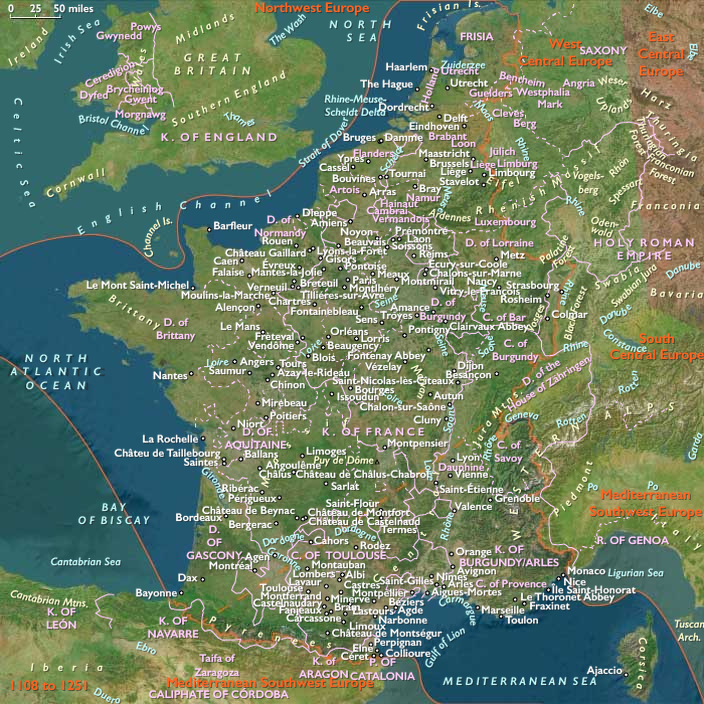
Basque mercenaries, after many failures against the Cathar fortress of Montségur, are able to secure a location on the eastern side of the summit across a depression, which allows the construction of a catapult.
This forces refugees that are living outside the walls of the castle to move inside, making living conditions difficult.
Apparently by treachery, a passage is found to get access to the barbican, which is conquered in March 1244.
The catapult is moved closer and the living situation inside deteriorates under the day-and-night bombardment.
When an attempt by the garrison fails to dislodge the invaders from the barbican, the defenders signal that they have decided to negotiate for surrender.
Surrender conditions are quickly decided on: All the people in the castle are allowed to leave except those who will not renounce their Cathar faith, primarily the perfecti.
A two-week truce is declared.
The last two weeks are spent praying and fasting.
A number of defenders decide to join about 190 perfecti and receive their consolamentum, bringing the total number of Cathar believers destined to burn to between 210 and 215.
On March 16, led by Bishop Bertrand, the group leaves the castle and goes down to the place where the wood for the pyre has been erected.
No stakes are needed: they mount the pyre and perish voluntarily in the flames.
The remainder of the defenders, including those who had participated in the murder of the inquisitors, are allowed to leave, among them Raymond de Pereille, who will later, like others, be subjected to the Inquisition.
It has been claimed that three or four perfecti survived, leaving he castle by a secret route to recover a treasure of the Cathars that had been buried in a nearby forest in the weeks prior to the surrender.
The treasure not only contains material valuables but also documents and possibly relics.
Nothing about its whereabouts is known.
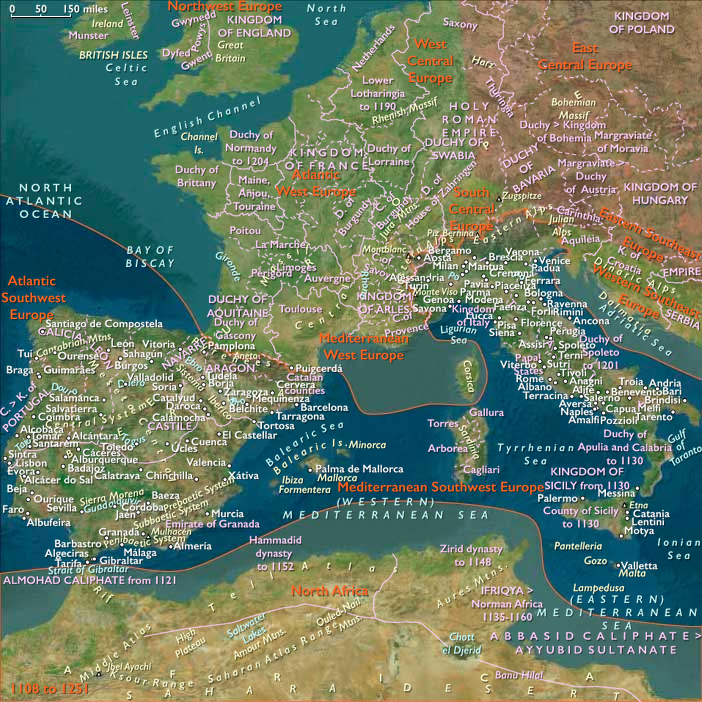
The taking of Montségur in 1244 makes it possible for the Languedoc province to be incorporated into the French kingdom.