Raphael
Italian painter and architect
Years: 1483 - 1520
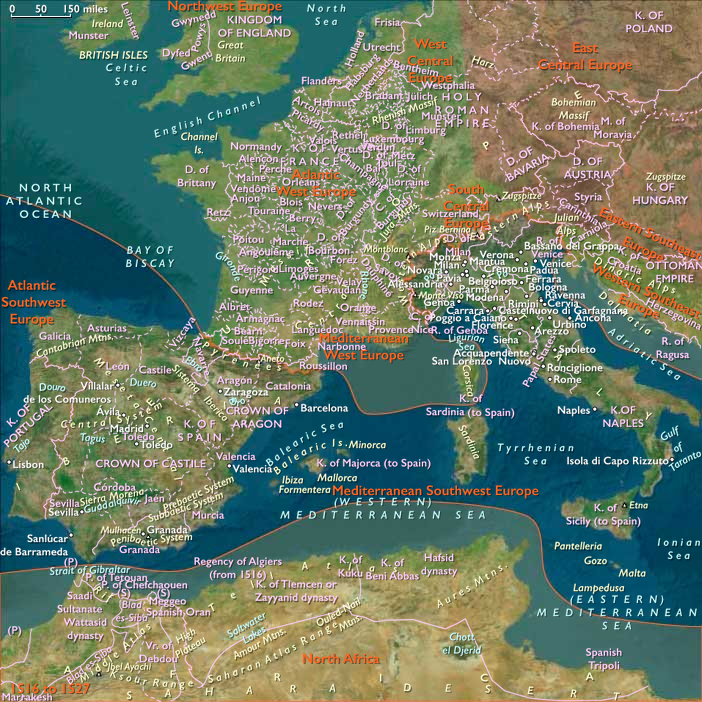
Raffaello Sanzio da Urbino (April 6 or March 28, 1483 – April 6, 1520), better known simply as Raphael, is an Italian painter and architect of the High Renaissance, celebrated for the perfection and grace of his paintings and drawings.
Together with Michelangelo and Leonardo da Vinci, he forms the traditional trinity of great masters of this period.
Raphael is enormously productive, running an unusually large workshop, and despite his death at thirty-seven, a large body of his work remains.
Many of his works are found in the Apostolic Palace of The Vatican, where the frescoed Raphael Rooms are the central, and the largest, work of his career.
The best known work is The School of Athens in the Vatican Stanza della Segnatura.
After his early years in Rome, much of his work is designed by him and executed largely by the workshop from his drawings, with considerable loss of quality.
He is extremely influential in his lifetime, though outside Rome his work is mostly known from his collaborative printmaking.
After his death, the influence of his great rival Michelangelo is more widespread until the eighteenth and nineteenth centuries, when Raphael's more serene and harmonious qualities are again regarded as the highest models.
His career falls naturally into three phases and three styles, first described by Giorgio Vasari: his early years in Umbria, then a period of about four years (from 1504–1508) absorbing the artistic traditions of Florence, followed by his last hectic and triumphant twelve years in Rome, working for two Popes and their close associates.