Rainilaiarivony
Malagasy politician who serves as the Prime Minister of Madagascar
Years: 1828 - 1896
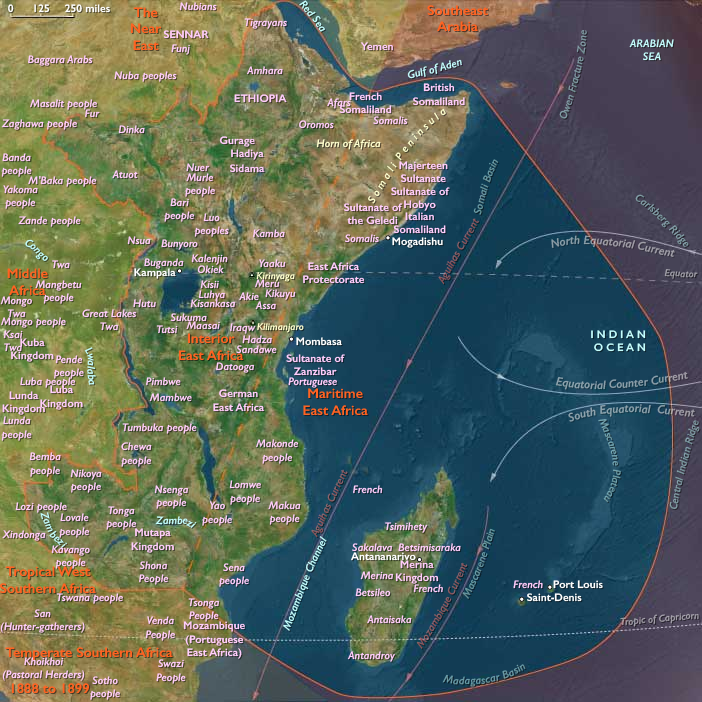
Rainilaiarivony (January 30, 1828 – July 17, 1896) is a Malagasy politician who serves as the Prime Minister of Madagascar from 1864 to 1895, succeeding his older brother Rainivoninahitriniony, who had held the post for thirteen years.
His career mirrors that of his father Rainiharo, a renowned military man who became Prime Minister during the reign of Queen Ranavalona I.
Despite a childhood marked by ostracism from his family, as a young man Rainilaiarivon is elevated to a position of high authority and confidence in the royal court, serving alongside his father and brother.
He co-leads a critical military expedition with Rainivoninahitriniony at the age of twenty-four and is promoted to Commander-in-Chief of the army following the death of the queen in 1861.
In this position he oversees continuing efforts to maintain royal authority in the outlying regions of Madagascar and acts as adviser to his brother, who had been promoted to Prime Minister in 1852.
He also influences the transformation of the kingdom's government from an absolute monarchy to a constitutional one, in which power is shared between the sovereign and the Prime Minister. Rainilaiarivony and Queen Rasoherina worked together to depose Rainivoninahitriniony for his abuses of office in 1864.
Taking his brother's place as Prime Minister, Rainilaiarivony remains in power as Madagascar's longest-serving prime minister for the next thirty-one years by marrying three queens in succession: Rasoherina, Ranavalona II and Ranavalona III.
As Prime Minister, Rainilaiarivony actively seeks to modernize the administration of the state, in order to strengthen and protect Madagascar against the political designs of the British and French colonial empires.
The army is reorganized and professionalized, public schooling is made mandatory, a series of legal codes patterned on English law are enacted and three courts are established in Antananarivo.
The statesman exercises care not to offend traditional norms, while gradually limiting traditional practices, such as slavery, polygamy, and unilateral repudiation of wives.
He legislates the Christianization of the monarchy under Ranavalona II.
His diplomatic skills and military acumen assure the defense of Madagascar during the Franco-Hova Wars, successfully preserving his country's sovereignty until a French column captures the royal palace in September 1895.
Although holding him in high esteem, the French colonial authority deposes the Prime Minister and exiles him to French Algeria, where he dies less than a year later in August 1896.