Radama II
King of Madagascar
Years: 1829 - 1863
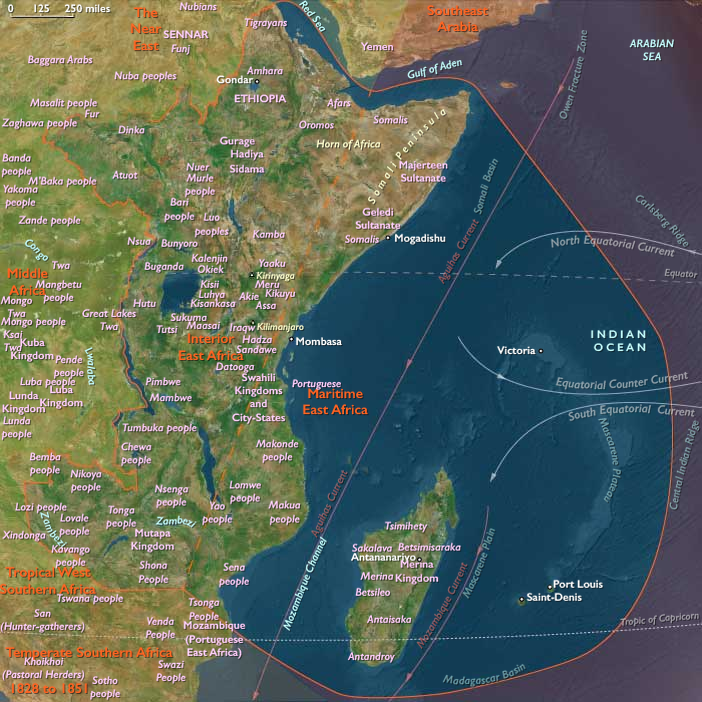
Radama II (September 23, 1829 – May 12, 1863 is the son and heir of Queen Ranavalona I and rules from 1861 to 1863 over the Kingdom of Madagascar, which controls virtually the entire island.
Radama's rule, although brief, is a pivotal period in the history of the Kingdom of Madagascar.
Under the unyielding and often harsh thirty-three-year rule of his mother, Queen Ranavalona I, Madagascar had successfully preserved its cultural and political independence from French and British designs.
Rejecting the queen's policy of isolationism and Christian persecution, Radama II permits religious freedom and re-opens Madagascar to European influence.
Under the terms of the Lambert Charter, which Radama had secretly contracted in 1855 with French entrepreneur Joseph-François Lambert while Ranavalona still ruled, the French were awarded exclusive rights to the exploitation of large tracts of valuable land and other lucrative resources and projects.
This agreement, which is later revoked by Prime Minister Rainilaiarivony, is key to establishing France's claim over Madagascar as a protectorate and, in 1896, as a colony.
The dramatic contrast between Ranavalona's isolationism and her son's pro-European stance represents an abrupt reversal of policy that threatens the traditional sociopolitical order.
Radama's absolutism in pursuing dramatic reforms in disregard of the advice of his ministers ultimately turns them against him.
In a coup led by his Prime Minister, Rainivoninahitriniony, Radama II is strangled on May 12, 1863.
His wife Rabodo, who takes the throne name Rasoherina, is allowed by the ministers to succeed her husband on the condition that she and future sovereigns will no longer rule unilaterally, but rather in concert with the Hova (the class of free citizens) as represented by the position of Prime Minister.
The public is informed that Radama had committed suicide and that his body had been unceremoniously interred in a tomb in Ilafy.
However, there soon emerge rumors–believed by prominent foreigners Jean Laborde and William Ellis–that Radama lives and is making plans to reclaim the throne.
A strong case will since bee made on the basis of significant evidence that Radama may indeed have revived after the strangling and lived to old age in anonymity near Lake Kinkony in the northwestern part of the island.