Prince Marko
Serbian king
Years: 1355 - 1395
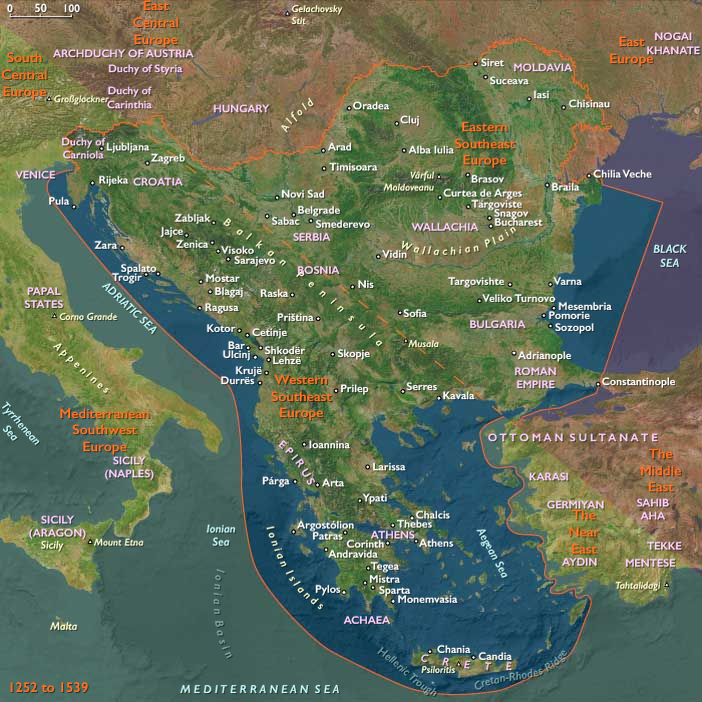
Marko Mrnjavčević (c. 1335 – May 17, 1395) is the de jure Serbian king from 1371 to 1395, while he is the de facto ruler of territory in western Macedonia centered on the town of Prilep.
He is known as Prince Marko and King Marko ) in South Slavic oral tradition, in which he has become a major character during the period of Ottoman rule over the Balkans.
Marko's father, King Vukašin, is co-ruler with Serbian Tsar Stefan Uroš V, whose reign is characterized by weakening central authority and the gradual disintegration of the Serbian Empire.
Vukašin's holdings include lands in western Macedonia, Kosovo and Metohija.
In 1370 or 1371, he crowns Marko "young king"; this title includes the possibility that Marko will succeed the childless Uroš on the Serbian throne.
On 26 September 1371, Vukašin is killed and his forces defeated in the Battle of Maritsa.
About two months later, Tsar Uroš dies.
This formally makes Marko the king of the Serbian land; however, Serbian noblemen, who have become effectively independent from the central authority, do not even consider to recognize him as their supreme ruler.
Sometime after 1371, he becomes an Ottoman vassal; by 1377, significant portions of the territory he has inherited from Vukašin are seized by other noblemen.
King Marko, in reality, comes to be a regional lord who rules over a relatively small territory in western Macedonia.
He funds the construction of the Monastery of Saint Demetrius near Skopje (better known as Marko's Monastery), which is completed in 1376.
Marko dies on May 17, 1395, fighting for the Ottomans against the Wallachians in the Battle of Rovine.
Although a ruler of modest historical significance, Marko becomes a major character in South Slavic oral tradition.
He is venerated as a national hero by the Serbs, Macedonians and Bulgarians, remembered in Balkan folklore as a fearless and powerful protector of the weak, who fought against injustice and confronted the Turks during the Ottoman occupation.