Prince Josias of Saxe-Coburg-Saalfeld
general in the Austrian service
Years: 1737 - 1815
Prince Frederick Josias of Saxe-Coburg-Saalfeld (German Friedrich Josias von Sachsen-Coburg-Saalfeld) (26 December 1737 – 26 February 1815) is a general in the Austrian service.

Related Events
Filter results
Showing 10 events out of 15 total
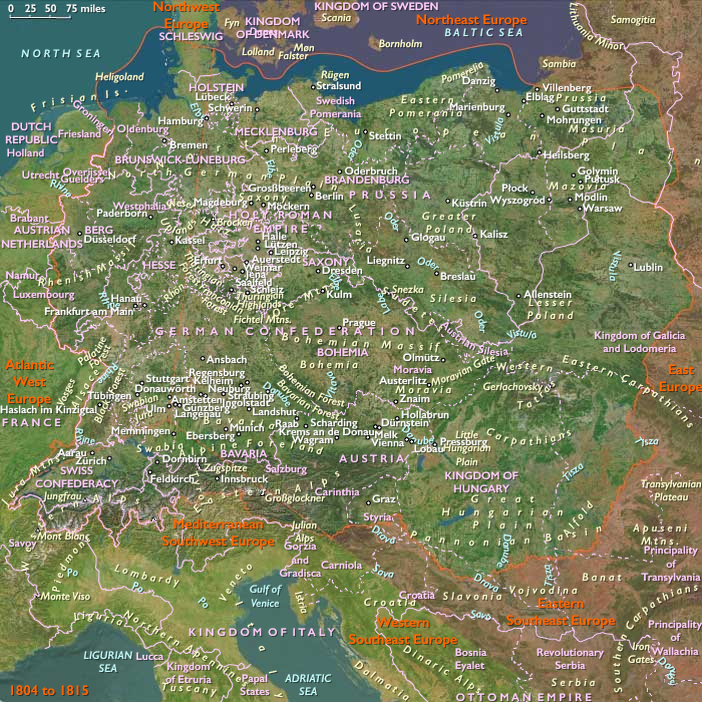
Sending his troops into a grueling night march, Pasha then attacks the eighteen thousand-strong Austrian detachment.
Taking into account Josias's numbers and their poor performance in the war, specifically after the Battle of Karánsebes, the Pasha is convinced that he can defeat this force easily.
Once Suvorov hears of this, however, he and his seven thousand-strong force march to their aid, covering about one hundred kilometers in two and a half days, arriving on the eve of the battle.
As the commander-in-chief of all Russo-Austrian forces in the front, he quickly takes command of the combined Austro-Russian army.
As the Russians advance they cripple the enemy artillery and adopt infantry square formations to repel massive enemy cavalry counterattacks, which try to split his army in two
This done, the army storms the enemy camp and routs them completely.
At 1500 hours, after storming the Ottoman fortifications near the village Bogsa and reuniting with the Austrian army, the combined army now advances onto a general offensive towards the main Ottoman camp in the forest nearby.
While the Austrians advance and are pinning down enemy troops, the rest of Suvorov's army outflanks the enemy army and attacks them with cavalry, causing panic among the Ottomans who have almost nowhere to retreat but across the Râmnicul Sărat river, where most of them drown while trying to cross it.
At the cost of seven hundred casualties, Suvorov has inflicted about twenty trhousand casualties against the Turks, who are now in full retreat from the Danubian Principalities.
The Turks lose all their artillery and baggage train.
For this victory, Suvorov will be awarded the title of "Count of Rymnik" by the Russian Empress Catherine the Great.
On the other hand, the Ottoman vizier Cenaze Hasan Pasha will be dismissed on December 2, 1789, because of his defeat.
Meanwhile, the Habsburg forces occupy all of Wallachia until the war ends.
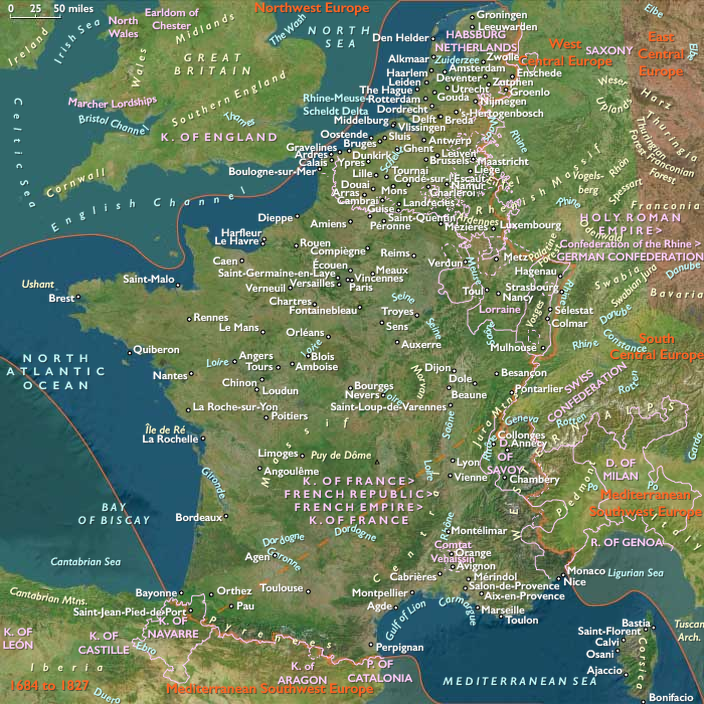
The Austrians, under Prince Josias of Coburg, repel the French under Dumouriez at Neerwinden on March 18.
Dumouriez now arranges an armistice with the Austrians, making an agreement to hand over to them several border fortresses in return for a truce where he could march on Paris and restore the monarchy under the Constitution of 1791.
However, he is unable to secure the loyalty of his troops, and he defects to the Austrian lines rather than face arrest by the Jacobins.
The revolutionary government has restored order in areas north of the Loire by early April, but south of the Loire in four departments that become known as the Vendée Militaire, there are few troops to control rebels and what had started as rioting quickly takes on the form of a full insurrection led by priests and the local nobility.
Within a few weeks, the rebel forces have formed the substantial, if ill-equipped, army, Royal and Catholic Army, supported by two thousand irregular cavalry and a few captured artillery pieces.
The main force of the rebels operates on a much smaller scale, using guerrilla tactics, supported by the insurgents' unparalleled local knowledge and the goodwill of the people.
...the Vendeans had then turned to a protracted siege of Nantes.
Jean-Baptiste Jourdan had been named to lead the Army of the North on September 22.
Three of his predecessors—Nicolas Luckner, Adam Philippe, comte de Custine, and Jean Nicolas Houchard—are under arrest; they will later be executed by guillotine.
Jourdan’s first assignment had been to relieve Jacques Ferrand's twenty thousand-man garrison of Maubeuge, besieged by an Austrian-Dutch army commanded by Prince Josias of Coburg.
The Committee of Public Safety felt that this mission was so important that it dispatched Lazare Carnot to oversee the operation.
Jourdan defeats Coburg on 15–16 October at the Battle of Wattignies and breaks the siege.
Carnot claimed that it was his own intervention that won the victory.
Historian Michael Glover writes that the first day's attack was a failure because of Carnot's interference, while the second day's success resulted from Jourdan using his own tactical judgment.
In any case, only Carnot's account reaches Paris. (Glover, Michael. "Jourdan: The True Patriot". Chandler, David (ed.). Napoleon's Marshals. New York: Macmillan, 1987)
Jourdan returns to the offensive, but does not make major gains before the winter.
Born at Limoges, France into a surgeon's family, Jourdan had enlisted in the French royal army in early 1778 when he was not quite sixteen.
Assigned to the Regiment of Auxerrois, he had participated in the ill-fated assault at the Siege of Savannah on October 9, 1779, during the American War of Independence.
After service in the West Indies, he had returned home in 1782 sick with a fever.
Bouts of illness (possibly malaria) will trouble him for the rest of his life.
In 1784, he had been discharged from the army and set up a haberdashery business in Limoges.
He had married a dressmaker in 1788 and the couple have five daughters.
When the National Assembly asked for volunteers, Jourdan had been elected Chef de bataillon of the 2nd Haute-Vienne Battalion.
He had led his troops in the French victory at the Battle of Jemappes and in the defeat at the Battle of Neerwinden.
Jourdan's leadership skills were noticed and had led to his promotion to general of brigade on May 27, 1793 and to general of division two months later.
He had led his division at the Battle of Hondschoote, in which he had been wounded in the chest.
Jean-Charles Pichegru, as Général de division and in command of the army of the Rhine, had been tasked with the reconquest of Alsace and the reorganization of the defeated troops of the French Republic, in cooperation with Lazare Hoche and the army of the Moselle.
They had succeeded, as Pichegru had made use of the morale of his soldiers to win numerous skirmishes, and Hoche had forced the lines at Haguenau and relieved Landau.
Hoche had been arrested In March 1793, probably owing to his colleague’s denunciations, and Pichegru had become commander-in-chief of the army of the Rhine-and-Moselle. (Hoche will escape execution, however, though imprisoned in Paris until the fall of Robespierre.)
Pichegru had then been summoned to succeed Jourdan in the army of the North, subsequently fighting three major campaigns of one year.
Pichegru was born at Arbois (or, according to Charles Nodier, at Les Planches, near Lons-le-Saulnier), as the son of a peasant.
The friars of Arbois, having been entrusted with his education, had sent him to the military school of Brienne-le-Château.
In 1783, he had entered the 1st regiment of artillery, where he had rapidly rises to the rank of Adjutant-Second Lieutenant and briefly served in the American Revolutionary War.
When the Revolution erupted in 1789, Pichegru had become leader of the Jacobin Club in Besançon, and had been elected Lieutenant Colonel when a regiment of volunteers of the départment of the Gard marched through the city.
The fine condition of his regiment had been noticed in the French Revolutionary Army section of the Rhine, and his organizing ability had gotten him appointed in the headquarters, and then promoted Général de brigade.
Lazare Carnot and Louis de Saint-Just had been sent In 1793 to find roturier (non-aristocratic) generals who could prove successful.
Carnot had discovered Jean-Baptiste Jourdan, and Saint-Just had discovered Louis Lazare Hoche and Pichegru.
The forces of the Kingdom of Great Britain, the Dutch Republic and Habsburg Austria hold a strong position along the Sambre to the North Sea.
After attempting to break the Austrian center, Pichegru suddenly turns their right, and defeats the Count of Clerfayt at Cassel, ...
...Menin and Courtrai, while his subordinate ...
Joseph Souham defeats Prince Josias of Coburg in the battle of Tourcoing on May 18, 1794.
Pichegru, after a lull during which he feigns a siege of Ypres, ...