Guy de Burgundy, born the fourth son of William I, Count of Burgundy, one of the wealthiest rulers in Europe is a member of the highest aristocracy in Europe.
His family is part of a network of noble alliances.
He is a cousin of Arduin of Ivrea, the King of Italy.
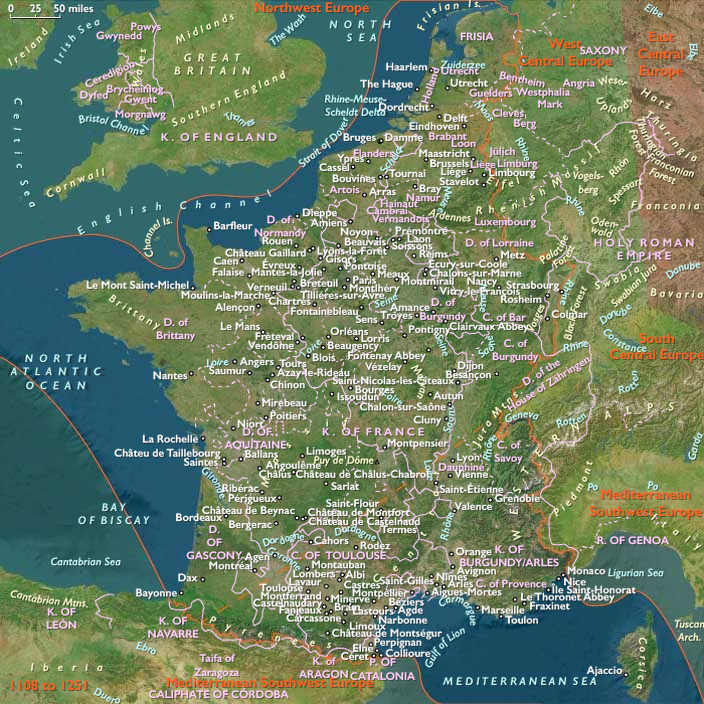
One sister, Gisela, was married to Humbert II, Count of Savoy, and then to Renier I of Montferrat; another sister, Maud, was the wife of Odo of Burgundy.
His brother Raymond was married to Urraca, the heiress of León; they became the parents of King Alfonso VII of León.
His brother Hugh was an Archbishop of Besançon.
Guy first appears in contemporary records when he became the Archbishop of Vienne in 1088.
He holds strong pro-Papal views about the Investiture Controversy.
As archbishop, he had been appointed papal legate to France by Pope Paschal II during the time that Paschal was induced under pressure from Holy Roman Emperor Henry V to issue the Privilegium of 1111, by which he had yielded much of the papal prerogatives that had been so forcefully claimed by Pope Gregory VII in the Gregorian Reforms.
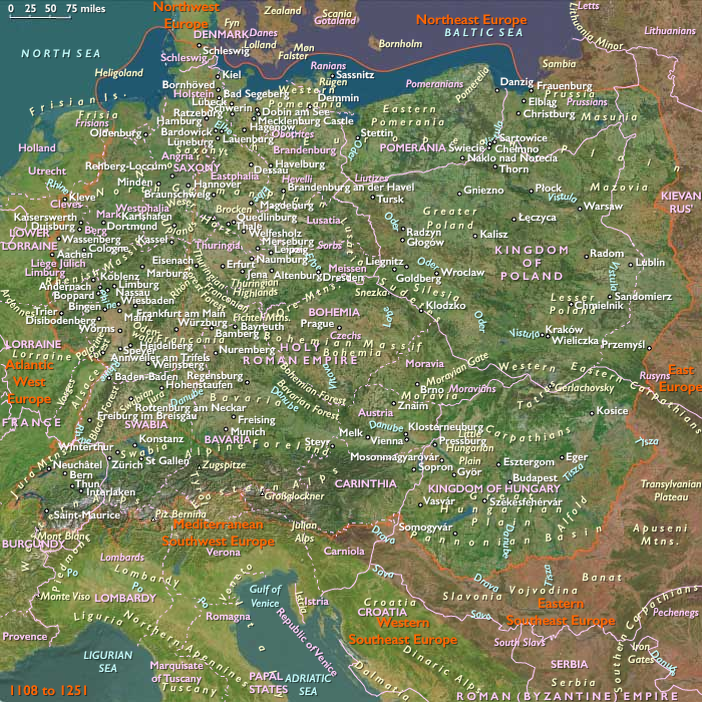
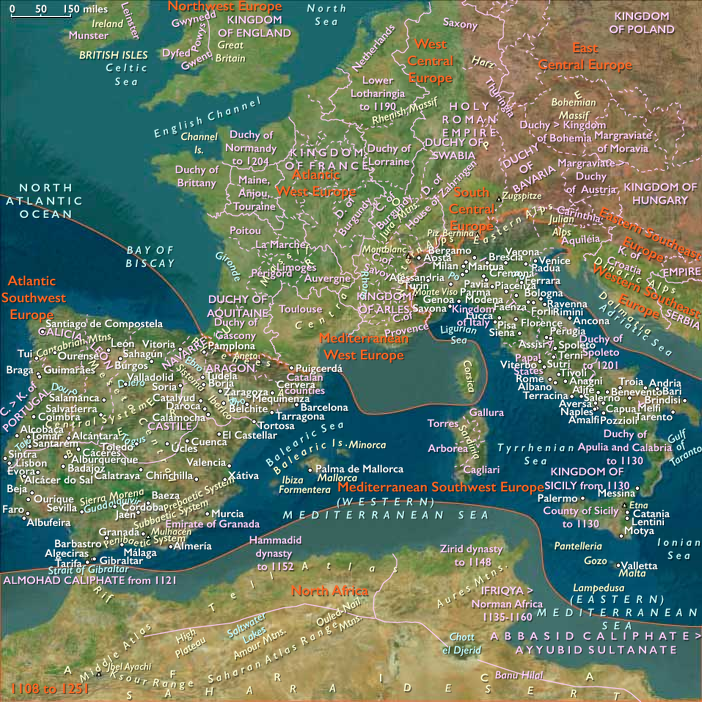
Guy, with relatives both in Burgundy and the Franche-Comté (that is, within the Emperor's jurisdiction and bordering it) had led the pro-Papal opposition at the synod called at the Lateran in 1112.
On his return to France, he immediately convenes an assembly of French and Burgundian bishops at Vienne, where the imperial claim to a traditional lay investiture of the clergy is denounced as heretical and a sentence of excommunication is now pronounced against Henry V on the grounds that he had extorted the Privilegium from Paschal II by means of violence.
These decrees are sent to Paschal II with a request for a confirmation, which they receive on October 20, 1112.