
Pope Adrian V
head of the Catholic Church
1210 CE to 1276 CE
Pope Adrian V (Latin: Adrianus V; c. 1210/1220 – 18 August 1276), born Ottobuono de' Fieschi, is Pope from July 11 to his death in 1276.
World
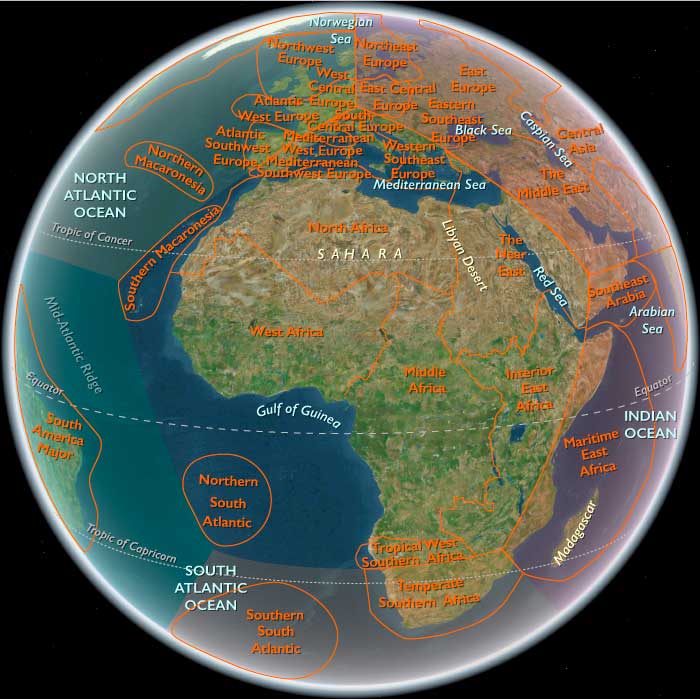
The Middle of The Earth
View →Related Events
Showing 1 events out of 1 total
Pierre de Tarentaise, a former Dominican preacher, succeeds Gregory X as the 185th pope on January 21, taking the regnal name Innocent V. The first member of that order to become Pope, he is the author of several works of philosophy, theology, and canon law, including commentaries on the Pauline epistles and on the Sentences of Peter Lombard.
He is sometimes referred to as famosissimus doctor.
The only noteworthy feature of his brief and uneventful pontificate is the practical form assumed by his desire for reunion with the Eastern Church; dying after a short bout with an unknown illness on June 22, 1276.
He is in turn succeeded on July 11 by Adrian V, born Ottobuono de' Fiesch, who had been sent to England in 1265 by Pope Clement IV to mediate between King Henry III of England and his barons, and to preach the Crusades.
He remained there for several years as the papal legate, serving from October 1265 to July 1268.
His diplomatic position was such that his name is still on the oldest extant piece of English statute law, the Statute of Marlborough of 1267, where the formal title mentions as a witness "the Lord Ottobon, at that time legate in England".
(Also on this legation was a young diplomat, the future Boniface VIII.)
In April 1268, he issued a set of canons, which formed the basis of church law in England until the Protestant Reformation of the sixteenth century.
Fieschi is related distantly to Henry III; his sister had married Thomas II of Savoy, who was a cousin of Henry's wife, Eleanor of Provence.
Under the influence of Charles of Anjou, he is elected Pope to succeed Innocent V on July July 1276 but dies at Viterbo on August 18, 1276 from illness without ever having been ordained to the priesthood.
He is buried here in the church of San Francesco alla Rocca.
His funeral monument is attributed to Arnolfo di Cambio.
On September 13, Pedro Julião succeeds Pope Adrian V as the 187th pope, becoming the fourth man this calendar year to hold the office of pope.
Pedro Julião, who was probably born in Lisbon between 1210 and 1220, had started his studies at the episcopal school of Lisbon Cathedral and later joined the University of Paris, although some historians claim that he was educated at Montpellier.
Wherever he studied, he concentrated on medicine, theology, logic, physics, metaphysics and Aristotle's dialectic.
There are some who believe he must be identified with an individual known as Peter of Spain.
On the basis of this premise, he is the person who from 1245 to 1250 became known as Pedro Hispano (because he came from Hispania, the Iberian Peninsula), and taught medicine at the University of Siena.
There, he wrote the Summulae Logicales, a reference manual on Aristotelian logic that will remain in use in European universities for more than 300 years.
He became famous as a university teacher, then returned to Lisbon.
At the court of Guimarães he was the councilor and spokesman for King Afonso III of Portugal in church matters.
Later, he became prior of Guimarães.
He had attempted to become Bishop of Lisbon, but he was defeated.
Instead, he became the master of the school of Lisbon.
A notable philosopher with works in logic, he was also the responsible for the creation of the Square of opposition.
Pedro had become the physician of Pope Gregory X (1271–76) early in his reign.
In March 1273, he had been elected Archbishop of Braga, but did not assume that post because on June 3, 1273 Gregory X created him Cardinal-Bishop of Frascati.
After the death of Pope Adrian V on August 18, 1276, Pedro Hispano is elected Pope on Septembe 13 and crowned a week later.
One of John XXI's few acts during his brief reign is the reversal of a decree recently passed at the Second Council of Lyon (1274); the decree had not only confined cardinals in solitude until they elected a successor Pope, but also progressively restricted their supplies of food and wine if their deliberations took too long.