Pompey
Roman general and poltician
Years: 106BCE - 48BCE
Gnaeus Pompeius Magnus, also known as Pompey or Pompey the Great (September 29, 106 BCE – September 29, 48 BCE), is a military and political leader of the late Roman Republic.
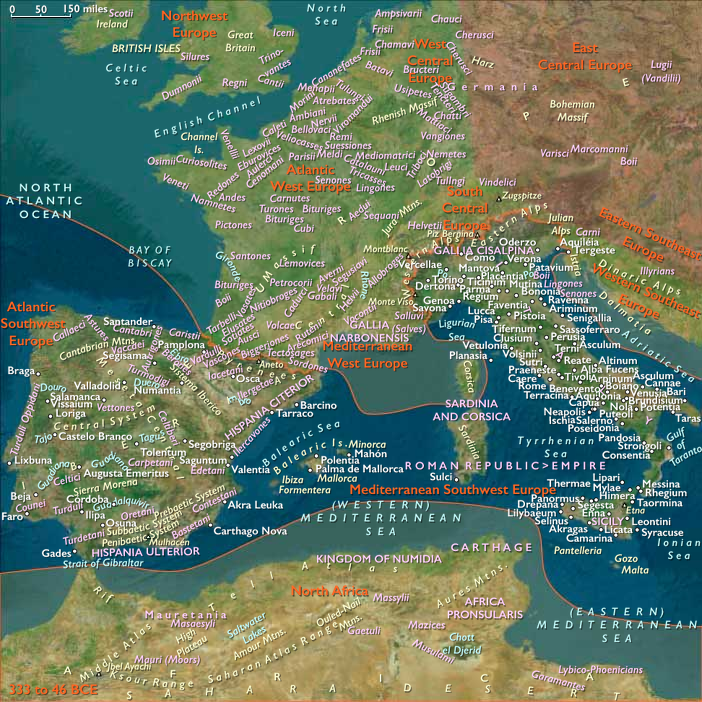
He comes from a wealthy Italian provincial background, and establishes himself in the ranks of Roman nobility by successful leadership in several military campaigns.
Sulla addresses him by the cognomen Magnus (the Great), and he is awarded three triumphs.
Pompey joins his rival Marcus Licinius Crassus and his ally Julius Caesar in the unofficial military-political alliance known as the First Triumvirate.
The first triumvirate is validated by the marriage between Julia Caesaris (daughter of Julius Caesar) and Pompey.
After the deaths of Julia and Crassus, Pompey sides with the optimates, the conservative and aristocratic faction of the Roman Senate.
Pompey and Caesar contend for the leadership of the Roman state, leading to a civil war.
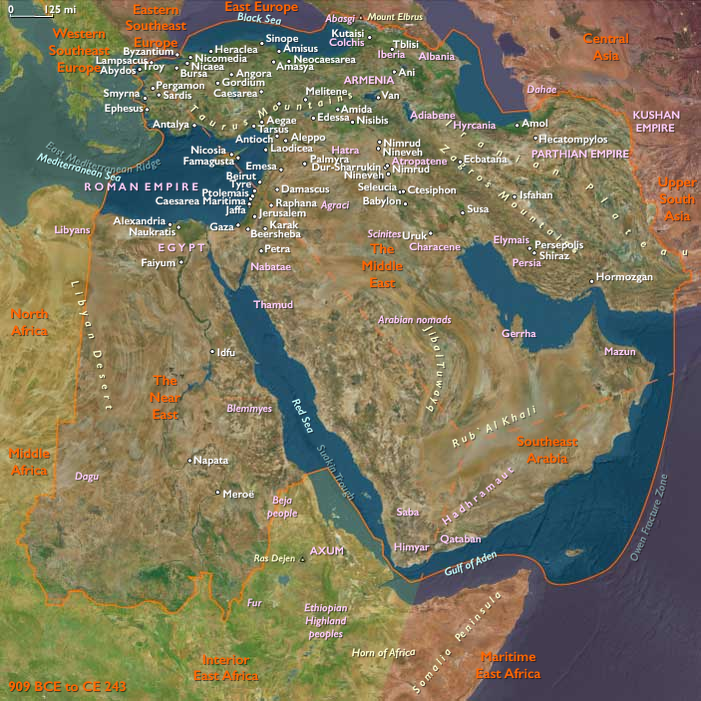
When Pompey is defeated at the Battle of Pharsalus, he seeks refuge in Egypt, where he is assassinated.
His career and defeat are significant in Rome's subsequent transformation from Republic to Principate and Empire.