Philipp Melanchthon
German reformer, collaborator with Martin Luther, the first systematic theologian of the Protestant Reformation, intellectual leader of the Lutheran Reformation, and an influential designer of educational systems
Years: 1497 - 1560
Philipp Melanchthon (February 16, 1497 – April 19, 1560), born Philipp Schwartzerdt, is a German reformer, collaborator with Martin Luther, the first systematic theologian of the Protestant Reformation, intellectual leader of the Lutheran Reformation, and an influential designer of educational systems.
He stands next to Luther and Calvin as a reformer, theologian, and molder of Protestantism.
As much as Luther, he is the primary founder of Lutheranism.
They both denounce what they see as the exaggerated cult of the saints, justification by works, and the coercion of the conscience in the sacrament of penance that nevertheless cannot offer certainty of salvation.
Melanchthon makes the distinction between law and gospel the central formula for Lutheran evangelical insight.
By the "law" he means the Papacy and rigid rituals controlled by priests; the "gospel" means an individual directly confronting Christ through Bible reading, hymns and prayer.





Related Events
Filter results
Showing 10 events out of 27 total
The Red Jews are a legendary Jewish nation that appears in vernacular sources in Germany during the medieval era until about 1600.
According to these texts, the Red Jews are an epochal threat to Christendom, and will invade Europe during the tribulations leading to the end of the world.
Andrew Colin Gow studied the original German language texts and concluded that the legend of the Red Jews was a conflation of three separate traditions: the Biblical prophetic references to Gog and Magog, the Ten Lost Tribes of Israel, and an episode from the Alexander Romance, in which Alexander the Great encloses a race of heathens behind a great wall in Caucasus.
These traditions had some overlap already; Gog and Magog are among the nations trapped behind the wall in the Alexander Romance, and the only ones named in the version of the story appearing in Qur'an Sura al-Kahf (The Cave) 83-98, while The Travels of Sir John Mandeville explicitly associates the confined nations with the Ten Lost Tribes.
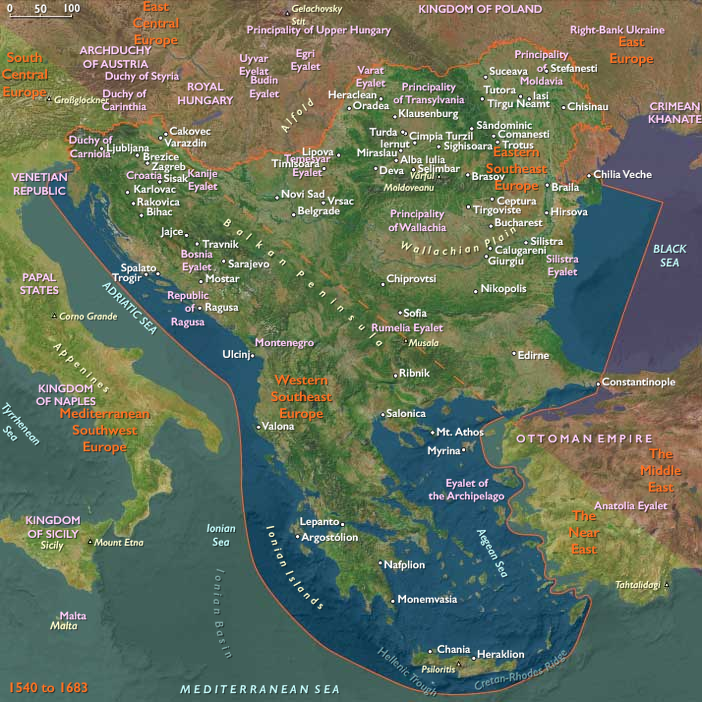
Many pamphlets circulate interpreting such events as the rise of Turkish power in the context of the legendary Red Jews.
Philipp Melanchthon, for example, claims that the Ottoman Turks are the Red Jews.
Kevin Alan Brook, among others, will speculated, but cannot conclusively prove, that the legend of the Red Jews was actually based on misremembered accounts of the Khazars.
Indeed, in Expositio in Matthaeum Evangelistam, Christian of Stavelot refers to the Khazars as Hunnic descendants of Gog and Magog, as well as having been "enclosed" by Alexander, but having since escaped, demonstrating that the Khazars were indeed conflated with two of the three elements making up the legend of the Red Jews.
Other medieval sources consider various connections with the Lost Tribes, owing to the Khazars' adoption of Judaism, and they are described in Arabic sources as having red hair, a trait associated with the Devil in medieval Germany and possibly the source of the term "Red Jews".
Alternatively, "Red Jews" refers to the Idumeans, or 'Edomites' who converted to Judaism a few generations before King Herod.
Edom in Hebrew means 'red.'
Philipp Melanchthon, whose real family name is Schwarzerd (meaning "black earth"), of which Melanchthon is the Greek translation, had been educated at Heidelberg and Tubingen, where he had read widely in the Greek classics and Hebrew scriptures.
In 1518, Melanchthon goes to the University of Wittenberg as a professor of Greek and delivers an inaugural address on behalf of humanistic studies.
Under Martin Luther's influence, Melanchthon is won over to the evangelical cause.
Luther himself defends his theology before his fellow Augustinians.
Copies of his ninety-five theses, which are quickly spread throughout Europe, unleash a storm of controversy.
Thirty-one-year-old German Roman Catholic theologian Johann Eck writes his Obelisci in reply to Luther's theses, condemning his ideas.
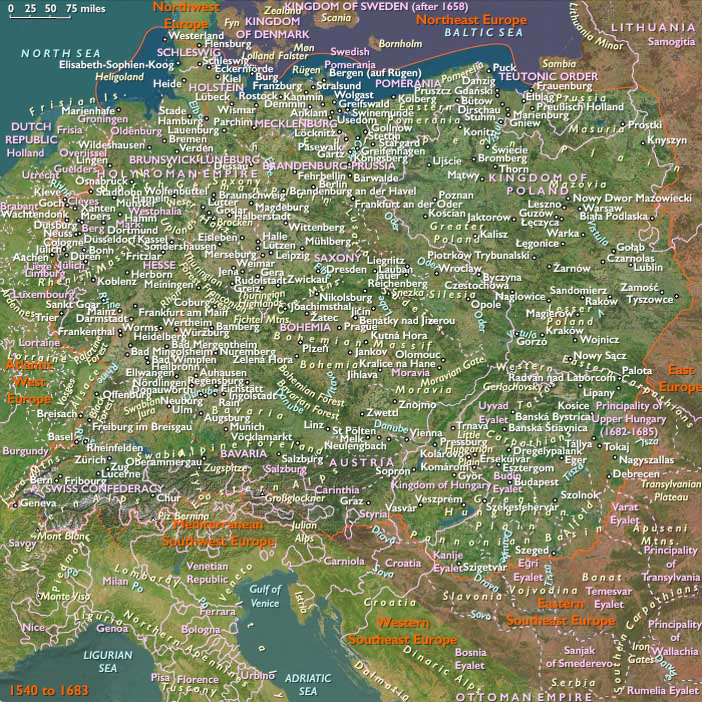
Thomas Müntzer was born in late 1489 (or possibly 1488), in the small town of Stolberg in the Harz Mountains of Germany.
There is every reason to suppose that Müntzer had a relatively comfortable background and upbringing—as evidenced by his lengthy education.
Both his parents are still alive in 1520, his mother dying at around this time.
The family later moved to the neighboring, and slightly larger town of Quedlinburg, and it was as ‘Thomas Munczer de Quedlinburgk’ that he had enrolled at the university of Leipzig in 1506.
Here he may have studied the Arts or even Theology: relevant records are missing, and it is uncertain whether Müntzer actually graduated from Leipzig.
He later enrolled in late 1512 at the Viadriana university of Frankfurt an der Oder.
It is not known what degrees he had obtained by 1514, when he found employment within the Church: almost certainly a Master’s degree in Theology or the Arts; and possibly—but less certainly—a Bachelor of Theology.
At some time in this rather obscure period of his life, possibly before his studies at Frankfurt, he had held posts as an assistant teacher in schools in Halle and Aschersleben, at which time, according to his final confession, he is alleged to have formed a ‘league’ against the incumbent Archbishop of Magdeburg—to what end the league was formed is wholly unknown.
In May 1514, he took up a post as priest in the town of Braunschweig (Brunswick), where he had been occupied on and off for the past few years.
It is here that he began to question the practices of the Catholic Church, and to criticize—for example—the selling of indulgences.
In letters of this time, he is already being addressed as a ‘castigator of unrighteousness’.
Between 1515 and 1516, he had also managed to find a job as schoolmaster at a nunnery in Frose, near Aschersleben.
In the autumn of 1517, he was in Wittenberg, met with Luther and became involved in the great discussions which preceded the posting of Luther’s Ninety-five Theses.
Attending lectures at the university there, he had been exposed to Luther’s ideas as well as other ideas originating with the Humanists, among whom could also be counted Andreas Bodenstein von Karlstadt, who will later become a radical opponent of Luther.
Müntzer had not remained in Wittenberg for long, and was reported in various other locations in Thuringia and Franconia.
He had continued to be paid for his position at Braunschweig until early 1519, when he turned up in the town of Jüterbog, northeast of Wittenberg, where he had been asked to stand in for the preacher Franz Günther.
Günther had already been preaching the reformed gospel, but had found himself viciously attacked by the local Franciscans; requesting leave of absence, he had left the scene and Müntzer had been sent in.
The latter had picked up where Günther had left off.
Before long, the local ecclesiastics are complaining bitterly about Müntzer’s heretical ‘articles’ which challenge both church teaching and church institutions.
By this time, Müntzer is not simply following Luther’s teachings; he has already begun to study the works of the fourteenth century-mystics Suso and Tauler, is seriously wondering about the possibility of enlightenment through dreams and visions, has thoroughly explored the early history of the Christian Church, and is in correspondence with other radical reformers such as Karlstadt.
In June 1519, Müntzer had attended one of the high points of the early Reformation: the disputation in Leipzig, between the reformers of Wittenberg (Luther, Melanchthon and Karlstadt) and the Roman Church hierarchy, represented by Johann Eck.
Müntzer had not gone unnoticed by Luther, who recommended him to a temporary post in the town of Zwickau.
However, at the end of this year, he was still employed in a nunnery at Beuditz, near Weissenfels.
He spends the entire winter studying works by the mystics, the Humanists and the church historians.
Müntzer had been able to capitalize on the recommendation made by Luther a year earlier, and in May 1520 had stood in as temporary replacement for a reformist/humanist preacher named Johann Sylvanus Egranus at St Mary’s Church in the busy town of Zwickau (population at this time around seven thousand), near the border with Bohemia.
Zwickau is in the middle of the important iron- and silver-mining area of the Erzgebirge, and is also home to a significant number of plebeians, primarily weavers.
Money from the mining operations, and from the commercial boom that mining generates, has infiltrated the town.
This has led to an increasing division between rich and poor citizens, and a parallel consolidation of larger manufacturers over small-scale craftsmen.
Social tensions run high.
It is a town that, although exceptional for the times, nurtures conditions that presage the trajectory of many towns over the following two centuries.
Müntzer at St. Mary’s carries on as he had started in Jüterbog.
This brings him into conflict with the representatives of the established Church.
He still regards himself as a follower of Luther, however, and as such he retains the support of the town council: so much so that when Egranus returns to post in October 1520, the town council appoints Müntzer to a permanent post at St Katharine’s Church.
St Katharine’s is the church of the weavers.
Even before the arrival of Lutheran doctrines, there had already in Zwickau been a reform movement inspired by the Hussite Reformation of the fifteenth century, especially in its radical, apocalyptic Taborite flavor.
This movement is particularly strong, along with spiritualism, among the Zwickau weavers.
Nikolaus Storch is active here, a self-taught weaver who places every confidence in spiritual revelation through dreams.
He and Müntzer are soon acting in concert.
Melanchthon, working with Luther in leading the Reformation, offers a systematic presentation of Lutheran teachings in his important Loci communes rerum theologicarum (“Commonplaces of Theology”), published in 1521).
Luther, having spent eight months in seclusion at the Wartburg castle, has translated the New Testament into German and written a number of pamphlets.
He returns in the first week of March 1522 to Wittenberg to restore order against enthusiastic iconoclasts who are destroying altars, images, and crucifixes.
From March 9–16 Luther delivers eight sermons in which he stresses some theological similarities with Karlstadt, but, in hindsight, urges caution.
This is a major turning point between Karlstadt and Luther.
Karlstadt reassertssome of his moderately mystical leanings, continues wearing peasants' clothing, asks to be called "Brother Andreas," and becomes disillusioned with academic life, renouncing his three doctoral degrees.
With Philipp Melanchthon and others, Luther organizes the Evangelical churches in the German territories whose princes support him.
He abolishes many traditional practices, including confession and private mass.
Priests marry; convents and monasteries are abandoned.
Luther loses some popular support, however, when he urges suppression of the Knights’ Revolt of 1522.
Karlstadt in May 1523 is invited by the church of Orlamünde to be its pastor, and he accepts at once.
Here he institutes all his radical reforms, and Orlamünde becomes the model of a congregationalist reformation.
Church music and art are set aside, clerical matrimony is preached, and infant baptism is rejected.
Perhaps most importantly, in Orlamünde Karlstadt denies the physical but affirms the spiritual presence of Christ in the communion.
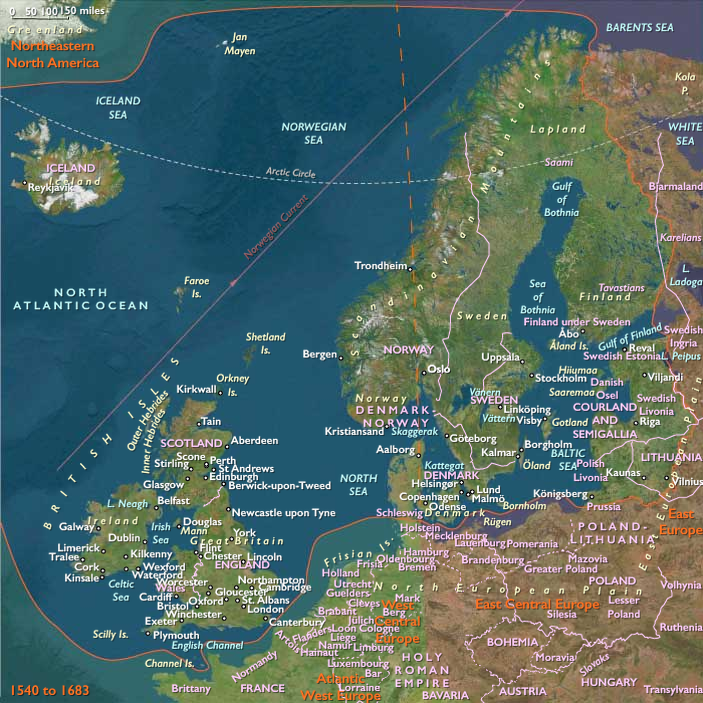
Olaus Petri, born Olof Persson in Örebro in south-central Sweden to a local blacksmith, had learned to read and write at the local Carmelite monastery.
He then went to the capital and studied at the University of Uppsala, where he read theology and German.
Later, he attended the University of Leipzig until 1516, and finally finished his education and received a Master's degree at the University of Wittenberg in February 1518.
While in Wittenberg with his younger brother Lars, Olaus had met with and had been influenced by the main characters of the German reformation, Philipp Melanchthon and Martin Luther.
Both Petri brothers had returned to Sweden in 1519, nearly dying as their ship ran aground on Gotland island during a storm.
They had remained on Gotland for a while, with Olaus preaching and assisting the local priest, Soren Norby, and Lars teaching at the local school.
In 1520, Olaus had returned to Strängnäs on the mainland, accepting ordination as a deacon and serving bishop Mattias Gregersson Lilje as secretary, chancellor of the Diocese of Strängnäs, canon of the Strängnäs Cathedral and dean of the cathedral school.
Olaus had accompanied his mentor, Bishop Gregersson, to Stockholm and attended the tumultuous crowning of Danish King Christian II, who had captured Stockholm and held it for about a year until returning to Denmark, where he was soon deposed and replaced by his uncle, who became King Frederick I of Denmark.
Meanwhile, at the notorious Stockholm Bloodbath in early November, King Christian violated his promises of a general amnesty for the Sture party, and during the post-coronation festivities arrested and executed 80-90 churchmen and secular Swedish nobles, including Bishop Gregersson.
When Olaus expressed his outrage, he was nearly executed as well, but a German who had seen him in Wittenberg identified Olaus as a fellow German and thus saved his life.
King Christian tried to appoint his friend, Odense's bishop Jens Andersen Beldenak, to the now-vacant Strängnäs bishopric, but both Danes soon returned to Denmark, and the scholar-priest Laurentius Andreae, who had been named archdeacon in 1520, ran the diocese.
The massacre had provoked the Swedish War of Liberation, including the election and crowning of Gustav Vasa as King in Strängnäs in 1523.
Olaus (whose father died in 1521, after which he and his brother joined the insurgents under Vasa's leadership) had attended the coronation, sworn fealty to his monarch, and soon became the kingdom's chancellor.
A year later Olaus had been appointed Stockholm's town secretary and moved to the new capital, where he has also served as a judge (despite lack of specific legal training), and town councilor.
Olaus has become known for his advocacy of Lutheranism and criticism of prevailing Roman Catholicism.
In October 1524, the Uppsala Cathedral's chapter had excommunicated both brothers on grounds of heresy.
They remain, however, confident in the new Swedish king's strong support.
In 1525 Olaus had married, as Lutheran practice permitted, and also implemented another of Luther's ideas by having the mass sung in Swedish for the first time.
Throughout this period Olaus has als been involved in scholarly endeavors, including translating Lutheran works into Swedish.
In 1526, Olaus publishes the first Swedish translation of the New Testament, also publishing a catechism in Swedish.
His translation is of vital importance to the development of the Swedish language.
Albrecht Dürer presents to the city of Nuremberg in 1526 the “Adoration of the Trinity,” painted from 1508 to 1511.
On his return to Nuremberg, Dürer has worked on a number of grand projects with religious themes, including a crucifixion scene and a Sacra Conversazione, though neither is completed.
This may have been due in part to his declining health, but perhaps also because of the time he gave to the preparation of his theoretical works on geometry and perspective, the proportions of men and horses, and fortification.
However, one consequence of this shift in emphasis was that during the last years of his life, Dürer has produced comparatively little as an artist.
In painting, there is only a portrait of Hieronymus Holtzschuher, a Madonna and Child (1526), Salvator Mundi (1526), and two panels showing St. John with St. Peter in background and St. Paul with St. Mark in the background.
This last great work, the Four Apostles, a fusion of his personal vision with the monumental impact of Italian painting, is given by Dürer to the City of Nuremberg—although he is given one hundred guilders in return.
As for engravings, Dürer's work is restricted to portraits and illustrations for his treatise.
The portraits include Cardinal-Elector Albert of Mainz; Frederick the Wise, elector of Saxony; the humanist scholar Willibald Pirckheimer; Philipp Melanchthon, and Erasmus of Rotterdam.
For those of the Cardinal, Melanchthon, and Dürer's final major work, a drawn portrait of the Nuremberg patrician Ulrich Starck, Dürer depicts the sitters in profile, perhaps reflecting a more mathematical approach.
Despite complaining of his lack of a formal classical education, Dürer is greatly interested in intellectual matters and has learned much from his boyhood friend Willibald Pirckheimer, whom he no doubt consults on the content of many of his images.
He also derives great satisfaction from his friendships and correspondence with Erasmus and other scholars.
Dürer succees in producing two books during his lifetime.
"The Four Books on Measurement" are published at Nuremberg in 1525 and is the first book for adults on mathematics in German, as well as being cited later by Galileo and Kepler.
Landgrave Philip had embraced Protestantism in 1524 after a personal meeting with the theologian Philipp Melanchthon.
He had then helped suppress the German Peasants' War by defeating Thomas Müntzer at the Battle of Frankenhausen.
Philip in 1525 had refused to be drawn into the anti-Lutheran league of George, Duke of Saxony.
By his alliance with John, Elector of Saxony, concluded in Gotha on February 27, 1526, he shows that he is already taking steps to organize a protective alliance of all Protestant princes and powers.
At the same time, he unites political motives with his religious policy.
As early as the spring of 1526, he seeks to prevent the election of the Catholic Archduke Ferdinand as Holy Roman Emperor.
Philip openly champions the Protestant cause at the Diet of Speyer in the same year, rendering it possible for Protestant preachers to propagate their views while the Diet is in session, and, like his followers, openly disregarding ordinary Roman Catholic ecclesiastical usages.