Pepin the Short
1st King of the Franks of the Carolingian dynasty
Years: 714 - 768
Pepin the Younger (c. 714 – 24 September 768), also known as Pepin the Short, is the King of the Franks from 752 until his death.
He is the first of the Carolingians to become King.
The younger son of Frankish strongman Charles Martel, Pepin's upbringing is distinguished by the ecclesiastical education he receives from the monks of St. Denis.
Succeeding his father as the Mayor of the Palace in 741, Pepin reigns over Francia jointly with his elder brother Carloman.
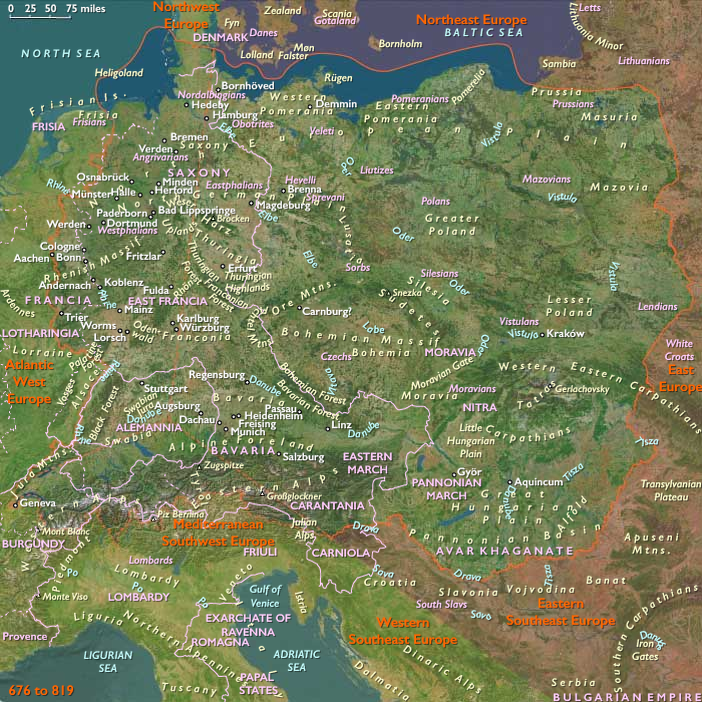
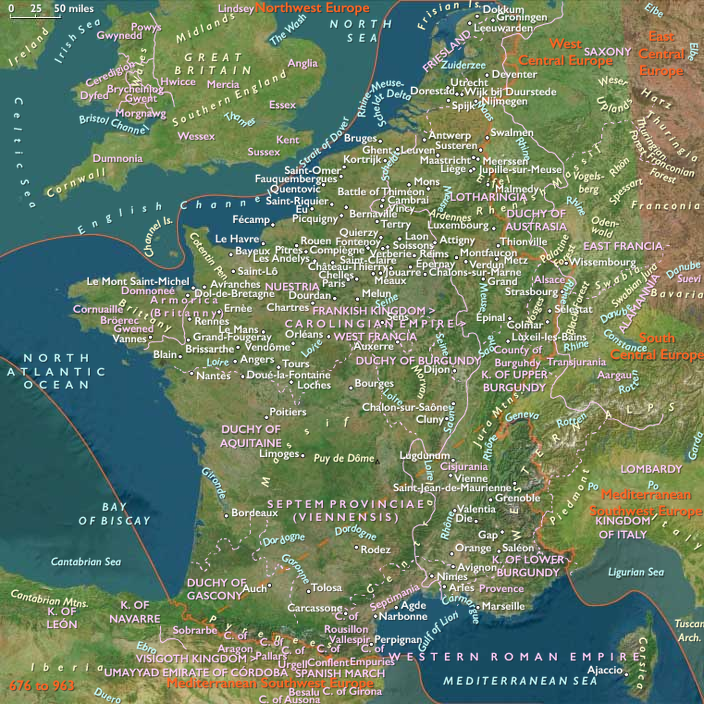
Pepin rules in Neustria, Burgundy, and Provence, while his brother Carloman establishes himself in Austrasia, Alemannia and Thuringia.
The brothers are active in subjugating revolts led by the Bavarians, Aquitanians, Saxons, and the Alemanni in the early years of their reign.
In 743, they end the Frankish interregnum by choosing Childeric III, who is to be the last Merovingian monarch, as figurehead king of the Franks.
Being well disposed towards the church and Papacy on account of their ecclesiastical upbringing, Pepin and Carloman continue their father's work in supporting Saint Boniface in reforming the Frankish church, and evangelizing the Saxons.
After Carloman, who is an intensely pious man, retires to religious life in 747, Pepin, becomes the sole ruler of the Franks.
He suppresses a revolt led by his step-brother Grifo, and succeeds in becoming the undisputed master of all Francia.
Giving up pretense, Pepin then forces Childeric into a monastery and has himself proclaimed king of the Franks with support of Pope Zachary in 751.
The decision is not supported by all members of the Carolingian family and Pepin has to put down a revolt led by Carloman's son, Drogo, and again by Grifo.
As King, Pepin embarks on an ambitious program to expand his power.
He reforms the legislation of the Franks and continues the ecclesiastical reforms of Boniface.
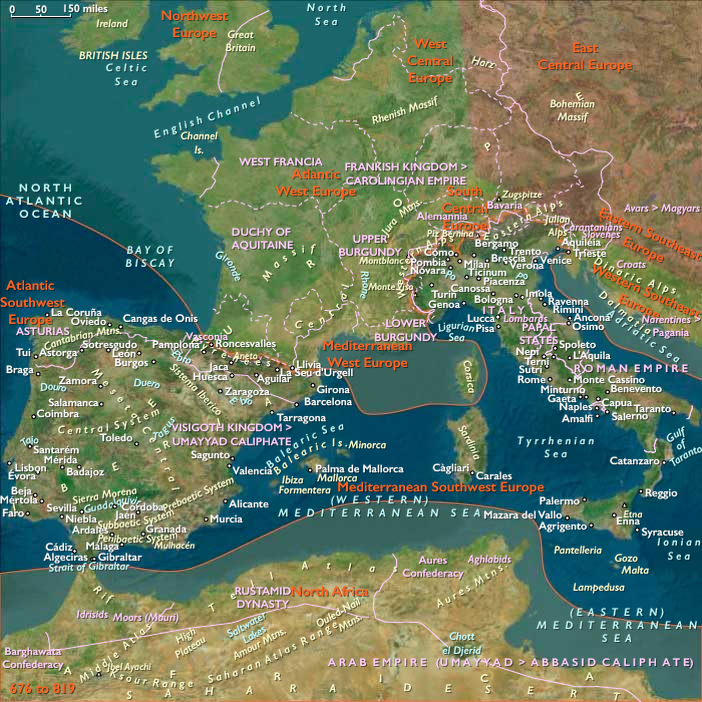
Pepin also intervenes in favor of the Papacy of Stephen II against the Lombards in Italy.
He is able to secure several cities, which he then gives to the Pope as part of the Donation of Pepin.
This forms the legal basis for the Papal States in the Middle Ages.
The Byzantines, keen to make good relations with the growing power of the Frankish empire, give Pepin the title of Patricius.
In wars of expansion, Pepin conquers Septimania from the Islamic Ummayads, and subjugates the southern realms by repeatedly defeating Waifer of Aquitaine and his Basque troops, after which the Basque and Aquitanian lords see no option but to pledge loyalty to the Franks.
Pepin is, however, troubled by the relentless revolts of the Saxons and the Bavarians.
He campaigns tirelessly in Germany, but the final subjugation of these tribes is left to his successors.
Pepin dies in 768 and is succeeded by his sons Charlemagne and Carloman.
Although unquestionably one of the most powerful and successful rulers of his time, Pepin's reign is largely overshadowed by those of his more famous son.