
Pedro Gutiérrez de Valdivia
Spanish conquistador and 1st royal governor of Chile
1500 CE to 1553 CE
Pedro Gutiérrez de Valdivia (ca.
1500 – December 25, 1553) is a Spanish conquistador and the first royal governor of Chile.
After serving with the Spanish army in Italy and Flanders, he is sent to South America in 1534, where he serves under Francisco Pizarro in Peru.
In 1540 he leads an expedition of 150 Spaniards into Chile, where he defeats a large force of Indians and founds Santiago in 1541.
He extends Spanish rule south to the Bío-Bío River in 1546, fights again in Peru (1546 – 48), and returns to Chile as governor in 1549.
He begins to conquer Chile south of the Bío-Bío and founds Concepción in 1550.
He is captured and killed in a campaign against the Araucanian Indians.
World
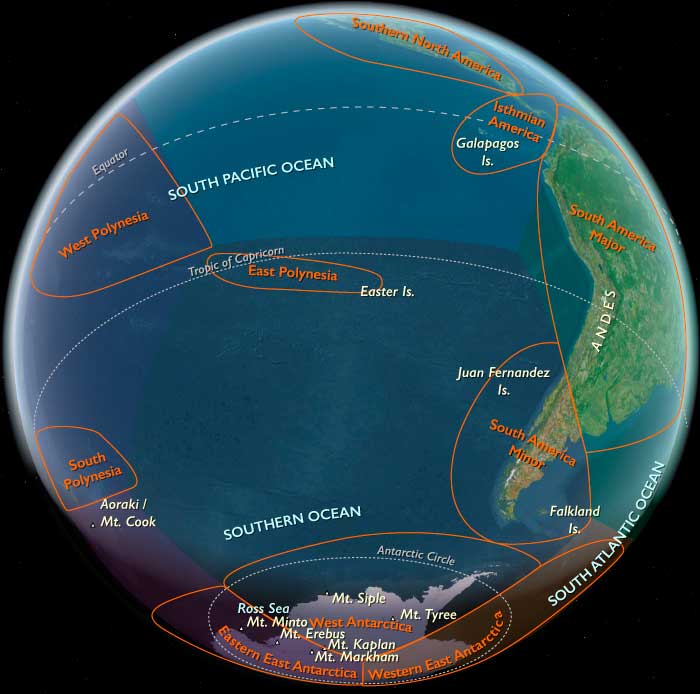
The Ends of the Earth
View →Related Events
Showing 10 events out of 16 total
The Spaniards in South America make their first attempt at the conquest and colonization of southern Chile, founding Concepción as the region’s first city in the face of strong resistance from the native populations, with whom hostilities are to continue, if intermittently, for more than three centuries.
Pedro de Valdivia, a thirty-eight-year-old Spanish conquistador and explorer who had entered military service in Spain, fought in Flanders and at Pavia, and participated in the conquest of Venezuela in 1535, joins Francisco Pizarro in Peru in 1538.
Spanish conquistador and explorer Pedro de Valdivia, having received Francisco Pizarro’s permission to establish a colony in Chile, had left Cuzco in January 1540 with one hundred and fifty Spaniards and about one thousand native allies from Peru, heading south across the coastal desert later called the Atacama.
After negotiating the desert with difficulty, the invaders successfully fight a succession of battles with the hostile Araucanians, the original inhabitants of Central and Southern Chile and Southern Argentina.
The Quechua word arauco (rebel) is not the root of araucano: it is more likely derived from the place name Arauco, meaning "clayey water.”
The Spanish conquest of Chile, which begins in earnest in 1540, causes large numbers of Araucanians—both a cultural and linguistic classification of the Picunche, Mapuche, and Huilliche Indians—to remove to the Argentine Andes.
The Mapuche are a wide-ranging ethnicity composed of various groups that share a common social, religious and economic structure, as well as a common linguistic heritage.
The polytheistic Mapuche determine descent and residence according to male ancestry.
Patterns of alliance, bride price, and dowry are based on female descent and involve ritual obligations such as participation in large-scale funeral rites and agricultural fertility ceremonies.
The Mapuche have an economy based on agriculture; their social organization consists of extended families, under the direction of a "lonko" or chief, although in times of war they would unite in larger groupings and elect a "toqui" ('axe-bearer') to lead them.
Their influence extends between the Aconcagua River and the Argentine pampas.
They can be divided into the Picunches who live in the central valleys of Chile — these integrated with the Inca Empire (and eventually with the Spaniards)—the Mapuches who inhabit the Valleys between the Itata and Toltén Rivers, and the Huilliches, the Lafkenches, and the Pehuenches.
The northern Aonikenk, called Patagons by Ferdinand Magellan, are an ethnic group of the pampa regions that made contact with some Mapuche groups, adopting their language and some culture; they are the Tehuelches.
Spaniards led by Pedro de Valdivia have begun the establishment of several settlements in Chile, including, on February 12, 1541, the city of Santiago del Nuevo Extremo (“Saint James of the New Frontier”), formerly inhabited by the Picunche people, and located on the Mapocho River at the northern end of the fertile Central Valley.
Valdivia has chosen the location because of its moderate climate and the ease with which it could be defended—the Mapocho River splits into two branches and rejoins further downstream, forming an island.
The city is destroyed on September 11, 1541 by the Indian forces under the chief Michimalonco, which leads to the Arauco War, a long conflict between colonial Spaniards and the Mapuche people of the region of Araucanía.
The survivors remove to a small island and await relief from their Spanish compatriots in Peru.
Quickly rebuilt, Santiago is today the capital of Chile, and the center of its largest conurbation (Greater Santiago).
Pedro de Valdivia and the beleaguered settlers of the destroyed new town of Santiago have meanwhile held out on their small island for two years against the Araucanians.
A Spanish relief force finally arrives in 1543 from Peru.
Valdivia sends a naval expedition consisting of the barks San Pedro and Santiaguillo, under the command of Juan Bautista Pastene, to reconnoiter the southwestern coast of South America in 1544, ordering him to reach the Strait of Magellan.
The expedition had set sail from Valparaíso and although Pastene does not reach this goal, he explores much of the coast.
He enters the bay of San Pedro, and makes landings at what are now known as Concepción and at Valdivia, which is later named in honor of the commander.
Encountering severe storms further south, he then returns to Valparaiso.
Valdivia himself sets out in February 1546, crossing the Itata River with sixty horsemen, plus native guides and porters.
He reaches the Bío-Bío River, where he plans to found another town.
Mapuche warriors attack the party, however, in the Battle of Quilacura.
Realizing that it will be impossible to proceed in such hostile territory with so limited a force, Valdivia wisely elects to return to Santiago shortly thereafter, after finding a site for a new city at what is now Penco and is to become the first site of Concepción.
Valdivia still manages to subdue the country between Santiago and the Maule River.
Valdivia, in an effort to secure additional aid and confirm his claims to the conquered territory, had returned in 1547 to Peru, leaving Francisco de Villagra as governor in his stead.
Here he has tried to gather more resources and men to continue the conquest.
When the Gonzalo Pizarro rebellion began, insurgents had attempted unsuccessfully to win Valdivia to their side, but he ultimately supports Gasca against Pizarro, joining the royal army in early 1548.
A discontented faction from Chile had managed, despite Valdivia’s support of Gasca, to have him tried in Lima, accused of tyranny, malfeasance of public funds and public immorality.
One of the charges leveled against him was that he, being married, openly lived with Inés de Suárez "...in the manner of man and wife and they sleep in one bed and they eat in one dish..." In exchange for being freed, and for his confirmation as Royal Governor, he had agreed to relinquish her and to bring to Chile his wife, Marina Ortíz de Gaete (who only arrives after Valdivia's death in 1554.
He was also ordered to marry off Inés, which he does, upon his return to Chile in 1549, to one of his captains, Rodrigo de Quiroga.
As recognition for his services, Valdivia is finally appointed as adelantado and wins the royal assent to his coveted title of Governor of Chile, returning to the settlement with his position and prestige considerably strengthened.
After Valdivia arrives back in Santiago from Peru, he again undertakes the conquest of southern Chile, but faces heavy resistance from the indigenous population.
Clashing with the warlike Araucanians beyond the Bio-Bio River in 1550, he defeats them but by no means breaks their will to resist, a will that grows stronger when the conquistador establishes settlements in their territory.
In spite of the fierce resistance at the Battle of Penco, he founds Concepción in 1550 on the site of the Araucanian village of Penco on the Rio Biobío.
Today, as the capital of Concepción Province and of the Biobío Region, Gran Concepción (Greater Concepción, including Talcahuano, San Pedro de La Paz, Hualpén, Chiguayante and Penco) is the second most important city-conurbation in Chile.