Paul von Hindenburg
German general and statesman
Years: 1847 - 1934
Paul Ludwig Hans Anton von Beneckendorff und von Hindenburg, known simply as Paul von Hindenburg (October 2, 1847 – August 2, 1934), is a German general and statesman who commands the Imperial German Army during the First World War and later becomes President of Germany from 1925 until his death, during the Weimar Republic.
He plays a key role in the Nazi Machtergreifung in January 1933 when, under pressure from advisers, he appoints Adolf Hitler Chancellor of Germany.
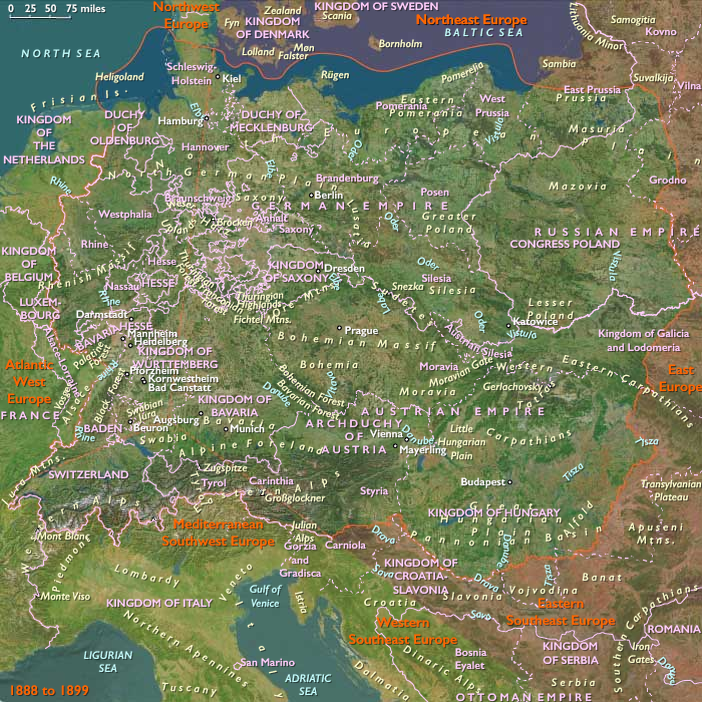
Born to a family of minor Prussian nobility, Hindenburg joina the Prussian army in 1866 where he sees combat during the Austro-Prussian and Franco-Prussian wars.
He retires with the rank of General of the Infantry in 1911, but is recalled to military service at the age of sixty-six following the outbreak of World War I in July 1914 and shortly thereafter receives nationwide attention as the victor of the Battle of Tannenberg and promotion to Field Marshal.
Upon later being named Chief of the General Staff in 1916, his popularity among the German public dramatically increases and produces a large cult of personality.
Taking advantage of Wilhelm II's broad delegation of authority to the Army High Command, Hindenburg and his deputy, General Erich Ludendorff, establish a de facto military dictatorship that controls Germany for the rest of the war.
Hindenburg retires again in 1919, but returns to public life in 1925 to be elected the second President of Germany.
He defeats Hitler in a runoff to win reelection in 1932.
He is opposed to Hitler and is a major player in the increasing political instability in the Weimar Republic that ends with Hitler's rise to power
He dissolves the Reichstag twice in 1932 and finally agrees to appoint Hitler Chancellor of Germany in January 1933.
Hindenburg does this to satisfy Hitler's demands that he should play a part in the Weimar government, for Hitler is the leader of the Nazi party, which had won a plurality in the November 1932 elections.
In February he approves the Reichstag Fire Decree, which suspends various civil liberties, and in March signs the Enabling Act of 1933, which gives Hitler's regime arbitrary powers.
Hindenburg dies the following year, after which Hitler declares himself Führer und Reichskanzler, or Supreme Leader and Chancellor, which supersedes both the Presidency and Chancellorship.