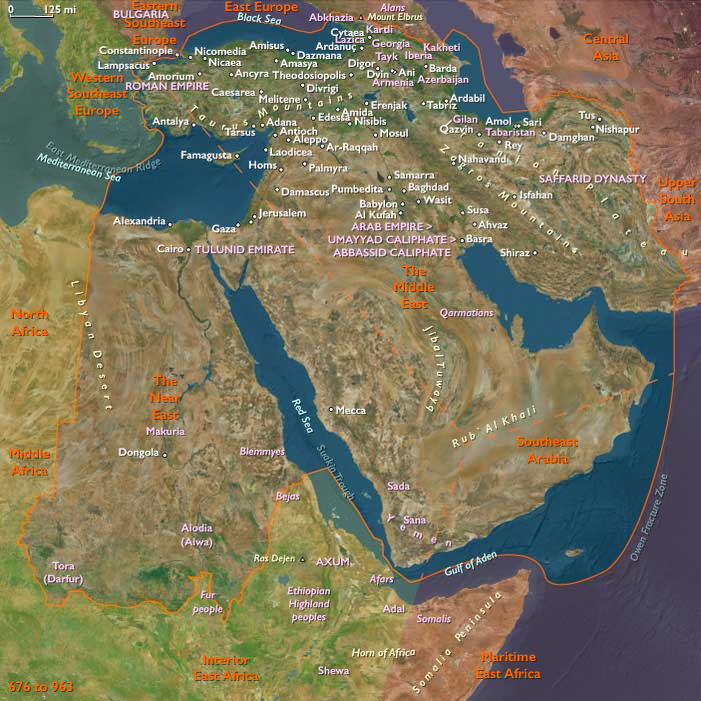
The imperial government, headed by the Empress-regent Theodora and the logothetes Theoktistos, have embarked on a sustained assault on the Empire's main political and ideological foe, the Abbasid Caliphate and its dependencies, following the restoration of the veneration of icons in March 843.
This aggressive stance is on the one hand facilitated by the internal stability that the end of the Iconoclasm controversy has brought, and on the other encouraged by a desire to vindicate the new policy through military victories against the Muslims.
The first such campaign, an attempted reconquest of the Emirate of Crete led by Theoktistos in person, had made initial gains, but ultimately ended in disaster.
After scoring a victory over the Arabs in Crete, Theoktistos had learned of a rumor that Theodora intended to name a new emperor, possibly her brother Bardas.
Theoktistos had hurried back to Constantinople, where he discovered that the rumor was false, but in his absence, the imperial army in Crete had been slaughtered by the Arabs.
Theoktistos, according to Byzantine sources, learns in 844 of an Arab invasion of imperial territory in Asia Minor, led by a certain 'Amr, probably the semiautonomous emir of Malatya, Umar al-Aqta.
The Arab sources do not make explicit mention of this campaign.
The Russian scholar Alexander Vasiliev, however, identified it with an expedition recorded in the poems of Abu Tammam and Buhturi, which was led by general Abu Sa'id and took place during the regency of Theodora.
Umar al-Aqta's participation is likely, as he often aided the Abbasids in their raids against the imperial forces.
According to Arab accounts, the troops led by Abu Sa'id comprised men from the border emirates of Qaliqala (Erzurum) and Tarsus.
The Arab forces united at Ardandun (possibly the border fort of Rhodandos) before raiding through the imperial themes of Cappadocia, Anatolikon, Boukellarion, and Opsikion.
Sa'id's troops sacked Dorylaion and even reached the shore of the Bosporus.
Theoktistos leads the imperial army in against the invaders, but is heavily defeated at Mauropotamos ("Black River").
The location of the latter, if indeed it is a river and not a simple toponym, is disputed; it was most likely a tributary of the Sangarius in Bithynia or of the Halys in Cappadocia.
Not only do the Greeks suffer heavy casualties, but many senior officials defect to the Arabs.
Theoktistos returns to Constantinople.