Parmenides
pre-Socratic Greek philosopher from Elea in Magna Graecia
Years: 520BCE - 455BCE
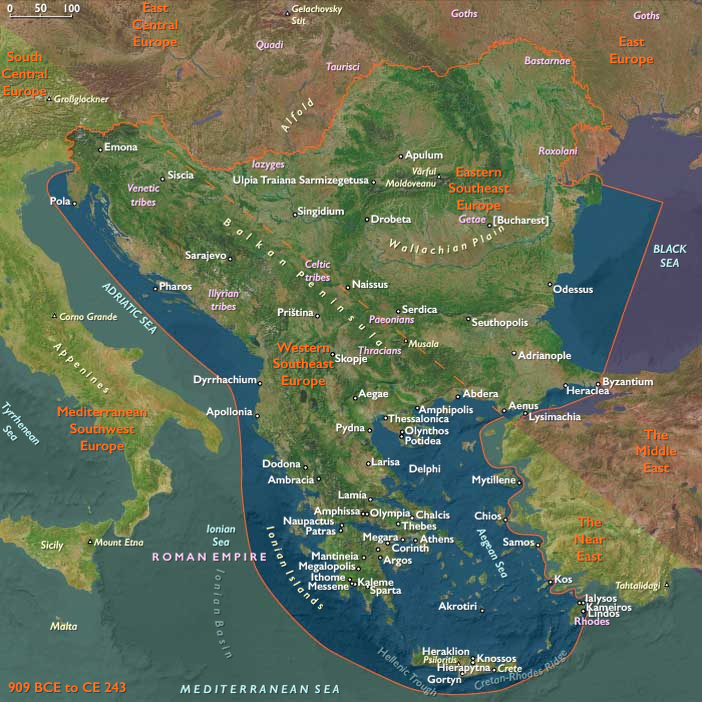
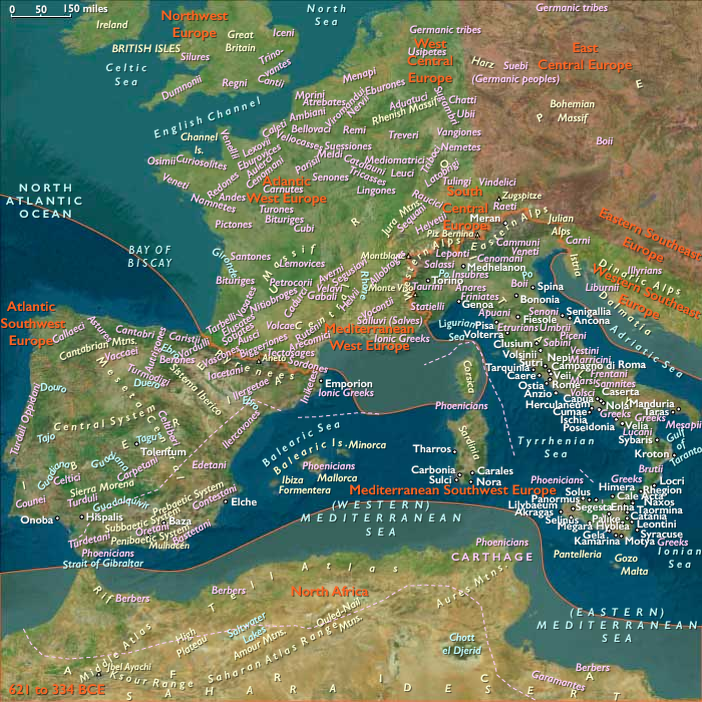
Parmenides of Elea fl. late sixth or early fifth century BCE) is a pre-Socratic Greek philosopher from Elea in Magna Graecia (meaning "Great Greece," the term which Romans give to Greek-populated coastal areas in Southern Italy).
Parmenides of Elea is in his prime about 475 BCE. His floruit is placed by Diogenes Laertius in 504-501 BCE, but he visits Athens and meets Socrates when the latter is still very young, and he himself is about sixty-five years old; so that if Socrates was about twenty, the meeting took place about 450 BCE, making Parmenides’ floruit 475 BCE.
Parmenides will be considered the founder of metaphysics or ontology and has influenced the whole history of Western philosophy.
He is the founder of the Eleatic school of philosophy, which also includes Zeno of Elea and Melissus of Samos.
Zeno's paradoxes of motion are to defend Parmenides' view.
The single known work by Parmenides is a poem, On Nature, only fragments of which survive, containing the first sustained argument in the history of philosophy.
In it, Parmenides prescribes two views of reality.
In "the way of truth" (a part of the poem), he explains how all reality is one, change is impossible, and existence is timeless, uniform, and necessary.
In "the way of opinion", Parmenides explains the world of appearances, in which one's sensory faculties lead to conceptions which are false and deceitful, yet he does offer a cosmology.
Parmenides' philosophy will be explained with the slogan "whatever is is, and what is not cannot be".
He is also credited with the phrase out of nothing nothing comes.
He argues that "A is not" can never be thought or said truthfully, and thus despite appearances everything exists as one, giant, unchanging thing.
This is generally considered one of the first digressions into the philosophical concept of being, and will be contrasted with Heraclitus's statement that "No man ever steps into the same river twice" as one of the first digressions into the philosophical concept of becoming.
Scholars will generally believe hat either Parmenides was responding to Heraclitus, or Heraclitus to Parmenides.
Alexius Meinong will hold a view similar to Parmenides, that even the "golden mountain" is real because it can be talked about.
The rivalry between Heraclitus and Parmenides will be re-introduced in discussions over the A theory and B theory of time.