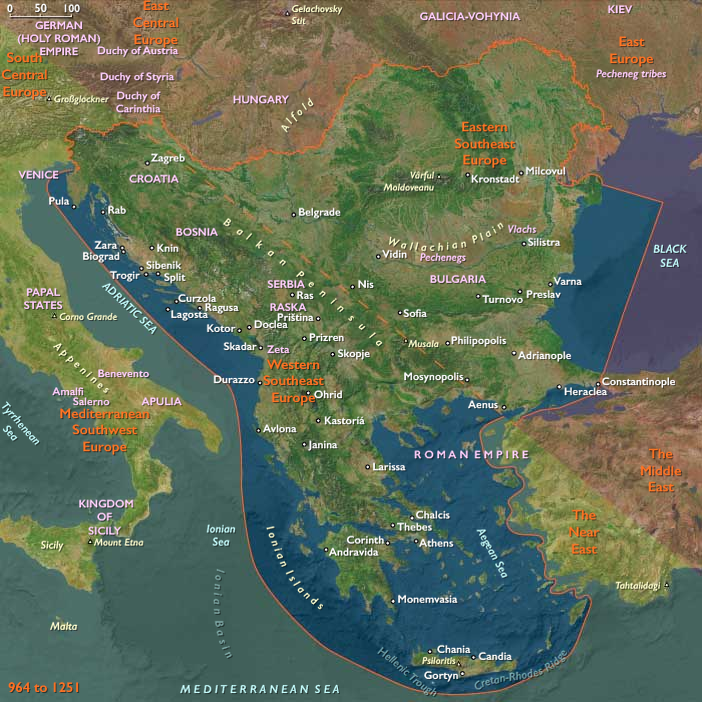
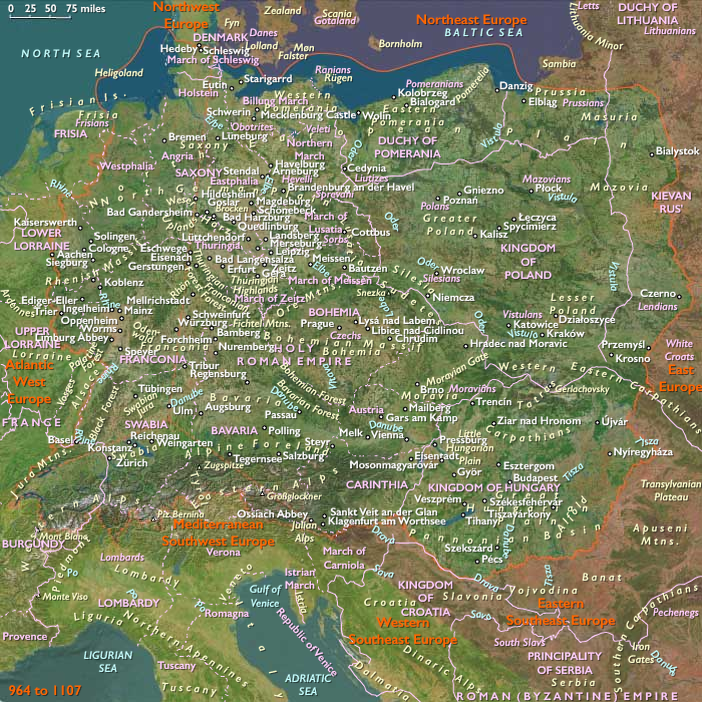
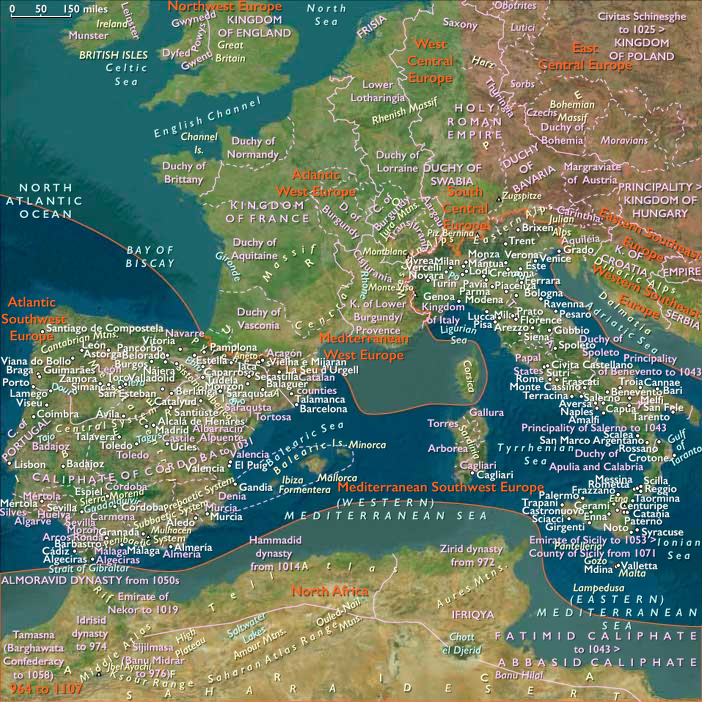
Gregory, after a failed call for a crusade to the princes of northern Europe, and after obtaining the support of other Norman princes such as Landulf VI of Benevento and Richard I of Capua, is able to excommunicate Robert in 1074 and give Gisulf considerable military aid.
In the same year, Gregory initiates his struggle to assert papal supremacy within Christian society at large by implementing a radical reform program directed at the widespread corruption in the church.
The momentum for a reform of the church had its clear beginning during the reign of the current German king’s father, Henry III, in the short but effective pontificate of Leo IX, whom Henry III had nominated.
Since that time, the reforming initiative has been carried on by men like Cardinal Bishop Humbert of Moyenmoutier and St. Peter Damian.
After the death of Cardinal Humbert, who had called for a return to the old canonical principles of free election of the papacy and the emancipation of the Church from the control of the secular power, the leadership of the reform movement had passed to younger men of whom the Tuscan monk Hildebrand, a follower of Humbert, had stood foremost.
While Henry IV adheres to papal decrees in religious matters to secure the Church's support for his expeditions in Saxony and Thuringia, Gregory VII sees the opportunity to press the Church's agenda.
He summons a council in the Lateran palace, which condemns simony and clerical concubinage.
Philip I of France, by his practice of simony and the violence of his proceedings against the Church, has provoked a threat of summary measures.
Excommunication, deposition and the interdict appear to be imminent in 1074.
Gregory, however, refrains from translating his threats into actions, although the attitude of the king shows no change, for he wishes to avoid a dispersion of his strength in the conflict soon to break out in Germany.