Otto I
Holy Roman Emperor, King of Germany, and King of Italy
Years: 912 - 973
Otto I (23 November 912 – 7 May 973), also known as Otto the Great, is the founder of the Holy Roman Empire, reigning from 936 until his death in 973.
The oldest son of Henry I the Fowler and Matilda of Ringelheim, Otto is "the first of the Germans to be called the emperor of Italy".
Otto inherits the Duchy of Saxony and the kingship of the Germans upon his father's death in 936.
He continues his father's work to unify all German tribes into a single kingdom and greatly expands the king's powers at the expense of the aristocracy.
Through strategic marriages and personal appointments, Otto installs members of his own family to the kingdom's most important duchies.
This reduceds the various dukes, who had previously been co-equals with the king, into royal subjects under his authority.
Otto transforms the Roman Catholic Church in Germany to strengthen the royal office and subjects its clergy to his personal control.
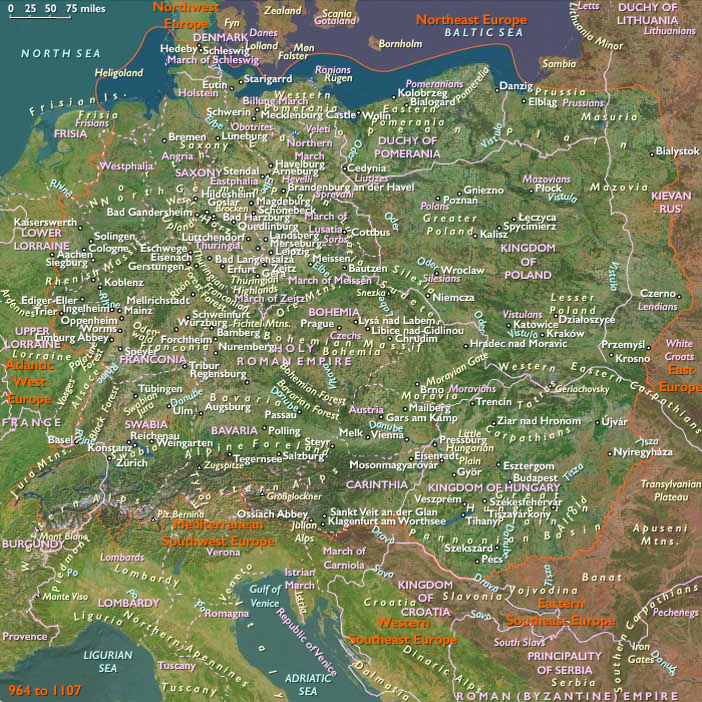
After putting down a brief civil war among the rebellious duchies, Otto defeats the Magyars in 955, thus ending the Hungarian invasions of Europe.
The victory against the pagan Magyars earns Otto the reputation as a savior of Christendom and secures his hold over the kingdom.
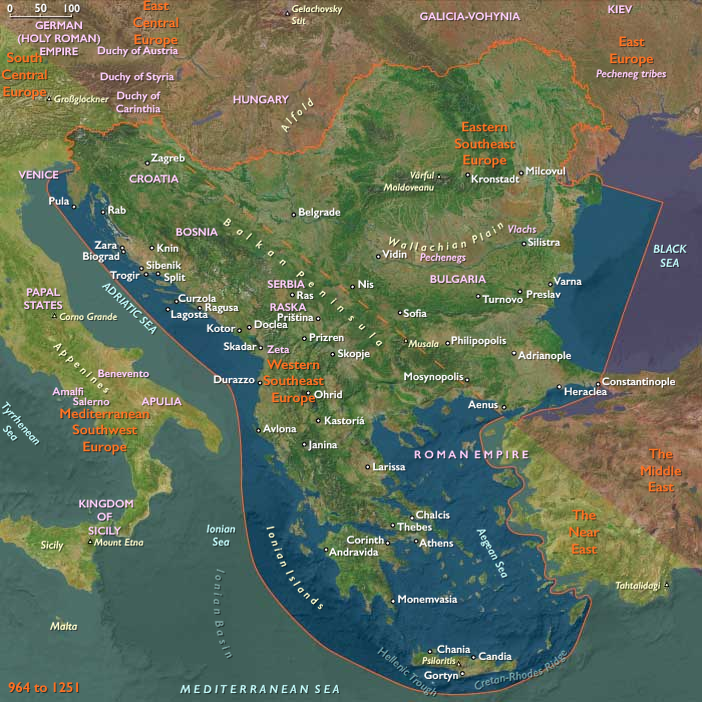
By 961, Otto has conquered the Kingdom of Italy and extended his realm's borders to the north, east, and south.
In control of much of central and southern Europe, the patronage of Otto and his immediate successors causes a limited cultural renaissance of the arts and architecture.
Following the example of Charlemagne's coronation as "Emperor of the Romans" in 800, Otto is crowned Emperor in 962 by Pope John XII in Rome.
Otto's later years are marked by conflicts with the Papacy and struggles to stabilize his rule over Italy.
Reigning from Rome, Otto seeks to improve relations with the Byzantine Empire, which opposes his claim to emperorship and his realm's further expansion to the south.
To resolve this conflict, the Byzantine princess Theophanu marries his son, Otto II, in April 972.
Otto finally returns to Germany in August 972 and dies of natural causes in 973.
Otto II succeeds him as Emperor.