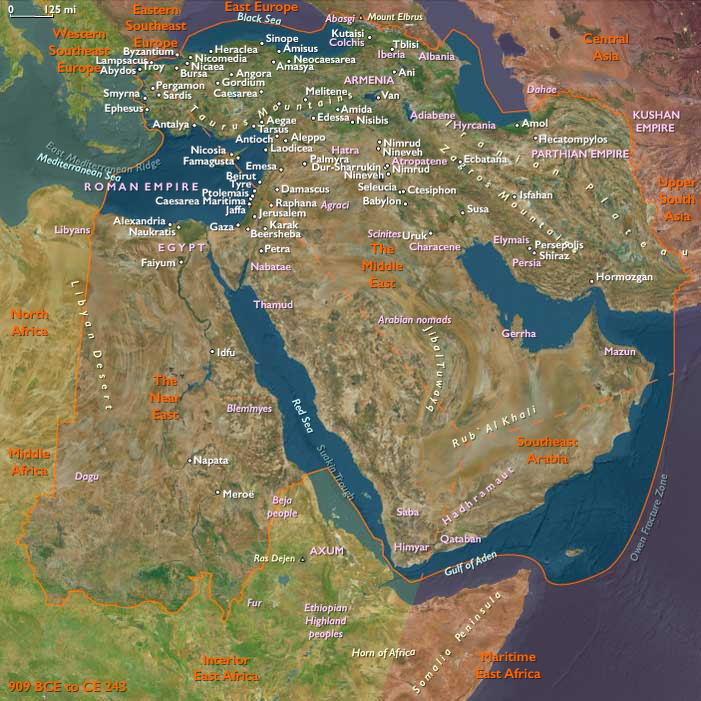
The emperor, after defeating a Parthian army in a battle where Sanatruces is killed and retaking Seleucia in 116, formally deposes the Parthian king Osroes I later in the year.
Parthamaspates, a pro-Roman son of Osroes who has spent much of his life in Roman exile, has accompanied Trajan on the latter's campaign to conquer Parthia.
Trajan had originally planned to annex Parthia as part of the Roman Empire, but ultimately decides instead to place Parthamaspates on his father's throne as a Roman client, doing so in 116.
That done, he retreats north in order to retain what he can of the new provinces of Armenia and Mesopotamia.
It is at this point that Trajan's health starts to fail him.
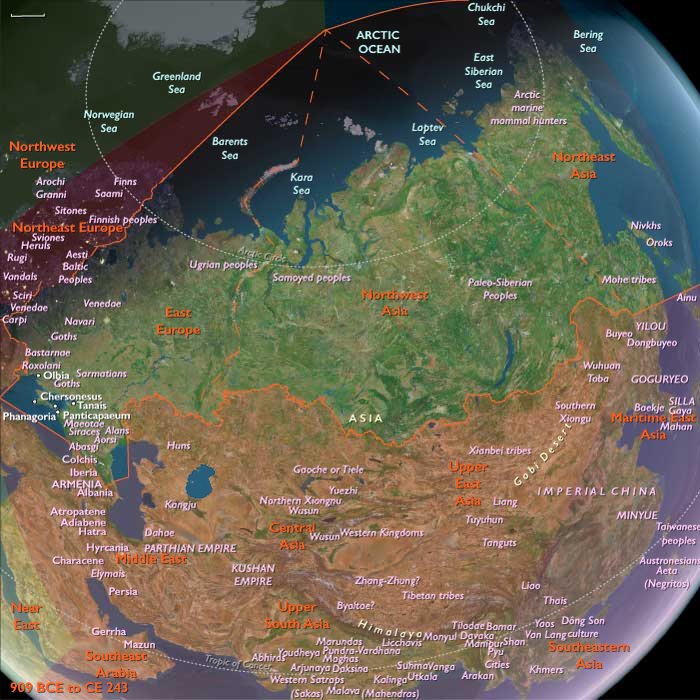
The fortress city of Hatra, on the Tigris in his rear, continues to hold out against repeated Roman assaults.
He is personally present at the siege and it is possible that he suffered a heat stroke while in the blazing heat.
Shortly afterwards, the Jews inside the Roman Empire rise up in rebellion once more, as do the people of Mesopotamia.
Trajan is forced to withdraw his army in order to put down the revolts.
Trajan sees it as simply a temporary setback, but he is destined never to command an army in the field again, turning his Eastern armies over to the high ranking legate and governor of Judaea, Lucius Quietus, who in early 116 had been in charge of the Roman division that had recovered Nisibis and Edessa from the rebels.