
Oscar Wilde
Irish poet and playwright
1854 CE to 1900 CE
Oscar Fingal O'Flahertie Wills Wilde (October 16, 1854 – November 30, 1900) is an Irish poet and playwright.
After writing in different forms throughout the 1880s, the early 1890s see him become one of the most popular playwrights in London.
He is best remembered for his epigrams and plays, his novel The Picture of Dorian Gray, and the circumstances of his criminal conviction for "gross indecency", imprisonment, and early death at age forty-six.
Wilde's parents are successful Anglo-Irish intellectuals in Dublin.
A young Wilde learned to speak fluent French and German.
At university, Wilde reads Greats; he demonstrates himself to be an exceptional classicist, first at Trinity College Dublin, then at Oxford.
He becomes associated with the emerging philosophy of aestheticism, led by two of his tutors, Walter Pater and John Ruskin.
After university, Wilde moves to London into fashionable cultural and social circles.
As a spokesman for aestheticism, he tries his hand at various literary activities: he publishes a book of poems, lectures in the United States and Canada on the new "English Renaissance in Art" and interior decoration, then returns to London where he works prolifically as a journalist.
Known for his biting wit, flamboyant dress and glittering conversational skill, Wilde becomes one of the best-known personalities of his day.
At the turn of the 1890s, he refines his ideas about the supremacy of art in a series of dialogues and essays, and incorporates themes of decadence, duplicity, and beauty into what will be his only novel, The Picture of Dorian Gray (1890).
The opportunity to construct aesthetic details precisely, and combine them with larger social themes, draws Wilde to write drama.
He writes Salome (1891) in French while in Paris but it is refused a license for England due to an absolute prohibition on the portrayal of Biblical subjects on the English stage.
Unperturbed, Wilde produces four society comedies in the early 1890s, which make him one of the most successful playwrights of late-Victorian London.
At the height of his fame and success, while The Importance of Being Earnest (1895) is still being performed in London, Wilde has the Marquess of Queensberry prosecuted for criminal libel.
The Marquess is the father of Wilde's lover, Lord Alfred Douglas.
The libel trial unearths evidence that causes Wilde to drop his charges and leads to his own arrest and trial for gross indecency with men.
After two more trials he is convicted and sentenced to two years' hard labor, the maximum penalty, and is jailed from 1895 to 1897.
During his last year in prison, he writes De Profundis (published posthumously in 1905), a long letter which discusses his spiritual journey through his trials, forming a dark counterpoint to his earlier philosophy of pleasure.
On his release, he leaves immediately for France, never to return to Ireland or Britain.
There he writes his last work, The Ballad of Reading Gaol (1898), a long poem commemorating the harsh rhythms of prison life.
World
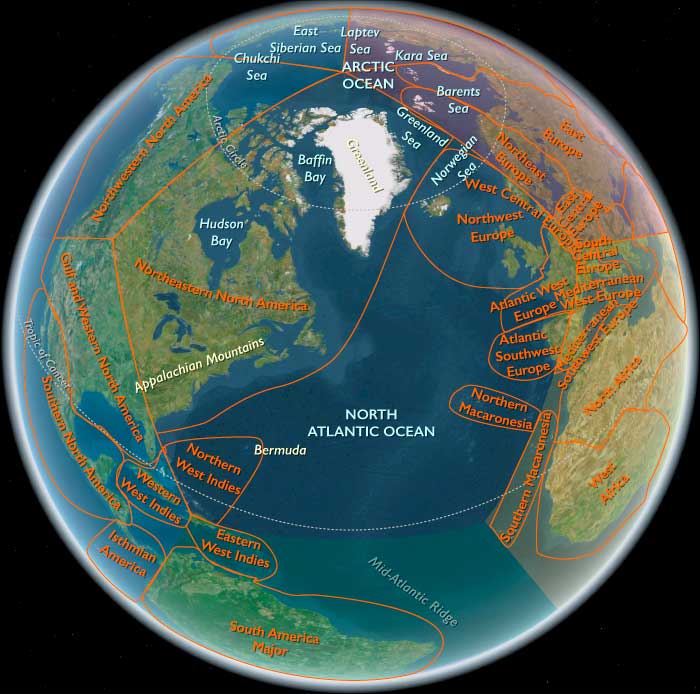
The Atlantic Lands
View →Related Events
Showing 5 events out of 5 total
Northwest Europe (1828–1971 CE)
Industrial Maturity, World Wars, and Atlantic Integration
Geography & Environmental Context
Northwest Europe includes Iceland, Ireland, the United Kingdom, western Norway, and western Denmark. Anchors include the North Sea basin, the Norwegian fjords, the Irish Sea, and the Atlantic approaches from the Channel to Iceland. Capitals such as London, Dublin, Edinburgh, Copenhagen, Oslo, and Reykjavik shaped political and cultural life, while industrial cities like Manchester, Glasgow, Belfast, and Bergen tied the region to global markets.
Climate & Environmental Shifts
The region endured a cool, wet temperate climate with pronounced variability. Iceland faced volcanic eruptions (e.g., Askja 1875) and glacial flooding, while Ireland suffered devastating crop failures in the 1840s during the Great Famine. North Sea storm surges threatened Danish and English coasts (notably 1953’s catastrophic flood). Fisheries fluctuated with changes in North Atlantic stocks, while hydroelectric development in Norway harnessed glacial rivers for modern energy.
Subsistence & Settlement
-
Ireland: The Great Famine (1845–1852), caused by potato blight, killed over a million and drove mass emigration. Afterwards, agriculture reoriented toward cattle and dairy for export to Britain.
-
Britain: The Agricultural Revolution matured; estates and tenant farming fed growing cities. Enclosure and mechanization intensified productivity.
-
Norway & Denmark: Small farms and fisheries combined with forestry; by the 20th century, dairying and cooperative movements modernized rural economies.
-
Iceland: Sheep, fishing, and later mechanized trawlers sustained settlement; urbanization gathered around Reykjavik.
Urbanization accelerated: Britain’s industrial cities boomed, Dublin and Belfast industrialized unevenly, Copenhagen became a northern hub, and Oslo grew as Norway’s capital after independence (1905).
Technology & Material Culture
-
Industry: Britain pioneered steam power, coal mining, iron and steel, and later textiles, shipbuilding, and railways. By the 20th century, heavy industry dominated Belfast, Glasgow, and the English Midlands.
-
Transport: Railways knit Britain and Ireland in the 19th century; steamships shrank Atlantic distances. By the mid-20th century, motorways and civil aviation transformed mobility.
-
Energy: Coal underpinned industry until the mid-20th century; Norway’s hydroelectric resources powered industry. Denmark mechanized agriculture and later pioneered wind technology.
-
Everyday life: Workers’ housing, printed newspapers, gramophones, radios, and later televisions reshaped material culture.
Movement & Interaction Corridors
-
Emigration: Millions left Ireland, Scotland, and Scandinavia for North America in the 19th century, reshaping Atlantic diasporas.
-
Imperial routes: Britain commanded vast maritime networks linking Northwest Europe to India, Africa, and the Pacific.
-
Fisheries & shipping: Cod and herring fleets from Iceland, Norway, and Scotland supplied Europe. North Sea ports (Liverpool, Bergen, Copenhagen) became gateways for trade and migration.
-
Wars: The North Sea and Atlantic were battlegrounds during the First and Second World Wars, with U-boat campaigns devastating shipping. Air bases in Iceland and Britain became strategic nodes.
-
Postwar integration: NATO bases, Marshall Plan aid, and later the EEC (Denmark 1973) tied the region tightly into Western Europe and the United States.
Cultural & Symbolic Expressions
-
Britain & Ireland: The Victorian era produced literature (Dickens, Brontë, Yeats), Romantic poetry, and later modernist innovation (Joyce, Woolf). The Industrial Revolution fueled class consciousness, expressed in labor movements and socialist parties.
-
Norway & Denmark: National romanticism flourished in art and music (Grieg, Ibsen, Kierkegaard). Cooperative movements and Lutheran traditions shaped civic life.
-
Iceland: Preserved sagas and oral traditions; nationalist poetry underpinned independence (achieved 1944).
-
Mass culture: Football, music halls, cinema, and later pop culture (the Beatles, British Invasion) projected regional influence worldwide.
Environmental Adaptation & Resilience
-
Agriculture: Shifts from subsistence to market-oriented systems, supported by cooperatives in Denmark and state subsidies in Britain and Norway.
-
Fisheries: Mechanized trawlers and state quotas modernized fishing; conflicts like the Cod Wars (Iceland vs. Britain, 1958–1976) reflected changing resource management.
-
Urban resilience: After WWII bombing, cities like London, Coventry, and Belfast rebuilt with modern planning. Flood defenses were expanded after the 1953 surge.
-
Social safety nets: Welfare reforms (Britain’s post-1945 system, Scandinavian social democracy) provided resilience against poverty and economic shocks.
Transition
Between 1828 and 1971, Northwest Europe evolved from a rural, maritime frontier into an industrial and geopolitical core. Britain drove global industrialization, but also suffered famine, emigration, and urban upheaval. Ireland endured catastrophe and revolution, moving toward independence (1922). Norway and Iceland emerged from Danish control into independence (1905, 1944), while Denmark rebuilt as a modern agricultural and industrial power. Two world wars and Cold War alignments made the North Atlantic a strategic corridor. By 1971, the region was a hub of welfare states, NATO defenses, and cultural exports, firmly tied into Western Europe’s integration and the Atlantic alliance.
Northwest Europe (1888–1899): Late Victorian Britain, Imperial Strains, and Political Transformations
Imperial Strength and Victorian Symbolism
Between 1888 and 1899, Britain continued as a leading global power, its imperial influence and cultural prestige underscored by Queen Victoria’s symbolic stature. Though politically passive, Victoria remained the emblem of British stability, domestic virtue, and imperial dignity. Yet, beneath this confident façade, Britain faced intensifying political, economic, and social tensions, marking the slow end of the unchallenged Victorian era.
Political Realignment: The Liberal Split and Rise of Conservative Dominance
Britain’s political landscape shifted dramatically following Prime Minister William Ewart Gladstone’s commitment to Irish Home Rule. Historically, Britain’s aristocracy had been politically divided between the Conservative and Liberal parties. However, Gladstone’s embrace of Home Rule caused many aristocrats and upper-class voters to abandon the Liberals, resulting in a permanent Conservative majority in the House of Lords. London's high society, following Queen Victoria’s personal disdain for Home Rule, ostracized prominent Home Rulers, further marginalizing the Liberal party socially.
A key event in this realignment occurred when influential Liberal Joseph Chamberlain broke decisively with Gladstone over Home Rule, taking with him a substantial faction of upper-class Liberal supporters. This group formed the Liberal Unionist Party, aligning closely with the Conservatives, and ultimately merging with them. This shift ensured long-term Conservative dominance, relegating Liberals to political opposition for much of the following two decades.
Gladstonian Liberals and The Newcastle Programme
In response, the remaining Gladstonian Liberals adopted the ambitious Newcastle Programme in 1891, proposing extensive reforms including:
-
Home Rule for Ireland
-
Disestablishment of the Church of England in Wales and Scotland
-
Stricter liquor regulations
-
Extensive factory reform
-
Significant democratic political reforms
The Programme resonated powerfully with middle-class Nonconformist Liberals who felt newly liberated from the dominance of aristocratic influence, reshaping the Liberal party’s social and political foundations.
The Boer War and Imperial Tensions in South Africa
Simultaneously, Britain faced rising imperial tensions in South Africa. British control of the region, established after the Napoleonic Wars, had continuously provoked resistance from Dutch-speaking settlers, or "Boers" (Afrikaners). The Boers established two independent republics—the Transvaal and the Orange Free State—resisting British attempts to assert greater control.
By the late 1890s, the British government, influenced significantly by cabinet minister Joseph Chamberlain, protested against discriminatory policies enacted by Boer leader Paul Kruger in the Transvaal Republic. Historian Andrew Roberts later described Kruger’s administration as oppressive, labeling it a "quasi-police state," noting it refused political rights to nonwhites, Catholics, Jews, and British "Uitlanders" who provided eighty percent of the republic's tax revenues. Despite a population of over fifty thousand British residents, Johannesburg was denied local governance, the English language was banned in official matters, public meetings were outlawed, newspapers censored, and citizenship strictly controlled.
Chamberlain highlighted Uitlander grievances, intensifying tensions. In response to escalating British pressure, the Boers declared war on October 20, 1899, beginning the Second Boer War (1899–1902). Despite numbering only 410,000, the Boer fighters employed effective guerrilla tactics against Britain’s larger and better-equipped forces. Ultimately, overwhelming British numbers, superior equipment, and often harsh military strategies secured a costly British victory, but at significant financial, human, and reputational cost, foreshadowing future imperial challenges.
Rising German Ambitions and Diplomatic Strains
On the broader international stage, the rise of a unified Germany after 1871 increasingly challenged British dominance. Initially, Chancellor Otto von Bismarck’s diplomatic strategy had maintained a peaceful European balance of power. However, after Kaiser William II ascended the German throne in 1888, he dismissed Bismarck, embracing aggressive rhetoric and a naval buildup explicitly designed to rival Britain’s global naval supremacy.
Germany’s expanding industrial strength threatened Britain's traditional industrial and commercial dominance, creating anxiety within Britain’s political and business communities. Germany's ambitions in Africa and the Pacific exacerbated imperial rivalries, gradually leading Britain toward diplomatic isolation and ultimately prompting reconsideration of its long-held policy of "splendid isolation."
Arts, Crafts, and the Cultural Legacy of William Morris
Culturally, Britain witnessed the transformative influence of the Arts and Crafts Movement, led by the influential designer, poet, and early socialist William Morris. Morris’s designs for furniture, fabrics, stained glass, wallpapers, and decorative arts revolutionized Victorian aesthetics, championing craftsmanship, simplicity, and beauty in reaction to industrial mass-production. Morris’s philosophy profoundly reshaped Victorian tastes and contributed to broader cultural shifts toward simpler, more naturalistic designs.
Late Victorian Society: Gender, Fashion, and the “New Woman”
Socially, Britain continued grappling with shifting gender roles. The emergence of the "New Woman" challenged traditional Victorian notions, advocating increased educational opportunities, economic independence, and eventually suffrage for women. Although mainstream fashion continued to favor restrictive corseting, the uncorseted styles promoted by the Aesthetic Movement and other progressive groups gradually influenced broader perceptions of women's autonomy.
Technological Innovation and Industrial Competition
Britain maintained global leadership in industries such as shipbuilding, finance, and communications. The telegraph and rail systems continued facilitating international trade, but Britain faced mounting industrial competition from Germany and the United States, increasingly challenging its industrial supremacy. Economic pressures from the continuing Long Depression period intensified these competitive anxieties.
Lord Salisbury and Gladstone’s Final Years
Politically, Britain’s leadership transitioned between two dominant figures in this era. Conservative Lord Salisbury, characterized by his full beard and patrician bearing, served as Prime Minister multiple times (briefly until January 1886, again from November 1886 to 1892, and once more starting in 1895), offering stable but cautious leadership through a turbulent era.
In contrast, Liberal icon William Ewart Gladstone, known for his sparse beard and charismatic moral leadership, served his fourth and final ministry between 1892 and 1894, attempting once again to pass Irish Home Rule before retiring due to age. Gladstone died in 1898, symbolizing the passing of an era of dynamic, moral-driven reformism in British politics.
Military Reforms and Lingering Challenges
Despite earlier reforms by Gladstone’s War Secretary, Edward Cardwell, the British Army remained plagued by organizational inefficiencies and outdated practices, exposed painfully during the Boer War. The army's voluntary nature, though admired domestically, proved challenging when confronting sustained guerrilla tactics overseas. These weaknesses highlighted critical military vulnerabilities Britain would later need to address.
Scandinavian Stability and Icelandic Nationalism
Scandinavia continued enjoying internal stability. Norway further solidified its distinct national identity within the union with Sweden, setting the stage for later independence movements. Denmark focused inwardly, consolidating after earlier territorial losses.
In Iceland, nationalist sentiments deepened, building on the earlier intellectual and political legacy of nationalist figure Jón Sigurðsson, laying the groundwork for greater autonomy.
Leisure, Tourism, and Victorian Culture
Middle-class leisure expanded steadily, driven by improved transport and rising incomes. Tourism, popularized by entrepreneurs such as Thomas Cook, broadened significantly, facilitating increased international and domestic travel. Literary culture remained vibrant, represented by figures like Oscar Wilde, Arthur Conan Doyle, and Rudyard Kipling, whose works examined social anxieties, imperial tensions, and shifting cultural norms. Wilde’s dramatic 1895 trial, in particular, illustrated tensions within traditional Victorian morality, marking broader cultural transformations at century’s end.
Conclusion: Imperial Confidence, Domestic Strains, and Emerging Modernity
From 1888 to 1899, Britain’s imperial dominance persisted, but underlying domestic and international tensions became increasingly pronounced. Political realignment driven by the Irish Home Rule crisis, challenges posed by the Boer War, rising German ambitions, shifting gender roles, and economic competition from emerging industrial powers defined this critical era. Simultaneously, cultural shifts epitomized by William Morris’s influential designs, rising feminist consciousness, and vibrant literary expressions signaled transformative changes.
This period marked the final years of confident Victorian dominance, revealing strains that would profoundly reshape Britain and Northwest Europe as they entered the twentieth century.
James McNeill Whistler has returned from Venice and become a great figure in London life, seeking publicity and winning points against Oscar Wilde in controversy.
In 1888 he marries Beatrix Godwin; he and his bride spend will much time in Paris on the Left Bank.
Whistler had joined the Society of British Artists in 1884, and on June 1, 1886, he was elected president.
The following year, during Queen Victoria's Golden Jubilee, Whistler had presented to the Queen, on the Society's behalf, an elaborate album including a lengthy written address and illustrations that he had made.
Queen Victoria so admired "the beautiful and artistic illumination" that she decreed henceforth, "that the Society should be called Royal."
This achievement was widely appreciated by the members, but soon it was overshadowed by the dispute that inevitably arose with the Royal Academy of Arts.
Whistler proposed that members of the Royal Society should withdraw from the Royal Academy.
This had ignited a feud within the membership ranks that hs overshadowed all other society business.
In May 1888, nine members writes to Whistler to demand his resignation.
At the annual meeting on June 4, he is defeated for reelection by a vote of 18–19, with nine abstentions.
Whistler and twenty-five supporters resign, while the anti-Whistler majority (in his view) is successful in purging him for his "eccentricities" and "non-English" background.
With his relationship with Maud unraveling, Whistler suddenly proposes to and marries Beatrice Godwin (also called 'Beatrix' or 'Trixie'), a former pupil and the widow of his architect Edward William Godwin.
Through his friendship with Godwin, Whistler had become close to Beatrice, whom Whistler had painted in the full-length portrait titled Harmony in Red: Lamplight .
By the summer of 1888 Whistler and Beatrice appear in public as a couple.
At a dinner Louise Jopling and Henry Labouchère insist that they should be married before the end of the week.
The marriage ceremony is arranged; as a member of parliament, Labouchère arranges for the Chaplain to the House of Commons to marry the couple.
No publicity is given to the ceremony to avoid the possibility of a furious Maud Franklin interrupting the marriage ceremony.
The marriage takes place on August 11, 1888, with the ceremony attended by a reporter from the Pall Mall Gazette, so that the event receives publicity.
The couple leave soon after for Paris, to avoid any risk of a scene with Maud.
Oscar Wilde epitomizes the English Decadent movement in The Picture of Dorian Gray.
Fearing the story is indecent, the magazine's editor had deleted roughly five hundred words before publication without Wilde's knowledge
Despite this censorship, The Picture of Dorian Gray offends the moral sensibilities of British book reviewers, some of whom will say that Oscar Wilde merits prosecution for violating the laws guarding public morality.
In response, Wilde will aggressively defend his novel and art in correspondence with the British press, although he will personally make excisions of some of the most controversial material when revising and lengthening the story for book publication the following year.