The Middle East: 81–70 BCE
The Third Mithridatic War and the Rise of Parthia
Between 81 and 70 BCE, significant geopolitical shifts occur in the Middle East as Rome consolidates its dominance in the region and Parthia emerges as a significant power.
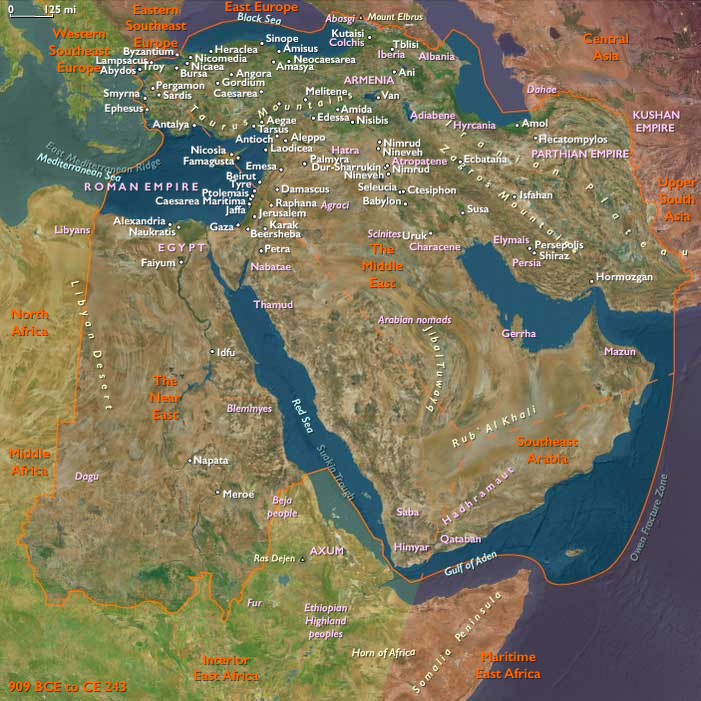
Peace is initially restored between Pontus and Rome on the orders of Lucius Cornelius Sulla, ending the Second Mithridatic War. However, stability proves fleeting, and the Third Mithridatic War (73–63 BCE) soon erupts as the last and most prolonged conflict between Mithridates VI of Pontus and his allies against the Roman Republic. The alliance formed between Mithridates VI and Quintus Sertorius, leader of the anti-Sullan faction, creates a formidable coalition capable of threatening Roman supremacy in the region.
The immediate catalyst for this war is the bequest to Rome by King Nicomedes IV of Bithynia upon his death in 74 BCE, leaving his kingdom to the Roman Republic. Exploiting the simultaneous revolt of Sertorius in Spain, Mithridates launches an offensive in Asia Minor, initially encountering minimal resistance. The Roman Senate responds by dispatching the consuls Lucius Licinius Lucullus and Marcus Aurelius Cotta. While Lucullus governs Cilicia, Cotta is assigned to Bithynia. With Rome's attention divided and its forces stretched thin—Pompey, Rome’s preeminent general, occupied in Gaul and Spain suppressing the Sertorian rebellion—Mithridates finds an opening for early successes.
Meanwhile, in Mesopotamia, the city of Hatra emerges as a significant commercial and religious center. Located strategically sixty-eight miles southwest of modern Mosul, Iraq, Hatra gains prominence as the capital of Araba, a semi-autonomous state under increasing Parthian influence, benefiting from its location along critical caravan trade routes.
In Parthia, the historical record during this period is fragmented, though the reign of King Orodes ends amidst internal strife. The subsequent succession is initially obscure until the ascent of Sanatruces around 77 BCE, stabilizing the Arsacid dynasty. The only direct reference to Orodes as king of kings is found in a Babylonian account of a lunar eclipse dated to April 11, 80 BCE.
Thus, this period, from 81 to 70 BCE, sees the continuing struggle for dominance between Rome and Pontus, the strengthening of Parthian influence in Mesopotamia, and the rise of critical regional centers such as Hatra, shaping the geopolitical landscape for future centuries.