Ordoño I, King of Asturias
King of Asturias
Years: 821 - 866
Ordoño I (c. 821 – 27 May 866) is King of Asturias from 850 until his death. He was born in Oviedo, where he spent his early life in the court of Alfonso II. He was probably raised in Lugo, capital of the province of Galicia, where his father, Ramiro I, had been named governor.

Related Events
Filter results
Showing 10 events out of 18 total
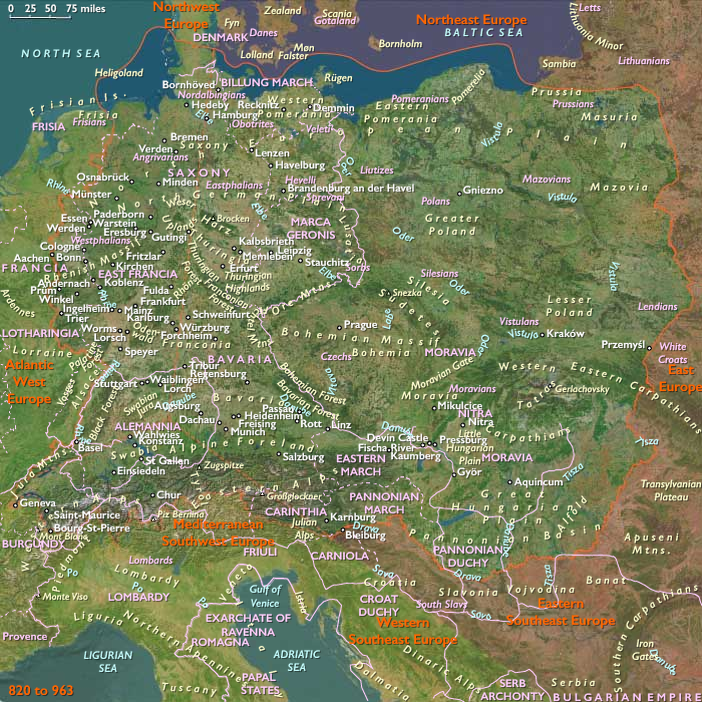
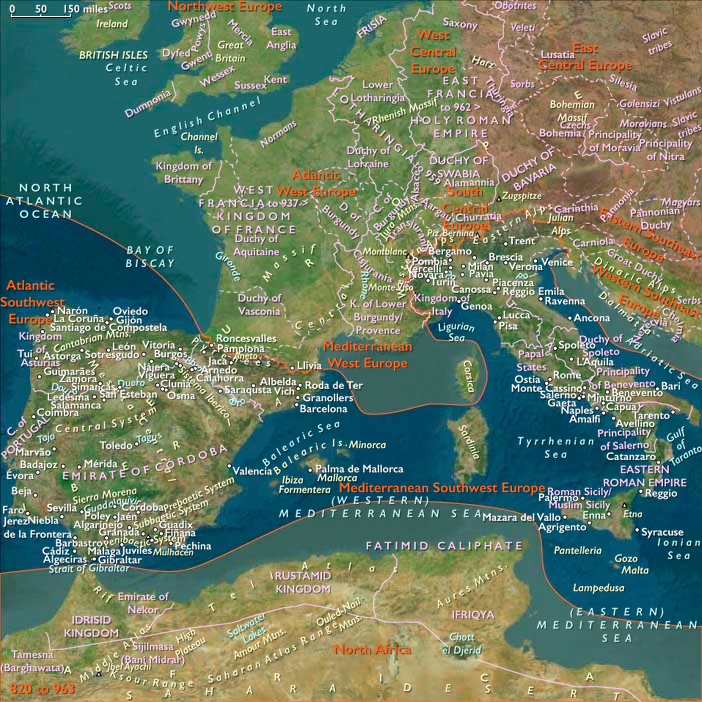
Atlantic Southwest Europe (820 – 963 CE): Asturias–León Frontiers, Portucale Marches, and the Atlantic Pilgrim Sea
Geographic and Environmental Context
Atlantic Southwest Europe includes northern Spain and central to northern Portugal, including Lisbon.
-
Core landscapes: the Cantabrian and Galician coasts, the Minho–Douro and upper Mondego basins, the Asturian and Galician ranges, and the inland plateaus feeding the Duero.
-
Urban nodes and strongholds: Oviedo, León, Burgos (founded 884), Porto (reoccupied 868), Braga, Coimbra (taken 878; frontier thereafter), and Lisbon (an al-Andalus port within the subregion’s southern rim).
-
The Bay of Biscay and Atlantic river mouths tied interior cereals and stock to maritime routes toward Aquitaine, Brittany, and the English Channel.
Climate and Environmental Shifts
-
A cool–temperate maritime regime with high rainfall along the Cantabrian–Galician arc supported oak–chestnut woodlands, pastures, and vines.
-
Toward the mid-10th century, the onset of the Medieval Warm Period modestly lengthened growing seasons, aiding vineyards on sunny slopes and transhumant meadows inland.
-
River floods on the Minho and Douro enriched lowland fields but dictated transport calendars.
Societies and Political Developments
-
Asturias → León: Under Alfonso II (791–842), Ramiro I (842–850), Ordoño I (850–866), and Alfonso III (866–910), the Asturian monarchy expanded east and south, founding and refortifying castillos along the Duero. In 910, the court shifted to León, inaugurating the Kingdom of León.
-
Piaculine Marches & Castile: The County of Castile coalesced on the eastern Duero marches; by the 930s–950s Fernán González consolidated comital autonomy, anchoring new fort lines from Burgos into the upper Ebro.
-
Galicia: Integrated within León, with powerful monasteries and magnates shaping the Atlantic façade.
-
Kingdom of Pamplona (Navarre) and the County of Barcelona (just beyond the subregion) influenced cross-Pyrenean diplomacy and trade that reached these Atlantic provinces.
-
Portucale (County of Porto): Vímara Peres reoccupied Porto (868), initiating repopulation (repoblación) between Minho–Douro; Coimbra fell to León (878), then remained a vulnerable march.
-
Lisbon: Within our geographic frame but under Umayyad (and after 929, Córdoban caliphal) rule—an Islamic entrepôt facing the Tagus estuary and Atlantic lanes.
Economy and Trade
-
Agrarian base: rye, wheat, barley, and millets on the plateaus; vineyards on south-facing terraces; chestnut and oak mast feeding swine; dairying in Atlantic hills.
-
Stock & salt: coastal saltworks (Aveiro, Vigo rías) and river fisheries provisioned towns and monasteries; wool and hides moved inland–coast.
-
Maritime exchange: cabotage from Gijón, A Coruña, Porto, and the Tagus linked to Bordeaux, Bayonne, Nantes, and Rouen; Lisbon’s Andalusi merchants connected Atlantic traffic to Córdoba and Seville.
-
Pilgrim economy: after the discovery of St. James’ relics at Compostela (c. 820, in Alfonso II’s time), a nascent Camino network drew pilgrims, alms, and artisans across the Pyrenees, stimulating markets from Oviedo to Santiago.
Subsistence and Technology
-
Heavy plow and ard mixed use: heavier soils of the Duero loess took the carruca where teams and seigneurial fields existed; lighter tools persisted in hill farms.
-
Water-mills multiplied on Atlantic streams; terracing and dry-stone retaining walls expanded vine and horti-culture.
-
Shipcraft: clinker-built coasters and river barges served bays and estuaries; riverine craft moved grain and timber down the Minho and Douro.
Movement and Interaction Corridors
-
Cantabrian coastal road (the later Camino del Norte) and emerging Camino spurs toward Santiago de Compostela funneled people and goods.
-
Duero line of fortresses and bridge-fords structured inland resettlement and tolling.
-
Atlantic lanes linked Porto–Lisbon with Aquitaine and Brittany; overland links ran through Astorga–León–Burgos toward the Ebro and Pyrenees.
Belief and Symbolism
-
Latin Christianity structured kingship and repopulation: churches and monasteries (e.g., Celanova, Samos) endowed with lands and tolls; charters (cartas pueblas) framed settlement rights.
-
The cult of Santiago transformed Galicia into a pan-European sacred destination; reliquaries, way-crosses, and hospitalia marked routes.
-
In Lisbon and Islamic marches: mosques, qāḍī courts, and Arabic chancery served Andalusi authority; Mozarab Christians preserved Latin rite under Islamic law.
Adaptation and Resilience
-
Frontier layering—fortified ridges, river crossings, and monastic estates—absorbed raids and stabilized repopulation.
-
Mixed agro-pastoral portfolios (grain + vines + chestnut + stock + fisheries) buffered climate variability.
-
Route redundancy (coastal Camino, interior Duero tracks, sea lanes) kept exchange flowing despite warfare.
Long-Term Significance
By 963 CE, Atlantic Southwest Europe had become a two-frontier commonwealth:
-
A Christian Asturias–León heartland pushing fort lines to the Duero with Castile and Portucale as dynamic marches, energized by the Compostela cult;
-
An Andalusi Lisbon–Tagus outpost knitting the Atlantic to Córdoba.
These institutions—marcher lordship, monastic landholding, and Atlantic pilgrimage/trade—forged the economic and sacred geographies that would power the great expansions of the later 10th–11th centuries.
Atlantic Southwest Europe (844–855 CE): Ramiro I's Stabilization, Viking Raids, and Emergence of the Basques
Between 844 and 855 CE, Atlantic Southwest Europe—encompassing Galicia, northern and central Portugal, Asturias, Cantabria, and northern Spain south of the Franco-Spanish border (43.05548° N, 1.22924° W)—underwent significant challenges and transitions. The Asturian kingdom, under King Ramiro I (842–850 CE) and his successor Ordoño I (850–866 CE), solidified its political and territorial foundations despite external pressures from Viking raiders and Islamic incursions. This era also marks the clearer emergence of the Basques, evolving from the earlier Roman-era Vascones, who began consolidating a distinctly medieval Basque identity around the nascent Kingdom of Pamplona.
Political and Military Developments
Stabilization under Ramiro I and Succession of Ordoño I
King Ramiro I effectively solidified internal unity and reinforced royal authority, successfully suppressing internal aristocratic revolts and maintaining stable regional alliances. His reign marked increased centralization and effective border defenses, particularly against raids from Islamic al-Andalus.
Upon Ramiro’s death in 850 CE, his son Ordoño I smoothly assumed power, swiftly consolidating authority, expanding Asturian influence into the frontier buffer region along the Duero, and further strengthening defenses against external threats.
Viking Incursions and Regional Defense (844 CE)
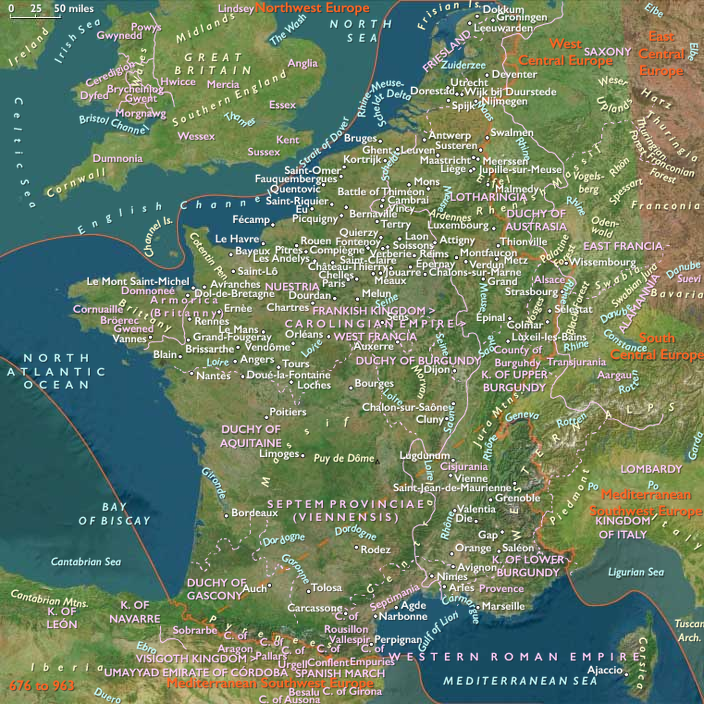
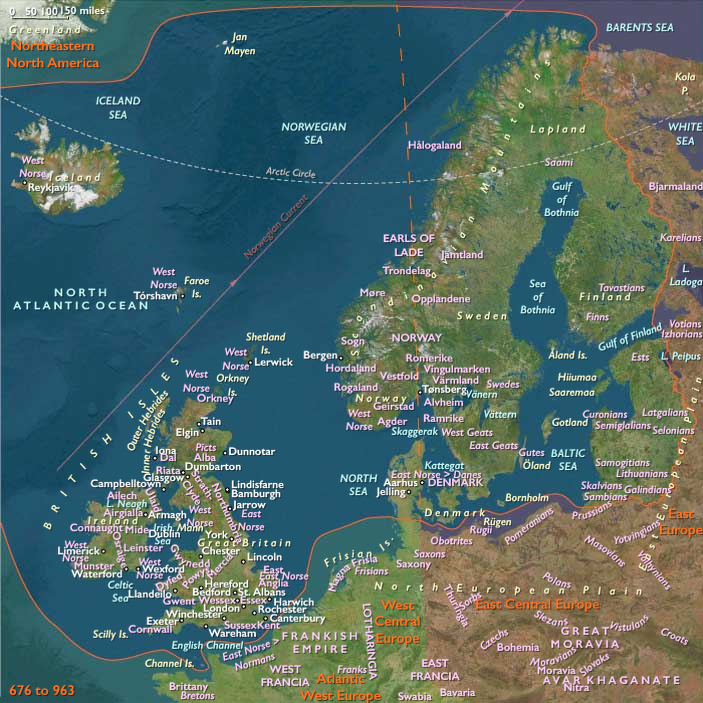
This period witnessed the unprecedented threat of Viking raids. In 844 CE, a Viking fleet attacked coastal settlements, notably sacking and briefly occupying coastal towns such as Bracara Augusta (Braga) and areas along northern Portugal and Galicia. These raids tested regional resilience, prompting Asturian rulers to improve coastal and river defenses and fortify inland settlements.
Emergence of the Basque Identity and Kingdom of Pamplona
During this era, the historical Vascones, traditionally independent and politically neutral, clearly transitioned toward a recognizable medieval Basque identity. Around 824 CE, the establishment of the Kingdom of Pamplona began, but it was in the mid-9th century—particularly between 844 and 855 CE—that Basque political identity fully solidified. The Basques now actively participated as independent political actors in broader Iberian dynamics, decisively shaping their historical trajectory.
Economic Developments
Resilient Regional Economies Amid External Threats
Despite Viking disruptions, regional economies remained resilient, with villa-based agricultural production (grain, olives, vineyards), livestock husbandry, artisanal manufacturing, and mining (particularly silver and gold extraction in Galicia and Asturias) continuing robustly. Economic activity rebounded quickly after disruptions, demonstrating the region’s underlying stability.
Continued Maritime and Regional Trade Recovery
Although maritime commerce temporarily suffered due to Viking incursions, towns like Braga and smaller ports along Galicia and northern Portugal swiftly resumed trade activities. These commercial networks proved resilient, maintaining critical economic links to broader Atlantic and Mediterranean markets.
Cultural and Religious Developments
Sustained Growth of Santiago de Compostela
Despite regional disruptions, Santiago de Compostela maintained its significance as a major pilgrimage center, drawing increasing numbers of pilgrims. The town’s growing religious prestige continued to profoundly shape regional identity, cultural unity, and economic prosperity, further embedding Santiago’s pilgrimage into the medieval fabric of northern Iberia.
Enhanced Ecclesiastical Authority and Social Cohesion
Bishoprics—especially Braga, Lugo, Asturica Augusta, and Santiago de Compostela—remained pivotal institutions, effectively responding to regional crises by providing moral authority, community organization, and welfare services. Their active role bolstered community cohesion, strengthened regional stability, and deepened orthodox Christianity’s social influence.
Monastic Vitality and Cultural Preservation
Monasteries continued to thrive despite external pressures, serving as centers of learning, manuscript preservation, education, agricultural innovation, and social welfare. Their resilience significantly contributed to maintaining cultural continuity and regional identity amid external threats.
Enduring Cultural Syncretism
The integration of orthodox Christianity with indigenous Celtic and Iberian traditions persisted robustly, especially in rural Galicia, Asturias, and northern Portugal. These traditions continued to reinforce regional identity and unity, providing resilience against disruptions.
Civic Identity and Governance
Consolidated Royal and Ecclesiastical Structures
Under Ramiro I and Ordoño I, Asturian governance solidified further, clearly integrating royal and ecclesiastical authority. Civic identity remained centered on the Asturian monarchy, regional bishoprics, and pilgrimage traditions of Santiago de Compostela, reinforcing Asturias as the symbolic heartland of Christian resistance in Iberia.
Basque Identity Formation
Simultaneously, the Basques emerged decisively as a distinct people, transitioning from the earlier Vascones and actively forming their own governance structures under the early Kingdom of Pamplona. Their clearer political identity significantly influenced broader regional dynamics from this era onward.
Notable Tribal Groups and Settlements
-
Astures and Cantabri: Continued to provide political stability, military strength, and core identity to the Asturian kingdom.
-
Galicians and Lusitanians: Retained resilient local governance, economic prosperity, and cultural autonomy, pragmatically cooperating with Asturian royal authority.
-
Basques (formerly Vascones): Now emerged explicitly as the Basque people, clearly defined by a distinct cultural, linguistic (Euskara), and political identity centered around Pamplona.
Long-Term Significance and Legacy
Between 844 and 855 CE, Atlantic Southwest Europe:
-
Maintained political stability and successfully adapted to new external threats, particularly Viking incursions, reinforcing regional resilience and defensive capabilities.
-
Witnessed the emergence of the Basques as distinct political and cultural actors, significantly shaping subsequent regional history.
-
Further entrenched Santiago de Compostela’s role as a major pilgrimage destination, significantly shaping medieval Iberian cultural and religious identity.
This pivotal era reinforced the political, cultural, and economic foundations of Atlantic Southwest Europe, significantly influencing its subsequent medieval historical trajectory.
Ramiro I’s Failed Repopulation of León and the Muslim Counterattack (846 CE)
While King Ramiro I of Asturias seeks to repopulate León, his most significant military confrontation with the Muslim emirates of Iberia proves unsuccessful.
At the same time, Emir Abd ar-Rahman II of Córdoba is occupied with other pressing threats, including:
- Viking invasions, which had reached Lisbon and Seville, and
- Internal rebellions, particularly those led by Musa ibn Musa of the Banu Qasi family, a powerful Muladi(Muslim of Iberian descent) ruler in the Ebro Valley.
Seizing the opportunity, Ramiro resettles León, attempting to reclaim and secure an area that had been left largely uninhabited for nearly a century.
The Desert of the Duero and the Christian-Muslim Frontier
During the reign of Alfonso I of Asturias (739–757), Christian forces had successfully retaken Galicia, La Rioja, and León through a series of military campaigns. However, rather than holding these lands, they had evacuated much of the population to the north, leaving a vast, largely uninhabited buffer zone between Christian Asturias and Muslim Al-Andalus, known as the Desert of the Duero.
For nearly a century, this depopulated region had served as a natural barrier, discouraging large-scale invasions. But Ramiro’s attempt to resettle León brings renewed Muslim attention to the frontier.
The Muslim Counterattack and the Destruction of León (846 CE)
By 846 CE, Emir Abd ar-Rahman II has dealt with both Viking raiders and internal revolts. With his rule stabilized, he dispatches an army led by his son and future successor, Muhammad I of Córdoba.
The Muslim forces quickly overwhelm León, forcing the Asturian settlers to evacuate. After reclaiming the city, the Muslims burn León to the ground, ensuring that it remains uninhabited for another decade.
León’s Later Resettlement
The city is not permanently reoccupied until 856 CE, under the reign of King Ordoño I of Asturias, when the Asturians once again attempt to consolidate their presence in the region.
Ramiro I’s short-lived repopulation effort underscores the continued fragility of the Christian-Muslim frontier and the long struggle to reclaim the Duero Valley, which remains a contested zone well into the 10th century.
Internal Conflicts During the Reign of Ramiro I of Asturias
Although Ramiro I’s reign is relatively free of foreign invasions, the latter part of his rule is marked by internal conflict and noble revolts.
His ascent to the throne in 842 CE had been contested, and he continues to face resistance from discontented Asturian nobles. The Chronica Albeldensis records two major rebellions during his reign:
- Piniolo, a high-ranking prócer (grandee), leads a rebellion against Ramiro but is defeated. As punishment, Ramiro executes Piniolo and his seven sons.
- Aldroito, the comes palatii (palace count), leads another uprising and is blinded by order of the king.
Ramiro’s Harsh Rule and the "Rod of Justice"
Ramiro also takes severe measures against lawlessness in his kingdom. He persecutes thieves (latrones), whose increasing numbers contribute to civil unrest, and targets magicians (magos), likely referring to pagan practitioners who remain in isolated regions.
His crackdown extends to suspected witches, sorcerers, and even Jews, many of whom he reportedly executes. Due to his strict and often ruthless justice, the Chronica Albeldensis refers to Ramiro as Uirga iustitiae, meaning "the Rod of Justice."
Ordoño I: Early Life and Rise to Power
Little is known about Ramiro’s first marriage, but it must have taken place early enough for his son, Ordoño I, to be an adult by the time of Ramiro’s death.
- Ordoño I was born in Oviedo and spent his early life at the court of Alfonso II.
- He was likely associated with the crown from an early age.
- He was probably raised in Lugo, the capital of Galicia, where his father had been appointed governor.
- There, he received an education, including military training.
Ordoño’s Role in Ramiro’s Succession
When Ramiro traveled to Vardulia to marry his second wife, Paterna, he left Ordoño as governor of Galicia. During his absence, Alfonso II died, and the Asturian nobles elected Count Nepocian as king, leading to a succession crisis.
Ordoño immediately raised an army to support his father’s claim to the throne, but he was unable to leave Galicia to assist. His forces ultimately went unused, as Ramiro eventually prevailed over Nepocian and secured the Asturian throne.
Once in power, Ramiro confirmed Ordoño as governor of Galicia, transforming what had been a provisional role into a permanent position, preparing Ordoño for his future reign as king.
Ordoño I: The First Hereditary King of Asturias
On January 1, 850, Ordoño I succeeds his father, Ramiro I, as King of Asturias. Unlike his predecessors, who were elected by the Asturian nobility, Ordoño ascends the throne as his father’s heir, making him the first Asturian king to inherit the crown without election.
Early Challenges: The Basque Rebellion and the Banu Qasi
Ordoño’s reign begins with immediate military challenges. His first confrontation is with the Basques, who rebel with the support of the Banu Qasi of Zaragoza, a powerful Muslim dynasty of Muladi origin that frequently shifted alliances between Christians and the Emirate of Córdoba.
Ordoño marches against the rebels and successfully defeats them, restoring control over the region.
Victory Against the Moors at the Ebro
While returning to Oviedo after his victory, Ordoño receives urgent news of an impending Moorish attack on Vardulia (part of modern Castile). Rather than waiting for the enemy to strike, Ordoño intercepts the Muslim forces near the Ebro River and decisively defeats them, securing his realm’s northern frontier.
These early military successes solidify Ordoño’s rule and mark the continuation of Asturian resistance against both Muslim incursions and internal uprisings.
Mediterranean Southwest Europe (856–867 CE): Muladi and Mozarab Revolts, and Umayyad Instability
The era 856–867 CE in Mediterranean Southwest Europe is characterized by significant internal unrest in Al-Andalus under Emir Muhammad I, involving revolts by Muladi and Mozarab populations, and continuing complex relationships among Iberian political entities.
Muladi and Mozarab Revolts under Muhammad I
The reign of Córdoba-born Umayyad Emir Muhammad I (r. 852–886 CE) is marked by widespread revolts among the Muladi (Muslims of ethnic Iberian origin) and Mozarabs (Christians living in Muslim-majority areas). Dissatisfied with the central authority, these groups express their discontent through numerous uprisings, reflecting the ongoing ethnic and religious tensions within Al-Andalus.
Musa ibn Musa and the Banu Qasi Revolt
Prominent among the rebels are the Banu Qasi, a powerful Muladi family led by Musa ibn Musa, governor of Zaragoza. Musa notably allies with the Arista family, rulers of the neighboring Christian Kingdom of Navarre, openly defying Córdoba’s authority. He audaciously proclaims himself the "third king of Spain," challenging both Emir Muhammad I of Córdoba and King Ordoño I of Asturias, illustrating the complex interplay of alliances and rivalries across religious and political boundaries.
Lucena and Jewish Cultural Influence
Meanwhile, Lucena continues to thrive as the cultural center of Andalusian Jewry, recognized for its unique all-Jewish character during the Muslim period. Jewish communities, particularly in Lucena, maintain significant roles in scholarship, commerce, and intercultural exchange, contributing greatly to the rich cultural tapestry of Al-Andalus.
Continued Carolingian Fragmentation and Italian Stability
In Italy, the Carolingian political landscape remains fragmented following the Treaty of Verdun (843 CE), though relative stability endures in territories ruled by Lothair I and his successors. The papacy sustains its central role as a stabilizing influence, fostering cultural continuity and maintaining diplomatic connections across fragmented Carolingian territories.
Economic and Technological Continuity
Technological developments, notably the widespread use of the Catalan forge, continue to underpin regional economic stability. Enhanced iron production supports improvements in agriculture, military capacity, and urban development, further sustaining prosperity and growth across Mediterranean Southwest Europe.
Legacy of the Era
The era 856–867 CE highlights critical ethnic, religious, and political tensions within Al-Andalus, marked by Muladi and Mozarab revolts against Umayyad rule. Simultaneously, the region's ongoing cultural vibrancy and economic stability continue to shape its dynamic medieval trajectory.
Several revolts and separatists movements of the Muladi (Muslims of ethnic Iberian origin) and Mozarabs (Christians living in the Muslim-majority areas) mark the reign of Cordoba-born Umayyad Emir Muhammad I.
The Banu Qasi Muladi family, led by Musa ibn Musa, the governor of Zaragoza, had allied with the Arista family of the Kingdom of Navarre, rebels, proclaiming himself "third king of Spain" (after Muhammad and Ordoño I of Asturias).
Atlantic Southwest Europe (856–867 CE): Ordoño I's Expansion, Basque Consolidation, and Cultural Strengthening
Between 856 and 867 CE, Atlantic Southwest Europe—covering Galicia, northern and central Portugal, Asturias, Cantabria, and northern Spain south of the Franco-Spanish border (43.05548° N, 1.22924° W)—experienced further political stabilization, territorial expansion, and cultural flourishing. The period, dominated by the effective reign of King Ordoño I (850–866 CE) and the early years of his successor Alfonso III (866–910 CE), saw decisive consolidation of Asturian power and the continued emergence of the Basques as independent political actors through the Kingdom of Pamplona. Economic stability, reinforced ecclesiastical authority, and the sustained prominence of Santiago de Compostela continued shaping the region’s distinct medieval identity.
Political and Military Developments
Ordoño I's Territorial Expansion and Consolidation
Ordoño I skillfully extended Asturian territory southward, actively repopulating and fortifying previously depopulated border zones along the Duero. This policy significantly strengthened frontier defenses against Islamic al-Andalus, firmly securing regional stability. Ordoño’s successful military expeditions and strategic repopulation efforts laid essential foundations for future territorial expansion.
Smooth Succession to Alfonso III
Upon Ordoño I’s death in 866 CE, his son Alfonso III ("the Great," 866–910 CE) ascended smoothly, maintaining dynastic stability. Alfonso quickly solidified royal authority, reinforcing territorial defenses and effectively managing alliances with regional aristocrats, further strengthening the Asturian kingdom's cohesion and political unity.
Basque Consolidation and Autonomy
The Basque political identity, having clearly emerged in the preceding decades from the earlier Vascones, was now firmly consolidated. Under the early rulers of the Kingdom of Pamplona (especially King García Íñiguez, c. 851–882 CE), the Basques maintained their distinctive political autonomy, diplomatically engaging with neighboring Asturias, al-Andalus, and the Frankish kingdom, decisively shaping broader Iberian political dynamics.
Economic Developments
Continued Economic Prosperity
The stable political environment enabled sustained economic prosperity. Villa-based agriculture, including grain cultivation, vineyards, olive orchards, and livestock husbandry, thrived. Regional artisanal industries and mining activities—especially gold and silver in Galicia and Asturias—remained economically vibrant, contributing significantly to overall regional wealth.
Steady Maritime and Regional Trade Networks
Coastal settlements such as Bracara Augusta (Braga) and smaller ports in Galicia and northern Portugal maintained steady maritime trade networks, effectively linking Atlantic Southwest Europe to broader Atlantic and Mediterranean markets. The stability of these economic exchanges reinforced regional prosperity and resilience.
Cultural and Religious Developments
Continued Growth and Influence of Santiago de Compostela
Santiago de Compostela’s significance as a pilgrimage destination continued to grow robustly. Pilgrimage activities enhanced regional religious unity, stimulated local economies, and reinforced cultural exchanges, decisively embedding Santiago’s pilgrimage traditions into the medieval cultural fabric of Iberia.
Reinforcement of Ecclesiastical Authority
Influential bishoprics—particularly Braga, Lugo, Asturica Augusta, and Santiago de Compostela—increasingly integrated themselves into regional governance, education, and social welfare. Bishops provided critical social cohesion, moral leadership, and community stability, embedding orthodox Christianity into local civic identity.
Monastic Expansion and Cultural Vitality
Monastic communities thrived further, maintaining their central role in manuscript production, scholarship, literacy, agricultural innovation, and social welfare. Monasteries significantly contributed to preserving and enriching regional cultural heritage and identity.
Enduring Cultural Syncretism
The persistent fusion of orthodox Christianity with indigenous Celtic and Iberian traditions remained strong, especially in rural Galicia, Asturias, and northern Portugal. This ongoing cultural integration reinforced regional unity, resilience, and local distinctiveness.
Civic Identity and Governance
Strong Royal-Ecclesiastical Centralization
Asturian governance structures continued integrating royal and ecclesiastical authority effectively, while maintaining significant regional autonomy. Civic identity was clearly defined by allegiance to Asturian royal authority, ecclesiastical institutions, and Santiago de Compostela’s pilgrimage tradition, solidifying Asturias as the primary Iberian Christian stronghold.
Solidified Basque Political Identity
In parallel, the Basques consolidated their distinctive civic identity and political autonomy under the early Kingdom of Pamplona, actively influencing broader regional political developments.
Notable Tribal Groups and Settlements
-
Astures and Cantabri: Continued providing critical political stability and military leadership, decisively shaping the Asturian kingdom’s identity and governance.
-
Galicians and Lusitanians: Maintained stable local governance, economic resilience, and cultural autonomy, pragmatically cooperating with Asturian central authority.
-
Basques: Now clearly identified politically and culturally, maintained distinct territorial independence, governance, and diplomatic relationships from their center in Pamplona.
Long-Term Significance and Legacy
Between 856 and 867 CE, Atlantic Southwest Europe:
-
Solidified Asturian territorial expansion, political stability, and regional security under Kings Ordoño I and Alfonso III, laying enduring foundations for future medieval kingdoms.
-
Witnessed the definitive consolidation of Basque identity and autonomy, significantly shaping regional political dynamics and Iberian history.
-
Continued strengthening ecclesiastical influence, cultural vitality, and economic resilience, decisively shaping medieval regional identity and historical continuity.
This pivotal era further established the political, economic, and cultural foundations for the region’s medieval trajectory, significantly shaping Atlantic Southwest Europe’s enduring historical legacy.
The Successful Repopulation of León Under Ordoño I (856 CE)
Around 846 CE, a group of Mozarabs—Christians living under Muslim rule—attempts to repopulate the abandoned city of León. However, the initiative fails due to a Muslim counterattack, forcing them to abandon their efforts.
A decade later, in 856 CE, under King Ordoño I of Asturias, a second repopulation effort is launched. This time, the settlement is successful, marking the permanent restoration of León as a Christian stronghold.
This repopulation strengthens Asturian control over the central region of the Iberian Peninsula, further advancing the Christian reconquest and reestablishing León as a key military and administrative center in the growing Asturian kingdom.
The Banu Qasi leader Mūsā ibn Mūsā, following the death of Íñigo Arista, has pursued a policy of closer allegiance with Muhammad I of Córdoba, leaving García to look to Christian Asturias for an ally.
In 859, Mūsā ibn Mūsā allows a contingent of Vikings to pass through his lands and attack Navarre, resulting in the capture of García, who is forced to pay at least seventy thousand gold dinars in ransom.
Later the same year, Mūsā ibn Mūsā attacks the Pamplonese city of Albelda.
García and his new friend Ordoño I of Asturias together deal Mūsā a crushing blow, killing, it is said, ten thousand of his magnates in the Battle of Monte Laturce.