Oliver Cromwell
1st Lord Protector of the Commonwealth of England, Scotland and Ireland
Years: 1599 - 1658
Oliver Cromwell (25 April 1599 – 3 September 1658) is an English military and political leader best known in England for his involvement in making England into a republican Commonwealth and for his later role as Lord Protector of England, Scotland and Ireland.
Events that occur during his reign and his politics are a cause of animosity between Ireland and the UK.
He is one of the commanders of the New Model Army which defeats the royalists in the English Civil War.
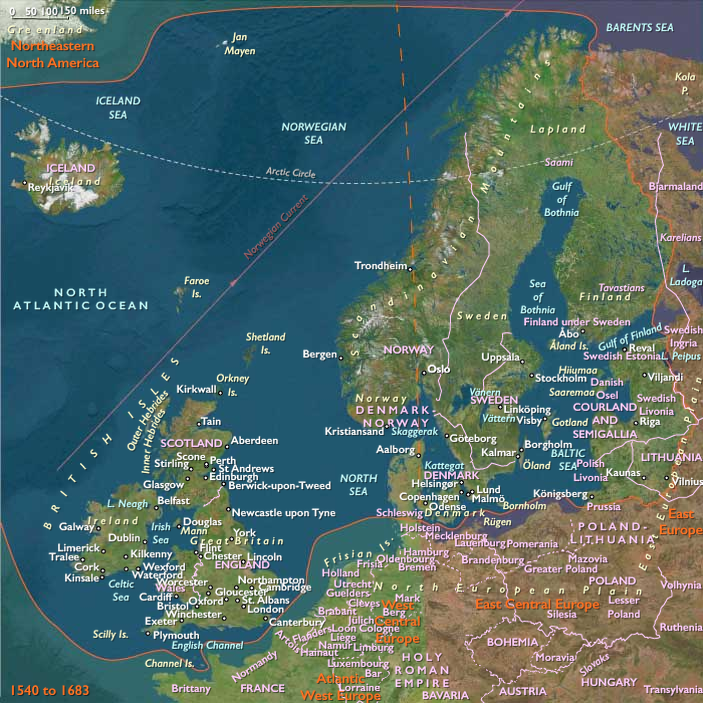
After the execution of King Charles I in 1649, Cromwell dominates the short-lived Commonwealth of England, conquers Ireland and Scotland, and rules as Lord Protector from 1653 until his death from malaria in 1658.
Cromwell was born into the ranks of the middle gentry, and remained relatively obscure for the first 40 years of his life.
At times his lifestyle resembled that of a yeoman farmer until his finances were boosted thanks to an inheritance from his uncle.
After undergoing a religious conversion during the same decade, he made an Independent style of Puritanism an essential part of his life.
Cromwell is elected Member of Parliament for Cambridge in the Short (1640) and Long (1640–49) Parliaments, and later enters the English Civil War on the side of the "Roundheads" or Parliamentarians.
As a soldier, he is more than capable (nicknamed "Old Ironsides") and is quickly promoted from leading a single cavalry troop to command of the entire army.
Cromwell is one of the signatories of Charles I's death warrant in 1649 and is a member of the Rump Parliament (1649–1653), being chosen by the Rump to take command of the English campaign in Ireland during 1649–50.
He then leads a campaign against the Scottish army between 1650 and 1651.
On 20 April 1653 he dismisses the Rump Parliament by force, setting up a short-lived nominated assembly known as the Barebones Parliament before being made Lord Protector of England, Wales, Scotland and Ireland on 16 December 1653.
He is buried in Westminster Abbey, but when the Royalists return to power his corpse is dug up, hung in chains, and beheaded.
Cromwell has been a controversial figure in the history of the British Isles—a regicidal dictator to some historians (such as David Hume and Christopher Hill) and a hero of liberty to others (such as Thomas Carlyle and Samuel Rawson Gardiner).
In Britain he was elected as one of the Top 10 Britons of all time in a 2002 BBC poll.
His measures against Irish Catholics have been characterized as genocidal or near-genocidal, and in Ireland itself he is widely hated.