Obeid Allah ibn al-Habhab al-Mawsili
Umayyad governor of Kairouan
Years: 680 - 755
Obeid Allah ibn al-Habhab al-Mawsili (?–?)
is an important Umayyad official in Egypt from 724 to 734, and subsequently Umayyad governor of Kairouan, Ifriqiya from 734 to 741.
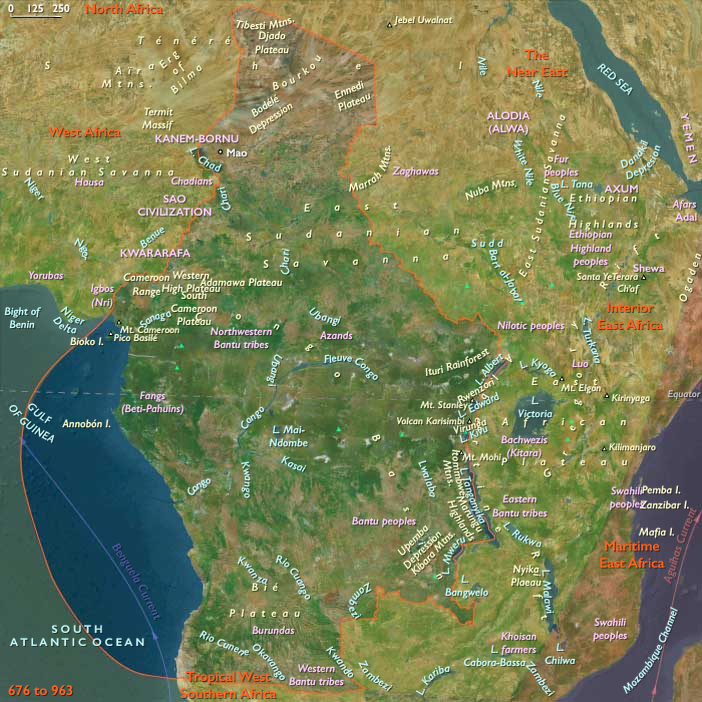
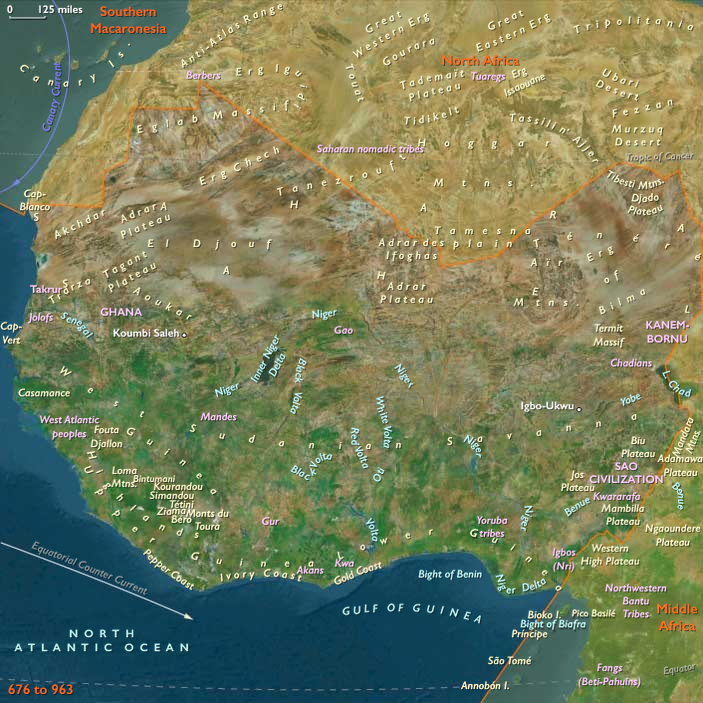
It is under his rule that the Great Berber Revolt breaks out in the Maghreb (North Africa) and al-Andalus (Iberian Peninsula).





Related Events
Filter results
Showing 10 events out of 38 total
Arab commanders have treated non-Arab (notably Berber) auxiliaries inconsistently, and often rather shabbily, from the early days of Muslim conquest of North Africa.
Berbers had undertaken much of the fighting in the conquest in Spain, but they had received a lesser share of the spoils and had been frequently assigned to the harsher duties (e.g., Berbers are thrown into the vanguard while Arab forces are kept in the back; they are assigned garrison duty on the more troubled frontiers).
Although the Ifriqiyan Arab governor Musa ibn Nusair had cultivated his Berber lieutenants (most famously, Tariq ibn Ziyad), his successors, notably Yazid ibn Abi Muslim, have treated their Berber forces particularly poorly.
Most grievously, Arab governors continue to levy extraordinary dhimmi taxation (the jizyah and kharaj) and slave-tributes on non-Arab populations that have converted to Islam, in direct contravention of Islamic law.
This had become particularly routine during the caliphates of Walid I and Sulayman.
The Umayyad caliph Umar II finally forbade the levying of extraordinary taxation and slave tributes from non-Arab Muslims in 718, defusing much of the tension.
But expensive military reverses in the 720s and 730s have forced caliphal authorities to look for innovative ways to replenish their treasuries.
During the caliphate of Hisham from 724, the prohibitions had been sidestepped with reinterpretations (e.g.
tying the kharaj land tax to the land rather than the owner, so that lands that were at any point subject to the kharaj remained under kharaj even if currently owned by a Muslim.)
As a result, resentful Berbers had grown receptive to radical Kharijite activists from the east (notably of Sufrite and later Ibadite persuasion) which had begun arriving in the Maghreb in the 720s.
The Kharijites preach a puritan form of Islam, promising a new political order, where all Muslims will be equal, irrespective of ethnicity or tribal status, and Islamic law will be strictly adhered to.
The appeal of the Kharijite message to Berber ears has allowed their activists to gradually penetrate Berber regiments and population centers.
Sporadic mutinies by Berber garrisons (e.g.
under Munnus in Cerdanya, Spain, in 729-31) have been put down with difficulty.
One Ifriqiyan governor, Yazid ibn Abi Muslim, who had openly resumed the jizya and humiliated his Berber guard by branding their hands, had been assassinated in 721.
Ubayd Allah ibn al-Habhab had been appointed Umayyad governor in Kairouan in 734 with supervisory authority over all the Maghreb (North Africa) and al-Andalus (Spain).
Coming in after a period of mismanagement, Ubayd Allah had soon set about expanding the fiscal resources of the government by leaning heavily on the non-Arab populations, resuming the extraordinary taxation and slave-tribute without apologies.
His deputies Oqba ibn al-Hajjaj al-Saluli in Córdoba (Spain) and Omar ibn el-Moradi in Tangier (Morocco) have been given similar instructions.
The failure of expensive expeditions into Gaul during the period 732-737, repulsed by the Franks under Charles Martel, has only increased the tax burden.
The parallel failure of the caliphal armies in the east brings no fiscal relief from Damascus.
The Berbers have long resented the second-class status accorded to them by the ruling Arab military caste.
Berber Muslims have been intermittently subjected to extraordinary taxation and slave-tributes, contrary to Islamic law.
As a result, many Berbers have grown receptive to puritan Kharijite activists, particularly those of the Sufrite sect, that had begun arriving in the Maghreb, preaching a new political order in which all Muslims are to be treated without regard for ethnicity or tribal status.
Maysara's Matghara tribe has been particularly taken up with Sufrite influence.
In the late 730s, the new Umayyad governor Ubayd Allah ibn al-Habhab of Ifriqiya had ratcheted up his fiscal exactions to make up for the financial shortfalls.
His regional deputies, notably Omar ibn al-Moradi, governor of Tangiers, have implemented some inventive and highly oppressive schemes to extract more revenues from the Berbers under his jurisdiction.
Contravening Islamic law and the 718 edicts of the Caliph Umar II, Ubayd Allah has reinstated some of the extraordinary dhimmi taxation (the jizyah and kharaj) and slave-tributes on the Muslim Berber population, provoking immense opposition.
Similar policies have been implemented by his deputies Oqba ibn al-Saluli in al-Andalus and (with particular zeal) Omar ibn el-Moradi in Morocco, but Ubayd Allah has gone above and beyond his duties.
Seeking to satisfy the luxurious tastes of the nobles of Damascus, Ubayd Allah has sent his officials in the relentless pursuit of the highly prized wool of unborn Merino lambs, seizing (and destroying) entire flocks—the livelihoods of many Berber communities—just to gather the handful he could dispatch back to Syria.
Berber girls and women are also highly prized as concubines by Damascus lords.
Ubayd Allah, eager to please as always, has ordered them seized and kidnapped in great numbers, not stopping even at the wives and daughters of loyal Berber chieftains.
By 739 or so, the main Berber tribes under Omar's jurisdiction in western Morocco—principally the Gomara, Barghawata and Miknasa—decide they have had enough and prepare for rebellion.
Forming an alliance, they elect the Matghara chieftain Maysara to lead them.
It is not a spontaneous uprising.
Maysara and the Berber commanders seem to have been careful enough to wait until the bulk of the Ifriqiyan army has left North Africa on an expedition to Sicily before springing into action.
The exact biographical details of Maysara at Maghari are obscure, and made more complicated by what are likely scurrilous stories circulated by his enemies.
Chroniclers have recorded allegations that Maysara was a low-born Berber water-seller in Kairouan or Tangiers, possibly a water-carrier in the caliphal army.
Chronicles routinely refer to him by the unflattering label of al-Hakir, 'the Ignoble' or 'the Vile'.
Ibn Khaldun, however, was probably closer to the truth in proposing that his origins were perhaps not so humble, that Maysara was probably a significant chieftain or sheikh of the Berber Matghara tribe.
Al-Tabari reports that Maysara had even headed a Berber delegation to Damascus to present the Berber complaints before the Caliph Hisham, and the complaints were many.
Abd al-Rahman ibn Habib is a great-grandson of Oqba ibn Nafi al-Fihri (Muslim Arab conqueror of North Africa).
His family, the al-Fihris, are among the leading Arab families of the Maghreb.
At the beginning of 740, he joins his father Habib ibn Abi Obeida in an Arab expedition across the water to Sicily in what is possibly the first attempt at a full-scale invasion of the island (rather than a mere raid).
They have a successful landing and laid a brief siege to Syracuse, securing its submission to tribute, but the breakout of the Great Berber Revolt in the Maghreb forces the al-Fihris to cancel the invasion of Sicily and ship their army quickly back to Africa to help quell the uprising.
The Great Berber Revolt finally begins in 740 after the Ifriqiyan army has safely departed.
Maysara assembles his coalition of Berber armies, heads shaven in the Kharajite fashion, Qur'ans hanging from their spears, and leads them bearing down on Tangiers.
The city quickly falls into their hands and the hated governor Omar al-Moradi is put to death.
Maysara places the Berber garrison in Tangiers under the command of a converted Christian, Abd al-Allah al-Hodeij al-Ifriqi, then proceeds to sweep down western Morocco, overwhelming Umayyad garrisons clear down to the Sous valley.
In a very short time, the whole length of western Morocco, from the Straits of Gibraltar to the Anti-Atlas, are in the hands of Maysara's rebels.
It is said that Maysara took up the title of amir al-mu'minin ('Commander of the Faithful', or 'Caliph') after his victory at Tangiers (or perhaps a little earlier).
This is probably the first time that a non-Arab lays claim to the supreme Muslim title.
Indeed, it might have been the first time anyone not connected by blood to the Prophet's Quraish tribe, had dared lay such a claim.
To orthodox Muslims of the time, the idea of a 'Berber caliph' must have seemed like an absurdity.
The rumor that Maysara was a lowly 'water-carrier' probably got started around this, if only to make the caliphal pretension seem even more self-aggrandizingly ridiculous, and consequently the entire rebellion misguided.
Because this step seemed to open the rebels to mockery, some have wondered whether the story of Maysara taking up the caliphal title was not fabricated, from start to finish, by Umayyad propagandists.
However, this rebellion has been fired up and led by Sufrite Kharijites, and one of the central tenets of Kharijite ideology is precisely that the caliphal title is open to any good pious Muslim, regardless of dynastic or tribal qualifications.
Moreover, this was, at least on the ideological plane, a Muslim uprising, open to all true Muslims, and not a Berber liberation movement.
Consequently, Maysara, as the commander of the true Muslims, could have no other title but 'caliph'.
To keep the Berber rebels in check until the Sicilian expedition army returns, Obeid Allah assembles a cavalry-heavy column composed largely of the aristocratic Arab elite of Kairouan, and places it under the command of Khalid ibn Abi Habib.
This column is dispatched immediately to Tangiers and instructed to serve as the vanguard until the Sicilian expeditionary force under Habib disembarks and catches up with them.
The Berbers now depose Maysara on account of cowardice, for having hastily ordered a retreat after the skirmish with the Arab column, and place the rebel army in the hands of a more experienced military commander, the Zenata chieftain Khalid ibn Hamid.
They later execute Maysara.
Khalid ibn Abi Habib encounters the Berber rebel army in the outskirts of Tangiers, and after a couple of skirmishes, forces them to pull back.
As per the instructions he has been given, Khalid holds his position south of Tangiers, awaiting the reinforcements from Sicily.
But before junction can be made, the Berber rebel army, under Khalid ibn Hamid al-Zanati, falls upon the Arab column in October/November 740.
Khalid ibn Abi Habib and his column, the flower of the Ifriqiyan nobility, are annihilated by the Berbers in what will become known as the Battle of the Nobles.
News of the slaughter of the Ifriqiyan nobles spreads like a shock-wave.
The reserve army of Ibn al-Mughira in Tlemcen falls into a panic.
Seeing Sufrite preachers everywhere around the city, the troops launch a series of indiscriminate massacres, provoking a massive uprising in the hitherto-quiet city.
The Sicilian expeditionary army of Habib ibn Abi Obeida had arrived too late to prevent the massacre of the nobles.
Realizing they were in no position to take on the Berbers by themselves, they have retreated to Tlemcen to gather the reserves, only to find that that city too is now in disarray and the troops killed or scattered.
Habib ibn Abi Obeida entrenched what remains of the Ifriqiyan army in the vicinity of Tlemcen (perhaps as far back as Tahert), and calls upon Kairouan for reinforcements.
The request is forwarded to Damascus.
Abd al-Malik, governor of Al-Andalus from 732 to 734, is a very wealthy member of a noble Arab family.
Spurred by critics who lashed out at his lack of military victories, he had led an expedition north to Pamplona, where a Frankish or Aquitanian party had taken over after the Battle of Poitiers.
Despite his failure to capture the Basque fortress, he had left troops to invest it, and had decided to continue his way north across the Pyrenees, where he engaged the Basques in skirmishes and was eventually overcome, but managed to escape back to Al-Andalus.
After being deposed and incarcerated by his successor Uqba ibn al-Hajjaj or possibly the governor of Ifriqiya ("was bound in chains"), he had made his way back to prominence in 740, when he is appointed wali (governor) of Al-Andalus again after the natural death of the former.
Abd al-Malik is a more popular figure among local Arabs and Berbers alike The news of the Berber victory in Morocco echoes through Spain.
Berbers heavily outnumber Arabs in al-Andalus, and the Andalusian Arab elite fear the Berber garrisons in their own lands might take inspiration from their Moroccan brethren.
Caliph Hisham, shocked at the news of the defeat, had dismissed Ubayd Allah in February 741 and had begun preparations to dispatch a large eastern Arab army under a new governor, Kulthum ibn Iyad al-Qasi to crush the Berber rebellion.
The disgraced Ubayd Allah leaves Ifriqiya in April 741, and returns to the east.
Kulthum is to be accompanied by fresh Arab army of thirty thousand raised from the Syrian regiments (junds) of the east—specifically, Damascus, Jordan, Qinnasrin, Emesa (Hims), Palestine and Egypt.
The military command of this elite 'Syrian' army is given to Kulthum's nephew and designated successor Balj ibn Bishr al-Qushayri and the vice-command to the designated second successor, Thalaba ibn Salama al-Amili (should tragedy befall the prior two).
The elite Syrian cavalry under Balj ibn Bishr, which had moved ahead of the bulk of the forces, is the first to arrive in Kairouan in the summer of 741.
Their brief stay is not a happy one.
The Syrians had arrived in haughty spirits and quarreled with the Kairouan city authorities, who, suspicious, had given them a rather cool reception.
Interpreting it as ingratitude, the Syrian barons had imposed themselves on the city, billeting troops and requisitioning supplies without regard to local authorities or priorities.
(The members of the Syrian expedition are of different tribal stock than the Arabs they came to save.
The early Arab colonists of Ifriqiya and al-Andalus had been drawn largely from tribes of south Arabian origin (known as Kalbid or 'Yemenite' tribes), whereas the Syrian junds were mostly of north Arabian tribes (Qaysid or Mudharite tribes).
The ancient and deep pre-Islamic tribal rivalry between Qaysid and Yemenite finds itself invoked in repeated quarrels between the earlier colonists and the arriving junds.
Kulthum ibn Iyad, moving slower with the bulk of the forces, does not himself enter Kairouan, but merely dispatches a message assigning the government of the city to Abd al-Rahman ibn Oqba al-Ghaffari, the qadi (a judge ruling in accordance with Islamic religious law) of Ifriqiya.
Collecting the Syrian vanguard, Kulthum hurries along to make junction with the remaining Ifriqiyan forces (some forty thousand) of Habib ibn Abi Obeida al-Fihri holding ground in the vicinity of Tlemcen.
The junction between the North African and Eastern forces does not go smoothly.
News of the Syrian misbehavior in Kairouan had reached the Ifriqiyan troops, while the Syrians, incensed at the poor reception, treat their Ifriqiyan counterparts in a high-handed fashion.
Habib and Balj bicker and the armies nearly come to blows.
By smooth diplomacy, Kulthum ibn Iyad manages hold the armies together, but the mutual resentments will play a role in subsequent events.
The Berber rebel army, under the leadership of Khalid ibn Hamid al-Zanati (perhaps jointly with a certain Salim Abu Yusuf al-Azdi, while boasting great numbers (some two hundred thousand), are very poorly equipped.
Many Berber fighters have nothing but stones and knives, dressed in a mere loin cloth, heads shaved in puritan fashion.
But they make up for this in knowledge of the terrain, excellent morale, and a fanatical Sufrite-inspired religious fervor.
The Berber Uprising in Al-Andalus (741 CE)
The coup that installed Abd al-Malik ibn Qatan al-Fihri as ruler of Al-Andalus in early 741 CE was intended as a failsafe measure to maintain stability. However, when news of the disastrous defeat at Bagdoura (in North Africa) spreads, a general Berber uprising in Spain becomes inevitable.
The Berber Mutiny and Rebellion
In October 741 CE, Berber garrisons in northwestern Galicia mutiny, overthrowing their Arab commanders, abandoning their fortifications, and forming a Berber rebel army to challenge Andalusian Arab rule in the south.
Although the names of their leaders are lost to history, the Spanish Berber rebel army is well-organized into three columns, each assigned a strategic objective:
- One force marches on Toledo, targeting the main garrison city of the central march.
- Another heads for Córdoba, the Umayyad capital of Al-Andalus.
- A third advances toward Algeciras, hoping to seize the Andalusian fleet and ferry reinforcements from North Africa.
This large-scale Berber rebellion threatens to overthrow Arab dominance in Al-Andalus, ushering in a period of instability and power struggles across Muslim Spain.
The Berber and Arab armies finally clash at the Battle of Bagdoura (or Baqdura) in October–November, 741, by the Sebou river (near modern Fes).
Disdaining the experience and cautious advice of the Ifriqiyans, Kulthum ibn Iyad makes several serious tactical errors.
Berber skirmishers dehorse and isolated the Syrian cavalry, while the Berber foot falls upon the Arab infantry with overwhelming numbers.
The Arab armies are quickly routed.
By some estimates, two-thirds of the Arab army are killed or captured by the Berbers at Bagdoura.
Among the casualties are the new governor Kulthum ibn Iyad al-Qasi and the Ifriqiyan commander Habib ibn Abi Obeida al-Fihri.
The Syrian regiments, now reduced to some ten thousand, are pulled together by Kulthum's nephew, Balj ibn Bishr and scramble up towards the straits, where they hope to get passage across the water to Spain.
A small Ifriqiyan contingent, under Habib's son Abd al-Rahman ibn Habib al-Fihri, joins the Syrians in their flight, but …