The Middle East: 321–310 BCE
The Partition of Babylon and the Rise of the Diadochi
Division of Alexander’s Empire
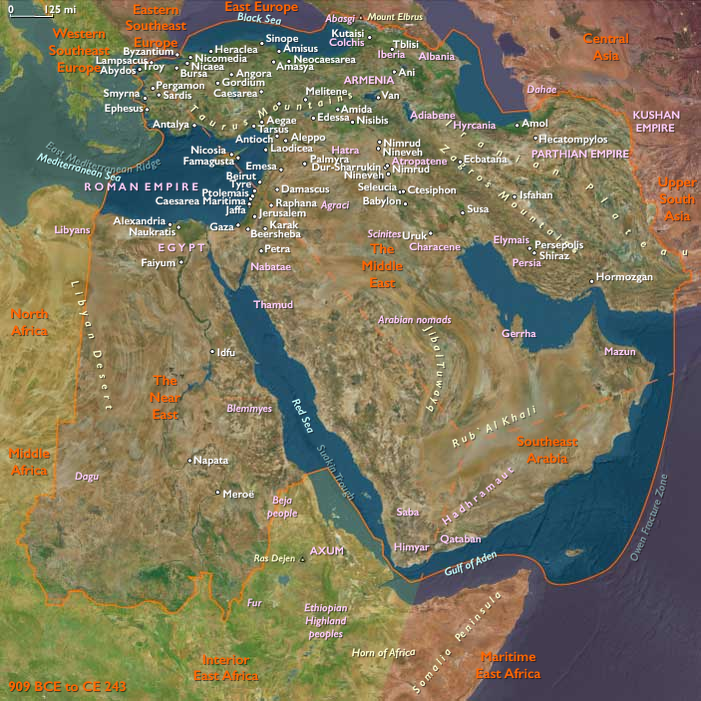
The death of Alexander in 323 BCE leads to the Partition of Babylon, dividing his empire among his top generals and companions, known as the Diadochi. Laomedon the Mitylenaean is appointed ruler of Syria, and Peithon governs the southern part of Media (Media Magna) up to the Caspian Straits. Philoxenus assumes rulership of Cilicia, while the feeble-minded half-brother of Alexander, Arrhidaeus, nominally governs Mesopotamia and Arbelitis.
Seleucus and the Satrapy of Babylon
Seleucus is established as the satrap of Babylon, positioning him strategically within the fertile Mesopotamian heartland. His governance begins to lay the foundation for what will become the extensive Seleucid Empire. Meanwhile, Antigenes, captain of the Macedonian Silver Shields, is appointed prefect of the province of Susa and tasked with collecting tribute alongside three thousand potentially mutinous Macedonian troops.
Regional Rulership and Autonomy
Peucestas maintains his governance of Persis, while Tlepolemus rules Carmania. The smaller northern region, previously a sub-satrapy known as Matiene, emerges as Media Atropatene, governed by Atropates, the former Achaemenid governor and father-in-law of Perdiccas, the regent of Alexander’s designated successor. Additionally, Philip rules Parthia, and Stasander governs the territories of the Arians and Drangians.
Governance in Anatolia and Cappadocia
In Anatolia, Nicanor receives control of Cappadocia, and Arrhidaeus (distinct from Alexander’s brother) administers Hellespontine Phrygia. These appointments establish the immediate political landscape after Alexander’s demise, though they also set the stage for subsequent conflicts among the successors, who soon seek greater autonomy and territorial control.