Nerva
12th Emperor of the Roman Empire
Years: 30 - 98
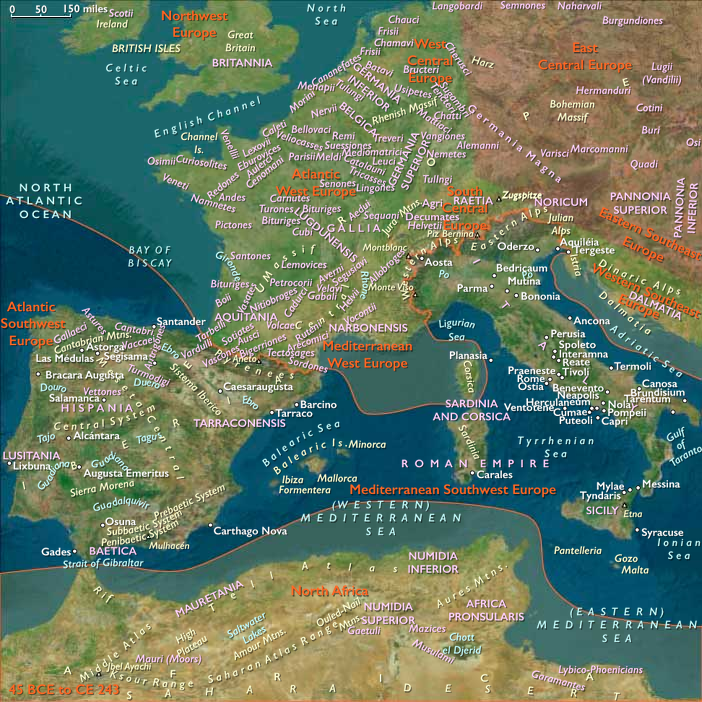
Nerva (Latin: Marcus Cocceius Nerva Caesar Augustus; 8 November 30 – 27 January 98), is Roman Emperor from 96 to 98.
Nerva becomes Emperor at the age of sixty-five, after a lifetime of imperial service under Nero and the rulers of the Flavian dynasty.
Under Nero, he is a member of the imperial entourage and plays a vital part in exposing the Pisonian conspiracy of 65.
Later, as a loyalist to the Flavians, he attains consulships in 71 and 90 during the reigns of Vespasian and Domitian respectively.
On 18 September 96, Domitian is assassinated in a palace conspiracy involving members of the Praetorian Guard and several of his freedmen.
On the same day, Nerva is declared emperor by the Roman Senate.
This is the first time the Senate elects a Roman Emperor.
As the new ruler of the Roman Empire, he vows to restore liberties which had been curtailed during the autocratic government of Domitian.
However, Nerva's brief reign is marred by financial difficulties and his inability to assert his authority over the Roman army.
A revolt by the Praetorian Guard in October 97 essentially forces him to adopt an heir.
After some deliberation Nerva adopts Trajan, a young and popular general, as his successor.
After barely fifteen months in office, Nerva dies of natural causes on 27 January 98.
Upon his death he is succeeded and deified by Trajan.
Although much of his life remains obscure, Nerva was considered a wise and moderate emperor by ancient historians.
Recent historians have revised this assessment, characterizing Nerva as a well-intentioned but ultimately weak ruler, whose reign brought the Roman Empire to the brink of civil war.
Nerva's greatest success was his ability to ensure a peaceful transition of power after his death, thus founding the Nerva-Antonine dynasty.