Nasir al-Dawla
Emir of Mosul
Years: 905 - 969
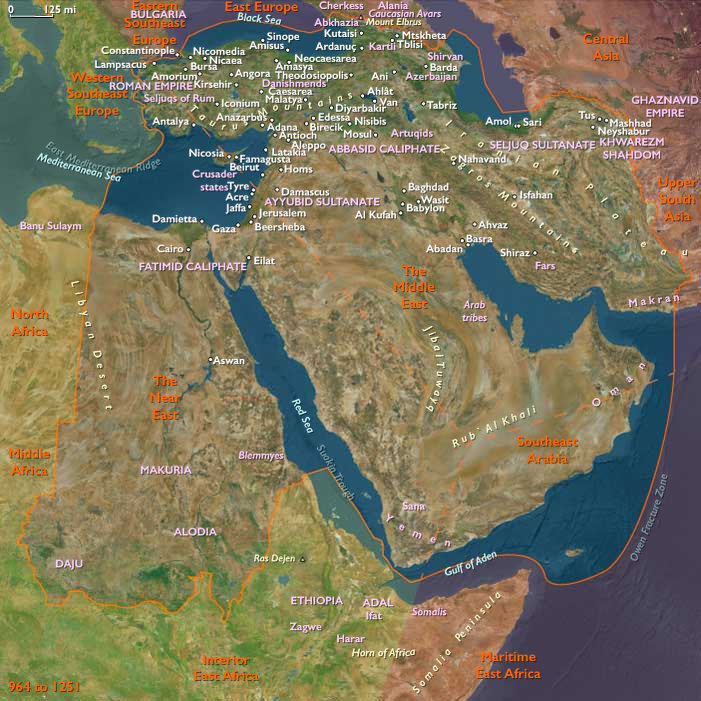
Abu Muhammad al-Hasan ibn Abu'l-Hayja 'Abdallah ibn Hamdan Nasir al-Dawla al-Taghlibi (died 968 or 969), more commonly known simply by his laqab (honorific epithet) of Nasir al-Dawla ("Defender of the [Abbasid] Dynasty"), is the second Hamdanid ruler of the Emirate of Mosul, encompassing most of the Jazira.
As the senior member of the Hamdanid dynasty, he inherits the family power base around Mosul from his father, and is able to secure it against challenges by his uncles.
Hasan becomes involved in the court intrigues of the Abbasid Caliphate in Baghdad, and, between 942 and 943, he, with the assistance of his brother Ali (known as Sayf al-Dawla), establishes himself as amir al-umara, or de facto regent for the Abbasid caliph.
He is driven back to Mosul by Turkish troops, however, and subsequent attempts to challenge the Buyids who seize control of Baghdad and lower Iraq end in repeated failure.
Twice, his capital Mosul is captured by Buyid forces, which ware, however, unable to defeat local opposition to their rule.
As a result of his failures to retain power, Nasir al-Dawla declines in influence and prestige.
He is eclipsed by the actions of his brother Ali, who establishes his rule more firmly over Aleppo and northern Syria.
After 964, Nasir al-Dawla's eldest son Abu Taghlib exercises de facto rule over his domains, and in 967, Abu Taghlib and his brothers depose and imprison their father, who dies in captivity a year or two later.