Muhammad Ali Jinnah
Governor-General of Pakistan
Years: 1876 - 1948
Muhammad Ali Jinnah (born Mahomedali Jinnahbhai; December 25, 1876 – September 11, 1948) is a lawyer, politician, and the founder of Pakistan.
Jinnah serves as leader of the All-India Muslim League from 1913 until Pakistan's independence on 14 August 1947, and as Pakistan's first Governor-General from independence until his death.
He is revered in Pakistan as Quaid-i-Azam (Great Leader) and Baba-i-Qaum (Father of the Nation).
His birthday is observed as a national holiday.
Born in Karachi and trained as a barrister at Lincoln's Inn in London, Jinnah rises to prominence in the Indian National Congress in the first two decades of the 20th century.
In these early years of his political career, Jinnah advocates Hindu–Muslim unity, helping to shape the 1916 Lucknow Pact between the Congress and the All-India Muslim League, a party in which Jinnah has also become prominent.
Jinnah becomes a key leader in the All India Home Rule League, and proposes a fourteen-point constitutional reform plan to safeguard the political rights of Muslims should a united British India become independent.
In 1920, however, Jinnah resigns from the Congress when it agrees to follow a campaign of satyagraha, or non-violent resistance, advocated by the influential leader, Mohandas Gandhi.
By 1940, Jinnah has come to believe that Indian Muslims should have their own state.
In this year, the Muslim League, led by Jinnah, passes the Lahore Resolution, demanding a separate nation.
During the Second World War, the League gain strength while leaders of the Congress are imprisoned, and in the elections held shortly after the war, it wins most of the seats reserved for Muslims.
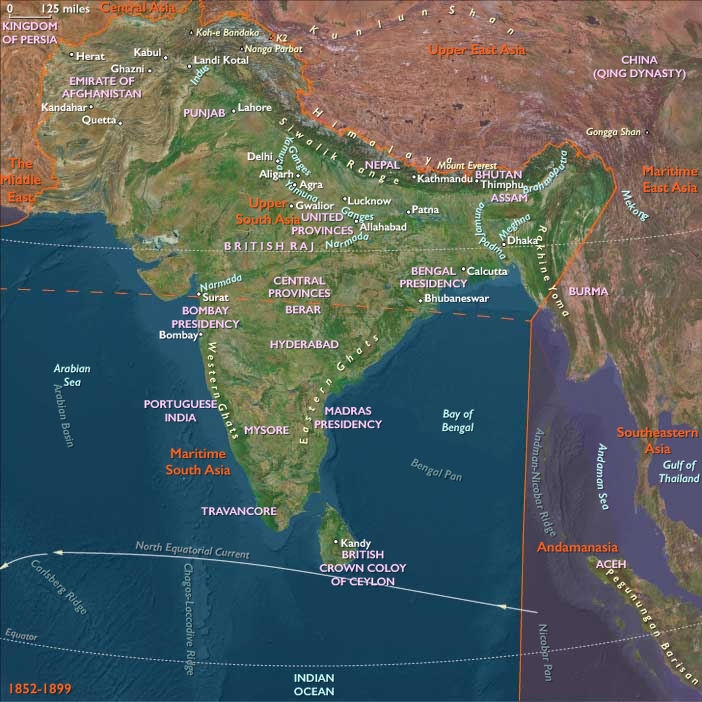
Ultimately, the Congress and the Muslim League cannot reach a power-sharing formula for a united India, leading all parties to agree to separate independence for a predominately Hindu India, and for a Muslim-majority state, to be called Pakistan.
As the first Governor-General of Pakistan, Jinnah works to establish the new nation's government and policies, and to aid the millions of Muslim migrants who have emigrated from the new nation of India to Pakistan after the partition, personally supervising the establishment of refugee camps.
Jinnah dies at age 71 in September 1948, just over a year after Pakistan gained independence from the British Raj.
He leaves a deep and respected legacy in Pakistan, though he is less well thought of in India.
According to his biographer, Stanley Wolpert, he remains Pakistan's greatest leader.