Miguel Primo de Rivera
prime minister of Spain
Years: 1870 - 1930
Miguel Primo de Rivera y Orbaneja, 2nd Marquis of Estella, GE (8 January 1870 – 16 March 1930), was a Spanish dictator and military officer who ruled as prime minister of Spain from 1923 to 1930 during the last years of the Bourbon Restoration.
He was born into a landowning family of Andalusian aristocrats. He met his baptism by fire in October 1893 in Cabrerizas Altas during the so-called Margallo War. He moved up the military ladder, promoted to brigadier general (1911), division general (1914), and lieutenant general (1919). He went on to serve as administrator of the Valencia, Madrid, and Barcelona military regions, distinguishing himself as a voice in favor of military withdrawal from Africa.
During the crisis of the Restoration regime, specifically upon political turmoil in the wake of setbacks in the Rif War and the ensuing spillover of the enquiries of the Picasso file, Primo de Rivera staged a military coup d'état on 13 September 1923 with help from a clique of Africanist generals close to King Alfonso XIII. The coup enjoyed the acquiescence of the monarch, and Primo de Rivera was ensuingly tasked to form a government. He thereby proceeded to suspend the 1876 constitution and establish martial law.
His dictatorial rule was marked by authoritarian nationalism and populism. Primo de Rivera initially said he would rule for only 90 days; however, he chose to remain in power, heading a military directorate. In December 1925, after the Alhucemas landing ended Rifian anti-colonial resistance, he installed the Civil Directory. From 1927 a policy of public spending on infrastructures was pursued and state monopolies such as oil company Campsa were created. Once economic tailwinds diminished, he lost the support of most of his generals, and he was forced to resign in January 1930 amid increasing inflation and civic unrest, dying abroad two months later.
Some of his children, such as José Antonio and Pilar, went on to become fascist leaders.


Related Events
Filter results
Showing 4 events out of 4 total
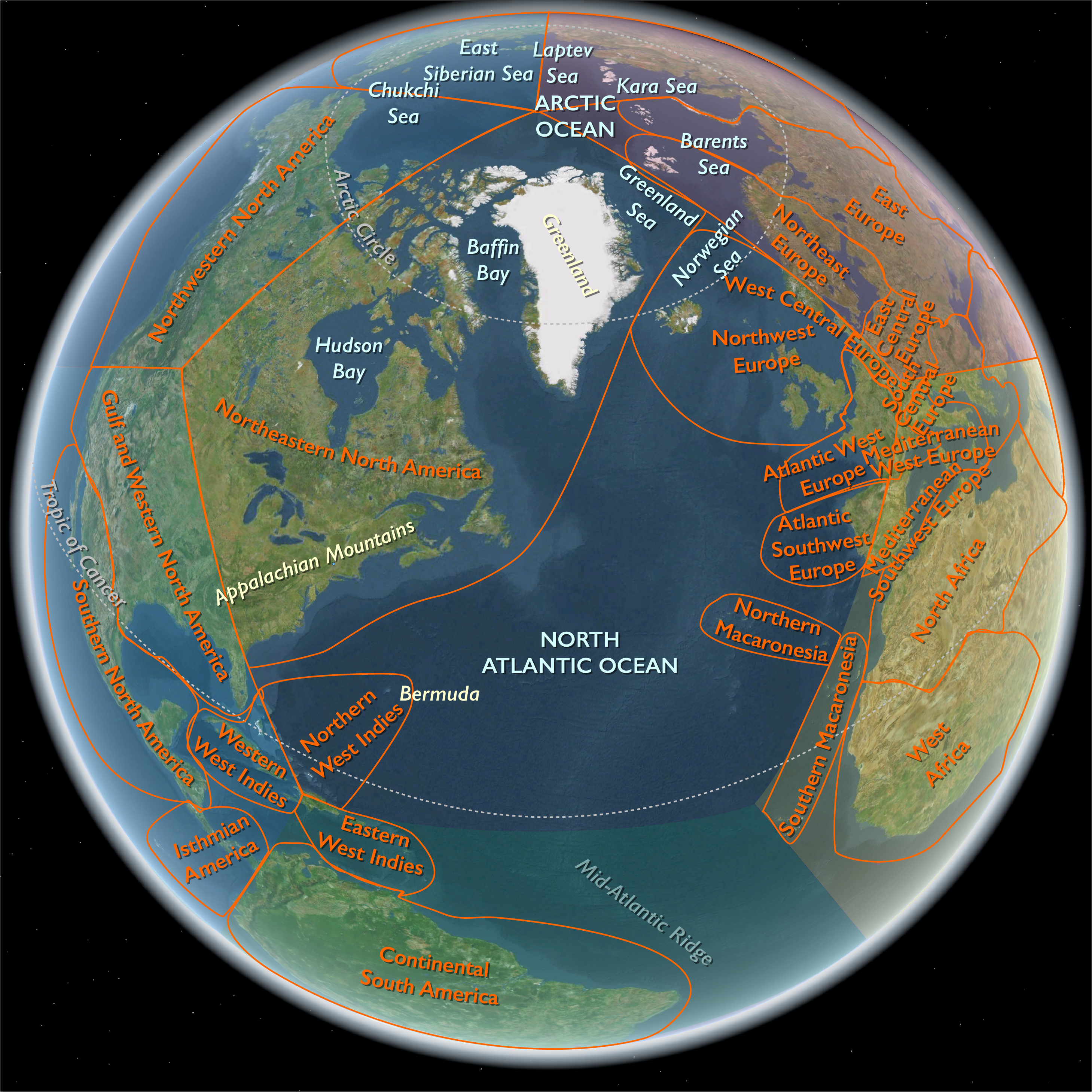
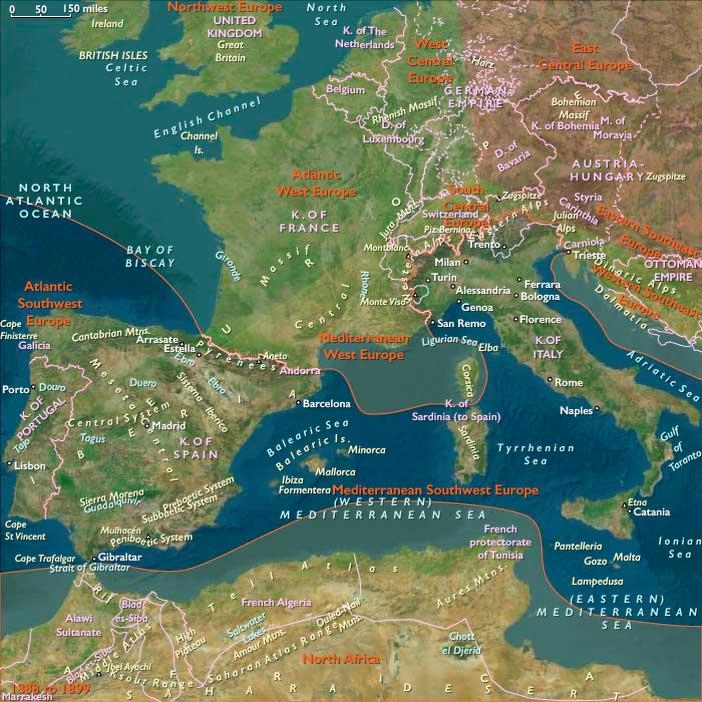
Atlantic Southwest Europe (1912–1923): Republican Turbulence, Rising Nationalism, and Social Struggle
Between 1912 and 1923, Atlantic Southwest Europe—including northern and central Portugal, Galicia, Asturias, Cantabria, northern León and Castile, northern Navarre, northern Rioja, and the Basque Country—faced significant political upheaval, escalating nationalist movements, social unrest, and economic instability. The era encompassed the challenges of Portugal’s unstable First Republic, the impact of World War I on regional economies, intensifying labor conflicts, and the rapid growth of cultural and nationalist identities, setting crucial foundations for later authoritarian responses in the region.
Political and Military Developments
Portugal: Republican Instability and Political Crisis
-
Portugal’s young First Republic (1910–1926) struggled with intense factionalism, political instability, frequent government changes, and ineffective governance. Northern Portugal, particularly in urban areas such as Porto and Braga, witnessed growing frustration with republican authorities, economic hardship, and social unrest.
-
Portugal’s controversial involvement in World War I (1916–1918) intensified national divisions, particularly in the northern provinces, where heavy conscription and casualties fueled popular resentment and political disillusionment.
Spain: Regional Nationalism and Central Government Tensions
-
Spain, neutral during World War I, nonetheless experienced severe economic disruptions and social unrest. The government of Alfonso XIII (r. 1886–1931) faced increasing challenges from labor movements, regional nationalists, and conservative forces, exacerbated by wartime inflation and economic instability.
-
In the Basque Country, the Basque Nationalist Party (PNV) and other nationalist groups gained strength, promoting Basque autonomy, cultural revival, and linguistic preservation, leading to increasing friction with Madrid’s centralist policies.
Economic Developments: Wartime Prosperity and Postwar Crisis
Impact of World War I on Regional Economies
-
Northern Spain’s neutrality during the war allowed brief economic prosperity, especially in the Basque Country (iron, steel, shipbuilding), Cantabria, and Asturias (coal mining), which supplied critical raw materials to both sides of the conflict, fueling temporary industrial growth and urban expansion.
-
However, post-war economic adjustments resulted in severe downturns, factory closures, and widespread unemployment in industrial centers such as Bilbao, Santander, and Gijón, triggering major labor unrest and social tensions.
Portuguese Economic Difficulties
-
Northern Portugal’s economy, heavily dependent on exports (textiles, wine), suffered considerably during and after the war, facing disruptions in trade routes, reduced demand, inflation, and rising unemployment.
-
Economic stagnation and hardship in rural Galicia, Asturias, and northern Portugal intensified emigration pressures to the Americas, exacerbating regional economic disparities and demographic shifts.
Social and Urban Developments
Labor Movements and Social Conflict
-
Severe economic downturns after World War I fueled heightened labor unrest throughout the region. Industrial cities—Bilbao, Porto, Vigo, Gijón—experienced widespread strikes, protests, and political radicalization, driven by growing socialist and anarcho-syndicalist movements.
-
Labor organizations, notably the Spanish anarchist CNT (Confederación Nacional del Trabajo) and Portuguese labor federations, intensified activism, demanding improved working conditions, higher wages, and social reforms, occasionally leading to violent clashes with authorities.
Rising Urbanization and Social Inequality
-
Continued urban growth exacerbated socio-economic disparities, with overcrowded, impoverished working-class districts in industrial cities such as Bilbao and Porto starkly contrasting affluent neighborhoods of industrialists and merchants.
-
Public health crises, inadequate housing, and rising social tensions highlighted the severe urban inequalities, fueling further demands for social reform and contributing to increased political radicalization.
Cultural and Religious Developments
Expansion of Regional Nationalist and Cultural Identities
-
Cultural revival flourished throughout Galicia, the Basque Country, and northern Portugal, marked by vibrant literary and artistic movements asserting regional distinctiveness. Notably, Galicia’s literary and linguistic revival and the Basque cultural renaissance significantly reinforced local identities and autonomy aspirations.
-
Portuguese intellectual circles, particularly in Porto and Coimbra, engaged in dynamic cultural and political debates regarding national identity, republican ideals, secularism, and modernity, contributing to the nation’s intellectual climate.
Church-State Tensions and Catholic Social Movements
-
In Portugal, the republican government pursued aggressive secular policies, intensifying tensions with the Catholic Church, particularly in conservative northern rural areas, fueling opposition and contributing to political divisions.
-
In Spain, the Catholic Church maintained considerable social and political influence, especially in Galicia and the Basque Country, supporting conservative movements and occasionally conflicting with secular socialist and anarchist groups, deepening social divides.
Legacy and Significance
The period from 1912 to 1923 represented a crucial era of heightened political volatility, economic uncertainty, social conflict, and intense nationalist activity within Atlantic Southwest Europe. The fragility and eventual failure of Portugal’s First Republic paved the way for future authoritarian governance under António de Oliveira Salazar. In Spain, unresolved tensions between centralized authority and assertive regional identities, alongside rising social unrest and economic instability, set conditions leading toward eventual military dictatorship under Miguel Primo de Rivera (1923–1930). Culturally, this era significantly strengthened regional identities and nationalist aspirations, leaving a powerful legacy of political mobilization and cultural assertiveness that would shape the region’s trajectory throughout the turbulent decades ahead.
Atlantic Southwest Europe (1924–1935): Dictatorship, Stabilization, and Rising Political Polarization
Between 1924 and 1935, Atlantic Southwest Europe—including northern and central Portugal, Galicia, Asturias, Cantabria, northern León and Castile, northern Navarre, northern Rioja, and the Basque Country—experienced authoritarian stabilization, economic modernization, and escalating political tensions. The era was defined by the establishment of authoritarian regimes in Portugal under António de Oliveira Salazar and Spain under Miguel Primo de Rivera, followed by the Second Spanish Republic’s brief democratic experiment. Meanwhile, deepening ideological divisions and intensified regional nationalism prepared the region for the turmoil of the late 1930s.
Political and Military Developments
Spain: Primo de Rivera’s Dictatorship (1923–1930)
-
In 1923, General Miguel Primo de Rivera seized power, establishing a military dictatorship to stabilize Spain amid severe political and social unrest. His regime initially restored public order and facilitated infrastructural projects, benefiting regions like the Basque Country (Bilbao’s port expansion), Cantabria, and Asturias.
-
Primo de Rivera curtailed regional autonomy, notably antagonizing Basque and Galician nationalists by suppressing cultural activities and limiting political expression, fueling further regional dissent.
The Second Spanish Republic and Rising Polarization (1931–1935)
-
Primo de Rivera’s resignation (1930) led to the proclamation of the Second Spanish Republic (1931–1939). Initial optimism for democracy gave way to profound political polarization, particularly intense in northern industrial and rural areas.
-
The Republic enacted extensive reforms, including secularization, land redistribution, and regional autonomy statutes. The Basque Country drafted an autonomy statute, reflecting growing nationalist strength, though tensions mounted as conservative sectors and the Catholic Church resisted republican reforms vehemently.
Portugal: Salazar’s Estado Novo (1933–1974)
-
Portugal’s chaotic First Republic ended definitively in 1926 with a military coup that installed a conservative dictatorship, solidified after António de Oliveira Salazar became finance minister in 1928 and prime minister in 1932. His regime—known from 1933 as the Estado Novo (“New State”)—established authoritarian, corporatist governance emphasizing social order, fiscal discipline, and conservative Catholic values.
-
Northern Portugal, particularly Porto, initially benefited from Salazar’s financial stabilization policies, gaining infrastructure improvements and economic growth, though at the cost of political freedoms and civil liberties.
Economic Developments: Stabilization and Modernization
Infrastructure and Industrial Growth
-
Under Primo de Rivera, northern Spain saw extensive infrastructure improvements, notably road-building, rail expansion, and urban renewal in cities like Bilbao, Oviedo, and Santander, promoting regional economic integration and industrial competitiveness.
-
The Basque Country, Asturias, and Cantabria experienced industrial stabilization, especially in steel, shipbuilding, and coal mining, although labor conditions remained harsh, fostering underlying social tensions.
Salazar’s Economic Policies and Stability in Portugal
-
Salazar’s disciplined fiscal policies ended Portugal’s inflationary cycles, restored public finances, and encouraged modest industrialization and infrastructure development, notably roads and railways connecting Porto, Braga, and Lisbon.
-
Northern Portugal’s textile, agricultural, and wine sectors benefited from improved stability, although economic growth was gradual and conservative, preserving significant regional and rural poverty.
Social and Urban Developments
Urban Expansion and Social Control
-
Under authoritarian regimes, cities such as Porto, Bilbao, and Santander witnessed controlled urban growth, infrastructural modernization, and improved public services, though accompanied by strict political surveillance and reduced civic freedoms.
-
Social inequalities persisted in industrial and rural areas, fueling underlying dissatisfaction, especially among working-class and rural populations in Galicia, Asturias, and northern León.
Labor and Social Tensions
-
Despite authoritarian stability, labor unrest periodically erupted due to poor working conditions and suppressed unions. Northern Spain’s industrial cities (Gijón, Bilbao, Oviedo) experienced occasional labor strikes and protests, harshly suppressed by authorities.
-
In Portugal, Salazar’s regime maintained tight control over labor movements, suppressing political dissent through strict censorship, surveillance, and occasional imprisonment of activists.
Cultural and Religious Developments
Resurgence of Catholicism and Conservative Values
-
Both Salazar’s Portugal and conservative sectors in Spain promoted Catholic traditionalism as fundamental to national identity, closely aligning Church and state. Catholic institutions regained prominence, influencing education, social policy, and cultural life, particularly strong in rural northern areas and cities such as Braga and Oviedo.
-
The Catholic Church strongly opposed republican secularization in Spain, becoming a central force in conservative opposition, particularly in northern Navarre, Rioja, and the Basque rural areas.
Strengthening of Regional and Nationalist Movements
-
Basque nationalism continued expanding, exemplified by the growth of the PNV, linguistic revitalization, and active cultural organizations promoting Basque identity. Similar, though milder, nationalist sentiment persisted in Galicia.
-
In Portugal, Salazar promoted centralized nationalism emphasizing unity, often suppressing regional distinctiveness. However, cultural life in Porto and northern universities (Coimbra, Braga) continued promoting regional pride within a framework acceptable to the regime.
Legacy and Significance
The period 1924–1935 in Atlantic Southwest Europe marked a critical turning point, defined by authoritarian stabilization, economic modernization, intensified political polarization, and rising regional nationalism. Primo de Rivera’s dictatorship and Salazar’s Estado Novo established stable but oppressive governance, temporarily quelling social unrest but embedding long-term tensions. Spain’s brief republican experiment heightened political polarization, laying critical foundations for the devastating Spanish Civil War (1936–1939). Simultaneously, Portugal under Salazar solidified authoritarian corporatism, shaping the country’s political and economic landscape for decades. Culturally, regional identities strengthened, particularly Basque nationalism, sowing seeds of future conflicts and autonomy movements.
Atlantic Southwest Europe (1936–1947): Civil War, Neutrality, and Authoritarian Consolidation
From 1936 to 1947, Atlantic Southwest Europe—including northern and central Portugal, Galicia, Asturias, Cantabria, northern León and Castile, northern Navarre, northern Rioja, and the Basque Country—experienced the dramatic upheaval of the Spanish Civil War, Portugal’s carefully maintained neutrality during World War II, and the consolidation of authoritarian regimes under Franco in Spain and Salazar in Portugal. The era fundamentally reshaped the region's political landscape, intensified ideological divisions, and deeply influenced economic, social, and cultural developments.
Political and Military Developments
The Spanish Civil War (1936–1939)
-
The Spanish Civil War erupted following General Francisco Franco’s military uprising against the democratic Second Republic in July 1936. Atlantic Southwest Europe became a strategic battleground:
-
The Basque Country and Asturias saw intense fighting. Bilbao and Gijón endured heavy bombardment, while Basque and Asturian militias fiercely resisted Franco's Nationalist forces.
-
In 1937, the bombing of Guernica by Nazi Germany’s Condor Legion symbolized wartime atrocities and civilian suffering, profoundly affecting international perceptions of the conflict.
-
Galicia, northern León, Navarre, and Rioja fell quickly under Franco’s control, serving as bases for Nationalist offensives, supported significantly by conservative sectors and the Catholic Church.
-
-
Franco’s victory in 1939 established a repressive authoritarian regime that systematically dismantled regional autonomy, especially targeting Basque and Galician nationalism.
Portugal’s Neutrality under Salazar
-
Portugal, governed by Salazar’s authoritarian Estado Novo, maintained strategic neutrality during World War II (1939–1945), carefully balancing relations with both Allied and Axis powers.
-
Northern Portuguese ports—particularly Porto—became essential for trade, intelligence gathering, and refugee movements, while Salazar leveraged neutrality to strengthen internal political stability and economic conditions.
Economic Developments: War and Reconstruction
Wartime Destruction and Francoist Autarky in Spain
-
The Civil War devastated northern Spain’s industrial infrastructure, notably the steel mills, shipyards, and coal mines in Asturias, Cantabria, and the Basque Country. The port cities of Bilbao, Santander, and Gijón suffered extensive physical destruction.
-
Franco imposed an autarkic (self-sufficient) economic policy to rebuild Spain’s economy, severely restricting foreign trade and imports. This policy led to prolonged economic hardship, shortages, and stagnation, deeply affecting daily life in Atlantic Southwest Spain.
Portugal: Economic Stability and Moderate Growth
-
Portugal’s wartime neutrality allowed for moderate economic benefits, particularly through trade with both Allied and Axis nations, promoting stability and modest growth in industries like textiles, wine production, and agriculture in northern regions, especially around Porto.
-
Salazar’s conservative fiscal policies and limited industrial investment sustained social stability but restricted broader industrial expansion, maintaining significant rural poverty.
Social and Urban Developments
Repression, Emigration, and Social Control in Franco’s Spain
-
Franco’s regime implemented severe political repression, including widespread imprisonment, executions, and forced labor camps, notably affecting the Basque Country, Asturias, and Galicia. This repression prompted significant emigration, particularly to Latin America and France.
-
Franco promoted traditional social hierarchies, enforced strict censorship, and tightly controlled labor movements, suppressing political dissent and regional identities to reinforce a unified Spanish nationalism.
Portugal: Controlled Stability and Emigration
-
Under Salazar’s Estado Novo, social stability persisted through strict political control and censorship. Despite improved economic conditions, northern Portugal experienced significant emigration, notably to Brazil, Angola, and later to other European countries, driven by rural poverty and limited economic opportunities.
-
Porto and northern urban centers expanded cautiously, with controlled urban growth, improved infrastructure, and moderate economic modernization under strict governmental oversight.
Cultural and Religious Developments
Catholic Nationalism and Cultural Control
-
Franco’s Spain heavily emphasized Catholic nationalism, promoting the Church’s role in education, social policy, and public morality. This significantly shaped cultural life, particularly strong in Galicia, Navarre, and rural areas of northern León and Castile.
-
Basque and Galician languages and cultures faced severe repression under Franco, with Basque institutions, cultural organizations, and media systematically suppressed, fueling underground nationalist resistance.
Portugal: Conservative Catholicism and Cultural Expression
-
Salazar reinforced conservative Catholic values, fostering close collaboration between state and Church. Cultural expression, especially in education and media, adhered strictly to regime-approved themes emphasizing nationalism, religious values, and social order.
-
However, northern universities (Coimbra, Porto, Braga) maintained intellectual vibrancy within limited frameworks, quietly nurturing regional cultural identities and scholarly activity despite political restrictions.
Legacy and Significance
Between 1936 and 1947, Atlantic Southwest Europe experienced profound trauma and transformation. The Spanish Civil War fundamentally reshaped northern Spain’s political and social landscape, resulting in severe economic disruption, brutal repression, and diminished regional autonomy. Franco’s regime solidified authoritarian control through enforced nationalism and Catholic orthodoxy, leaving lasting scars and resistance, especially in Basque and Galician regions. Portugal’s strategic neutrality and internal stability under Salazar allowed moderate economic benefits, though at significant social and political costs. This era thus set critical foundations for subsequent economic modernization, social transformations, and regional resistance movements in the post-war period, influencing Atlantic Southwest Europe’s historical trajectory deeply into the latter half of the 20th century.
Atlantic Southwest Europe (1948–1959): Authoritarian Stability, Gradual Modernization, and Emerging Resistance
From 1948 to 1959, Atlantic Southwest Europe—including northern and central Portugal, Galicia, Asturias, Cantabria, northern León and Castile, northern Navarre, northern Rioja, and the Basque Country—experienced political continuity under authoritarian regimes, gradual economic modernization, and early signs of cultural and political resistance. Franco’s Spain and Salazar’s Portugal pursued policies of cautious industrial growth, rigid social control, and cultural conservatism, even as regional dissatisfaction and underground resistance movements subtly intensified.
Political and Military Developments
Francoist Consolidation and International Integration
-
Under Francisco Franco (r. 1939–1975), northern Spain continued its authoritarian rule, reinforced by strong central government control, military oversight, and rigid censorship. Basque and Galician nationalist movements faced persistent repression, fueling underground activism.
-
Internationally, Spain began cautiously reintegrating into Western Europe, joining international bodies like the United Nations (1955), and signing the Madrid Pact (1953) with the United States, securing economic aid in exchange for military bases, indirectly benefiting northern Spanish ports like Santander and Bilbao.
Portugal’s Estado Novo under Salazar
-
Portugal maintained political stability through Salazar’s tightly controlled Estado Novo. Northern Portugal, particularly Porto and Braga, benefited modestly from stable governance, but remained subject to stringent political oversight and suppression of dissent.
-
Salazar’s government prioritized colonial consolidation, notably in Africa, creating an economic dependency that would profoundly shape Portugal’s future.
Economic Developments: Gradual Growth and Industrialization
Spain’s Economic Autarky and Early Liberalization
-
Franco’s rigid autarkic economic policies persisted into the early 1950s, hindering rapid economic growth in Galicia, Asturias, and the Basque Country. However, by the late 1950s, these policies gradually relaxed, paving the way for limited foreign investment and industrial modernization, notably benefiting Bilbao’s steel production and Santander’s maritime commerce.
-
Early infrastructure improvements, such as roads and electricity networks, initiated modest economic recovery and growth, laying the groundwork for future industrialization.
Portugal: Controlled Economic Modernization
-
Portugal experienced moderate economic growth under Salazar’s cautious policies, emphasizing fiscal conservatism, agricultural development, and gradual industrial expansion, particularly visible in Porto’s textile, wine, and manufacturing sectors.
-
Infrastructure improvements—roads, bridges, electricity—strengthened economic linkages between northern cities (Porto, Braga, Coimbra) and rural areas, yet significant rural poverty and emigration persisted, notably toward Brazil and France.
Social and Urban Developments
Controlled Urbanization and Social Stability in Spain
-
Northern Spanish cities like Bilbao, Santander, and Gijón underwent controlled urban expansion, driven by industrialization and improved infrastructure. Yet rural Galicia, Asturias, and Castilian regions continued facing economic stagnation, prompting migration toward urban centers or abroad.
-
Despite social stability enforced through strict censorship and security apparatus, underground political resistance and workers’ movements gradually increased, particularly in Basque industrial towns.
Portugal: Social Stability amid Rural Poverty
-
Portugal’s Estado Novo maintained social stability through conservative policies and limited urban growth. Porto, Braga, and Coimbra experienced controlled modernization, but rural northern Portugal suffered persistent poverty, driving continued emigration to Brazil, France, and later Germany.
-
Urban centers became focal points for modest social mobility, with middle-class expansion in commerce and industry cautiously managed under tight state oversight.
Cultural and Religious Developments
Franco’s National Catholicism and Regional Repression
-
Spain under Franco continued promoting Catholic nationalism as a core ideology, strongly influencing education, social policy, and cultural life across northern regions. The Church remained a powerful institution, reinforcing conservative values and regime legitimacy.
-
Despite official suppression, Basque and Galician cultural expressions subtly persisted underground, preserving regional languages, folklore, and nationalist sentiments, laying groundwork for later resurgence.
Portuguese Cultural Conservatism and Quiet Regional Identity
-
Under Salazar, Portugal reinforced conservative Catholic values through strict control over education and media. However, northern Portuguese universities—Coimbra, Porto, and Braga—served as quiet intellectual hubs, cautiously maintaining regional cultural identity and scholarly independence.
-
Regional folklore, literature, and artistic traditions subtly flourished in rural northern areas, balancing regime-approved conservatism with quiet assertions of local identity.
Emerging Resistance and Regional Identity
-
In northern Spain, particularly in the Basque Country, Galicia, and Asturias, underground political movements and labor activism quietly gained strength, challenging Francoist repression and advocating regional autonomy and democratic reform.
-
The Basque nationalist movement began reorganizing clandestinely, laying foundations for more assertive resistance in the subsequent decades. Similarly, Galicia experienced a subtle cultural revival, driven by intellectual circles quietly advocating regional identity.
Legacy and Significance
Between 1948 and 1959, Atlantic Southwest Europe witnessed stable authoritarian governance, modest economic modernization, and early emergence of regional resistance movements. Franco’s Spain and Salazar’s Portugal maintained political control and social stability through strict governance, economic caution, and cultural conservatism. Yet beneath this stability, subtle shifts toward economic liberalization and growing regional discontent foreshadowed future transformations. This era thus represented a critical transitional period, gradually setting the stage for the region’s subsequent economic modernization, political liberalization, and cultural revitalization in the decades ahead.