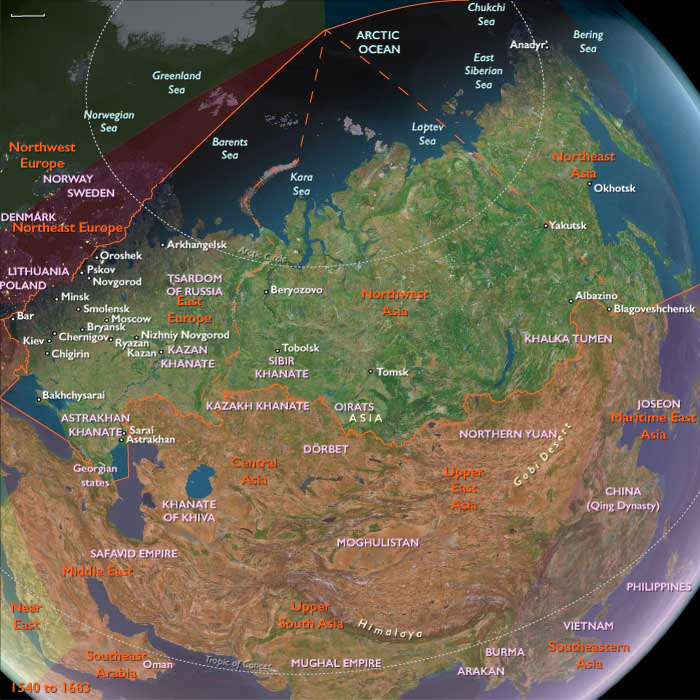
The Middle East: 1588–1599 CE
Ottoman Consolidation and Local Autonomy
Leadership and Succession in the Ottoman Empire
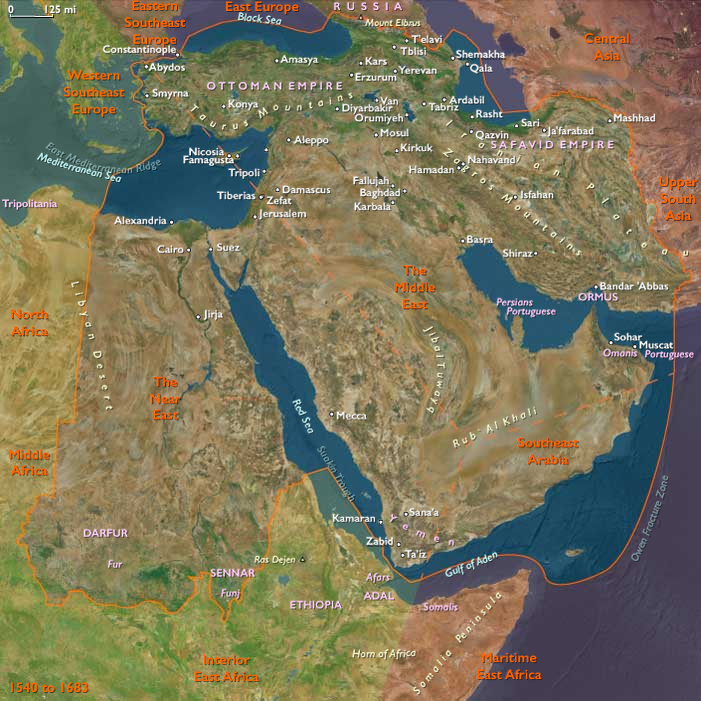
Sultan Murad III dies in 1595, succeeded by his son Mehmed III (1595–1603). Mehmed III continues to consolidate Ottoman control across the Middle East, dealing decisively with revolts and rebellions, especially in eastern Anatolia and Yemen. Ottoman administration remains stable and effective, maintaining control over vast territories despite ongoing challenges from local rulers and internal dissent.
Mount Lebanon's Autonomy Under Fakhr al-Din II
Mount Lebanon experiences significant autonomy under the Ottoman framework, particularly under Emir Fakhr al-Din II ibn Maan, a prominent Druze leader. Fakhr al-Din emerges victorious in 1591 from internal conflicts and aims to unify the feuding Maronite and Druze districts. Despite his Druze background, Fakhr al-Din is celebrated for religious tolerance, gaining significant support from the Christian Maronites who oppose the oppressive rule of Yusuf Sayfa, the Shi’i ruler of Tripoli. Fakhr al-Din navigates a complicated seven-year struggle for dominance, with the Ottomans shifting allegiances between him and Yusuf Sayfa.
Persian Developments and Safavid Stability
Stability Under Shah Abbas I
In Persia, Shah Abbas I (1588–1629) begins his transformative reign. He undertakes significant military reforms, bolstering the Safavid army with the introduction of gunpowder weaponry and reorganizing administrative structures. Shah Abbas revitalizes the Persian economy and begins diplomatic overtures with European powers to counterbalance Ottoman influence.
Cultural Flourishing under Safavid Patronage
The Safavid court in Isfahan continues to be a vibrant cultural hub. Shah Abbas actively patronizes arts and architecture, initiating ambitious projects that contribute to Isfahan’s reputation as a center of Persian culture. Persian miniature painting and poetry thrive, reflecting both traditional values and the emerging cosmopolitan influences under Abbas’s reign.
Economic and Strategic Dynamics
Rivalries and Maritime Trade
The Persian Gulf remains strategically crucial, with the Portuguese controlling key coastal strongholds. Local resistance, especially in Oman, grows significantly as indigenous Ibadi factions challenge Portuguese dominance through sustained rebellions and military engagements. These clashes underscore ongoing tensions between European maritime ambitions and local Middle Eastern powers.
Aleppo and Regional Trade Networks
Aleppo solidifies its position as the primary commercial hub in the region, attracting European traders eager to exchange Western goods for spices, textiles, and luxury items from Persia and India. The city’s economic prominence contributes significantly to Ottoman revenue, highlighting the intertwined nature of regional stability and economic prosperity.
Cultural Exchange and Legacy
Interaction Between Europe and the Middle East
Continuous trade with European merchants leads to cultural exchanges and diplomatic entanglements. Missionaries, scholars, and tourists from Europe frequent major Middle Eastern cities, bringing new ideas and fostering intellectual exchanges.
Legacy of the Era
This era is marked by strategic consolidation, cautious diplomacy, and cultural flourishing. The delicate balance of power maintained by Ottoman rulers, local autonomy in Lebanon under Fakhr al-Din, and the resurgence of Persian stability and culture under Shah Abbas shape the region’s socio-political and economic dynamics into the seventeenth century.