Martin Bucer
Protestant reformer
Years: 1491 - 1551
Martin Bucer (early German: Martin Butzer) (11 November 1491 – 28 February 1551) is a Protestant reformer based in Strasbourg who influences Lutheran, Calvinist, and Anglican doctrines and practices.
Bucer is originally a member of the Dominican Order, but after meeting and being influenced by Martin Luther in 1518 he arranges for his monastic vows to be annulled.
He then begins to work for the Reformation, with the support of Franz von Sickingen.
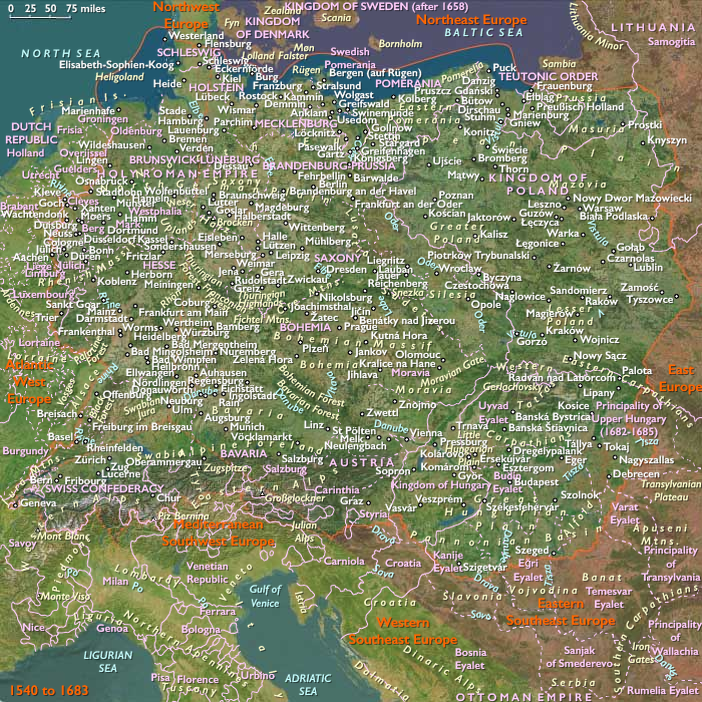
Bucer's efforts to reform the church in Wissembourg result in his excommunication from the Roman Catholic Church, and he is forced to flee to Strasbourg.
There he joins a team of reformers which includes Matthew Zell, Wolfgang Capito, and Caspar Hedio.
He acts as a mediator between the two leading reformers, Martin Luther and Huldrych Zwingli, who differ on the doctrine of the eucharist.
Later, Bucer seeks agreement on common articles of faith such as the Tetrapolitan Confession and the Wittenberg Concord, working closely with Philipp Melanchthon on the latter.
Bucer believeds that the Catholics in the Holy Roman Empire can be convinced to join the Reformation.
Through a series of conferences organized by Charles V, he tries to unite Protestants and Catholics to create a German national church separate from Rome.
He does not achieve this, as political events lead to the Schmalkaldic War and the retreat of Protestantism within the Empire.
In 1548, Bucer is persuaded, under duress, to sign the Augsburg Interim, which imposes certain forms of Catholic worship.
However, he continues to promote reforms until the city of Strasbourg accepts the Interim, and forces him to leave.
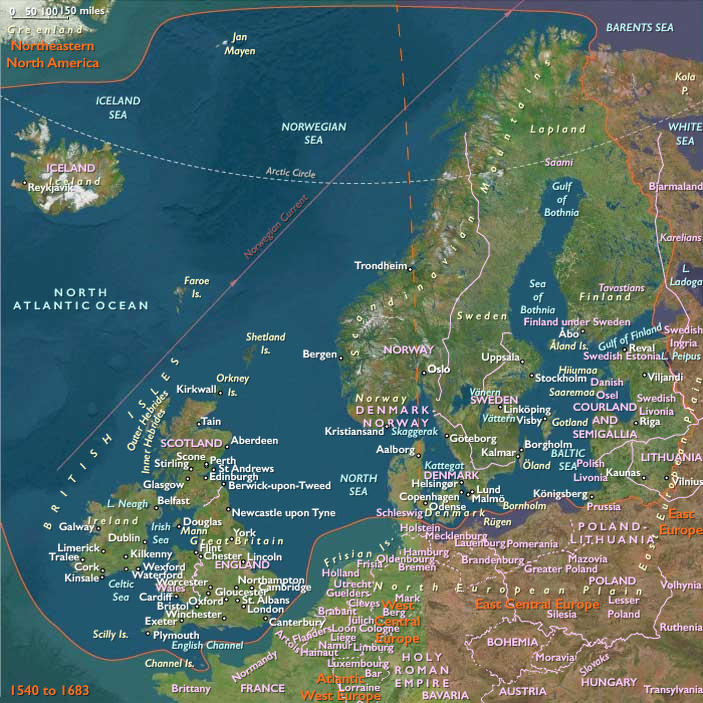
In 1549, Bucer is exiled to England, where, under the guidance of Thomas Cranmer, he is able to influence the second revision of the Book of Common Prayer.
He dies in Cambridge, England, at the age of 59.
Although his ministry did not lead to the formation of a new denomination, many Protestant denominations have claimed him as one of their own.
He is remembered as an early pioneer of ecumenism.