Bagrat, the son of king George I by his first wife Mariam of Vaspurakan, had been surrendered by his father at the age of three as a hostage to the emperor Basil II as a price for George’s defeat in the 1022 war with Constantinople.
The young child had spent the next three years in the imperial capital and was released in 1025.
He was still in the imperial possessions when Basil had died and had been succeeded by his brother Constantine VIII.
Constantine had ordered the retrieval of the young prince, but the imperial courier had been unable to overtake Bagrat, who was already in the Georgian kingdom.
After George I dies on August 16, 1027, Bagrat, aged eight, succeeds to the throne.
Queen Dowager Mariam now returns to prominence as regent for her son, sharing the regency with the grandees, particularly Liparit IV, Duke of Trialeti, and Ivane, Duke of Kartli.
By the time Bagrat becomes king, the Bagratids’ drive to complete the unification of all Georgian lands has gained irreversible momentum.
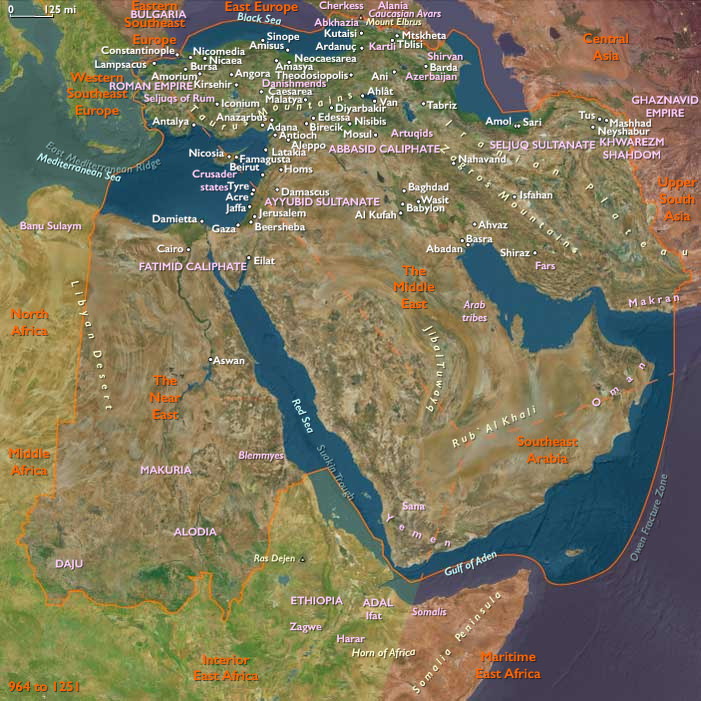
The kings of Georgia sit at Kutaisi in western Georgia from which they run all of what had been the Kingdom of Abkhazia and a greater portion of Iberia/Kartli; Tao/Tayk had been lost to the Empire while a Muslim emir remains in Tbilisi and the kings of Kakheti obstinately defend their autonomy in easternmost Georgia.
Furthermore, the loyalty of great nobles to the Georgian crown is far from stable.