Maria Christina of the Two Sicilies
Queen consort of Spain
Years: 1806 - 1878
Maria Christina of the Two Sicilies (7 April 1806 – 22 August 1878) is Queen consort of Spain (1829 to 1833) and Regent of Spain (1833 to 1840).

Related Events
Filter results
Showing 10 events out of 28 total
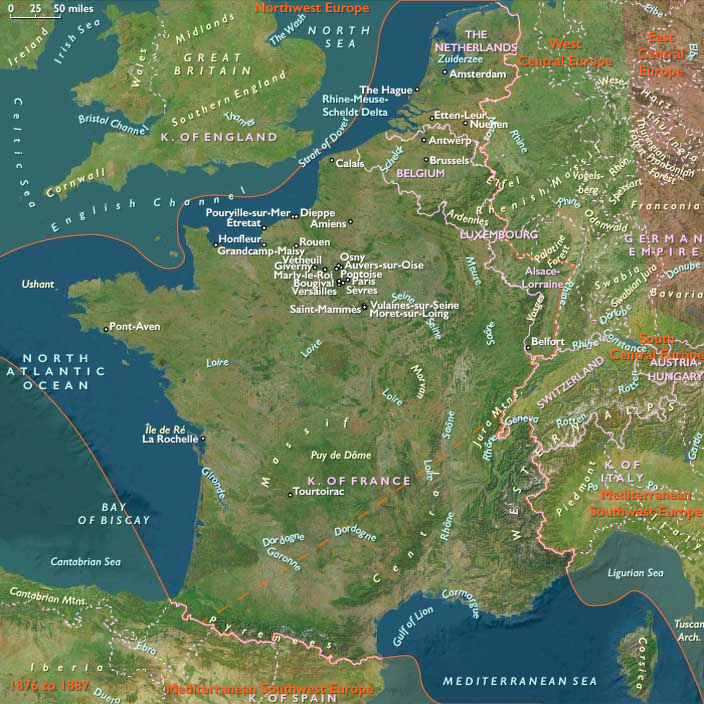
Mediterranean Southwest Europe (1828–1839 CE): Nationalism, Civil War, and Constitutional Struggles
The era 1828–1839 CE marks a tumultuous period in Mediterranean Southwest Europe, characterized by the rise of nationalism, intense constitutional debates, and civil conflict, significantly shaping the political landscape of Spain and Italy.
Italian Nationalism and the Risorgimento
In Italy, the early nineteenth century sees a powerful surge of nationalist sentiment aimed at uniting the fragmented Italian states into a single nation. This movement, eventually known as the Risorgimento, gains momentum through the efforts of revolutionaries and intellectuals such as Giuseppe Mazzini, a fervent advocate for Italian unity and republican ideals. Mazzini founds the influential revolutionary organization Young Italy in the early 1830s, which promotes a broad-based nationalist and republican agenda, becoming central to the spread of revolutionary ideas throughout Italy.
Despite these nationalist aspirations, Italian states remain under varying degrees of foreign influence, particularly Austrian dominance in the north and Bourbon rule in the south, conditions that fuel ongoing revolutionary agitation and ideological conflict.
Dynastic Crisis and the Carlist Wars in Spain
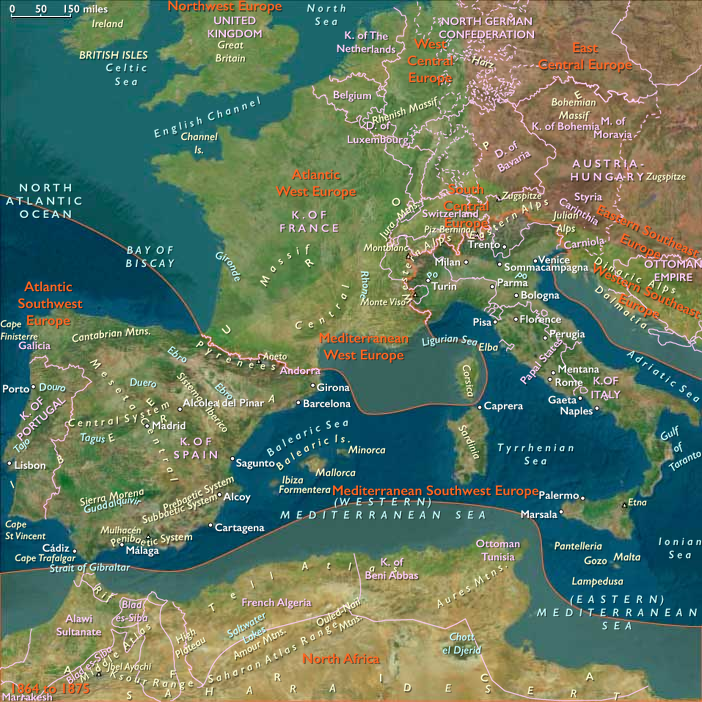
Spain faces a significant dynastic crisis following the death of King Ferdinand VII in 1833, leading to the outbreak of the First Carlist War (1833–1839). The conflict arises from the disputed succession between Ferdinand’s daughter, Isabella II, whose regency is held by her mother, Maria Cristina, and Ferdinand’s brother, Don Carlos, who claims the throne based on traditional male-only succession laws.
The war splits Spain along ideological and regional lines. The Carlists, traditionalist supporters of Don Carlos, include agrarian interests, regionalists, and devout Catholics, primarily strong in Aragon and Basque Navarre. They fiercely oppose the liberal, centralizing, and anticlerical forces backing Maria Cristina and Isabella II. British support for the liberal side helps prevent a decisive Carlist victory.
The conflict sees prolonged and intense fighting, especially in the mountainous Basque regions. A Carlist advance toward Madrid in 1837 ultimately fails, leading to a compromise settlement in 1839, known as the Convention of Vergara, which recognizes Basque regional privileges (fueros) while confirming Isabella II’s succession. However, the Carlist movement remains influential, leading to further uprisings later in the century.
Andorra's Stability Amidst Regional Turmoil
In contrast to broader regional unrest, Andorra maintains its historical stability during this era. The principality continues under the traditional dual sovereignty of the Bishop of Urgell and the French head of state, preserving its economic independence and relative autonomy despite periodic political changes in neighboring Spain and France.
Cultural and Intellectual Currents
The broader cultural and intellectual climate in Mediterranean Southwest Europe continues to reflect Enlightenment principles mingled with emerging nationalist ideas. Revolutionary and liberal ideals permeate public discourse, influencing literature, political thought, and public life, further fueling movements toward national unity and constitutional reform.
Conclusion: Foundations for Future Transformations
Between 1828 and 1839, Mediterranean Southwest Europe experiences profound political turmoil, driven by nationalist aspirations, civil war, and constitutional struggles. These developments lay critical foundations for the transformative events of the mid-nineteenth century, shaping the future trajectory of nations in this region.
Ferdinand VII of Spain, a widower, is childless, and Don Carlos, his popular, traditionalist brother, is heir presumptive.
In 1829, however, Ferdinand had married his Neapolitan cousin, Maria Cristina, who had given birth to a daughter, an event followed closely by the revocation of provisions prohibiting female succession.
Ferdinand dies in 1833, leaving Maria Cristina as regent for their daughter, Isabella II (r. 1833-68).
Don Carlos contests his niece's succession, and he wins the fanatical support of the traditionalists of Aragon and of Basque Navarre (Spanish, Navarra).
The Carlists (supporters of Don Carlos) hold that legitimate succession is possible only through the male line.
Comprising agrarians, regionalists, and Catholics, the Carlists also oppose the middle class—centralist, anticlerical liberals who flock to support the regency.
The Carlists field an army that holds off government attempts to suppress them for six years (1833-39), during which time Maria Cristina receives British aid in arms and volunteers.
A Carlist offensive against Madrid in 1837 fails, but in the mountains, the Basques continue to resist until a compromise peace in 1839 recognizes their ancient fueros.
Sentiment for Don Carlos and for his successor remains strong in Navarre, and the Carlists continue as a serious political force. Carlist uprisings will occur in 1847 and again from 1872 to 1876.
The power struggles of the early nineteenth century have led to the loss of all of Spain's colonies in Latin America, with the exception of Cuba and Puerto Rico.
The end of the wars in the Americas had improved the Spanish government's financial situation, and the economic and fiscal situation in Spain is improving.
Ferdinand had begun his restoration with a severe purge of liberals; but the regime has become increasingly unacceptable to extreme conservatives, who anticipate the succession of Don Carlos.
In 1829, Ferdinand takes as his fourth wife his niece Maria Christina of the Two Sicilies, who soon realizes that her influence depends on the elimination of that of Don Carlos.
María Cristina’s faction at court persuades the king to set aside the Salic law in March 1830 and thereby exclude Don Carlos from the succession even if María Cristina produces a female heir. (This attack on the rights of Don Carlos is the origin of the Carlist party and of the Carlist Wars, which will be a disrupting influence in Spain for more than a half century.)
The Queen Consort will, in fact, present Ferdinand with a daughter on October 10.
Meanwhile, the liberal exiles will mount another ineffective invasion.
King Ferdinand VIII of Spain has spent the last ten years in what the persecuted liberals call the “ominous decade” (and what will later be called an “orgy of repression”).
After the defeat of an attempt to force Queen Consort María Cristina to recognize the rights of Don Carlos, Ferdinand’s brother, during the king’s illness (September 1832), María Cristina's faction had become dominant at court.
She has succeeded in securing every important military command in the hands of supporters of the claims of Isabella.
Ferdinand recovers, banishes Don Carlos, and looks for moderate liberal support for his little daughter.
However, when, on September 29, the forty-nine-year-old Ferdinand dies, his three-year-old daughter becomes Queen Isabella II, with his twenty-seven-year-old widow ruling as regent.
María Cristina is obliged to lean on the liberals as Don Carlos asserts his royal claims from Portugal.
Conservative elements, the Catholic Church, and much of Navarre, Aragon, and Catalonia rebel against the government in support of Don Carlos; thus begins the so-called First Carlist War, which will last until 1839.
The Quadruple Alliance (April 22, 1834) – The Endgame of the Portuguese and Spanish Civil Wars
On April 22, 1834, the Quadruple Alliance was signed between Portugal, Spain, Great Britain, and France, marking the final stage of the Portuguese Civil War (1828–1834) and the broader struggle between liberalism and absolutism in the Iberian Peninsula.
The treaty aimed to permanently remove the absolutist pretenders, Dom Miguel of Portugal and Don Carlos of Spain, ensuring that constitutional monarchies prevailed in both nations.
Terms of the Quadruple Alliance
-
Exile of Dom Miguel and Don Carlos
- Dom Miguel was banished from Portugal and forbidden from claiming the throne again.
- Don Carlos, the Carlist claimant to the Spanish throne, was expelled from Spain, as he had opposed Isabella II’s constitutional rule.
-
Continued Spanish Troop Presence in Portugal
- Spain committed to keeping troops in Portugal until the final defeat of Miguelite forces, ensuring stability for Queen Maria II.
-
British Naval Support
- Britain pledged naval assistance to protect both Pedro’s constitutional forces in Portugal and Isabella II in Spain.
-
Portuguese Military Assistance Against the Carlists
- Portugal agreed to send an auxiliary force to help Spain combat the Carlist rebellion, which had erupted over disputed succession laws.
Impact – The End of the Portuguese Civil War
- With British, Spanish, and French backing, Pedro’s forces achieved total victory, forcing Miguel’s surrender at Évora-Monte on May 26, 1834.
- Miguel formally abdicated and went into exile, marking the end of absolutist rule in Portugal.
- Queen Maria II was securely placed on the throne, and constitutional governance was restored under the Constitutional Charter of 1826.
Conclusion – The Triumph of Liberalism in Iberia
The Quadruple Alliance of 1834 played a decisive role in ensuring the success of constitutional monarchies in both Portugal and Spain. With Miguel and Don Carlos exiled, the liberal cause had prevailed, securing Portugal’s and Spain’s place in the European order as constitutional states.
However, while Portugal’s civil war ended in 1834, the First Carlist War in Spain continued until 1840, showing that the struggle between absolutism and liberalism was far from over.
As regent for the young Isabella II of Spain, María Cristina, whose alliances with liberalism has arisen out of military necessity, not from conviction, would prefer to grant administrative reforms rather than consent that her daughter should become a constitutional monarch.
However, the liberals alone can save her daughter's throne from the Carlists, and the minimum demand of all liberals is a constitution.
As regent, she therefore consistently supports conservative liberals against the radicals.
The Royal Statute of 1834, a conservative constitution, represents this alliance between respectable upper-middle-class liberals and the crown.
In this year, the Spanish Inquisition, which began in the fifteenth century, is suppressed by royal decree on July 15, 1834.
The Royal Statute, with its property franchise and the great powers it gives the crown in the choice of ministers, cannot stop the drift toward the left implicit in liberalism itself.
The radicals, who are the heirs of the exaltados of 1820-23, had been installed in power first by a series of provincial town risings in 1835 in Andalusia, ...
...Aragon, ...