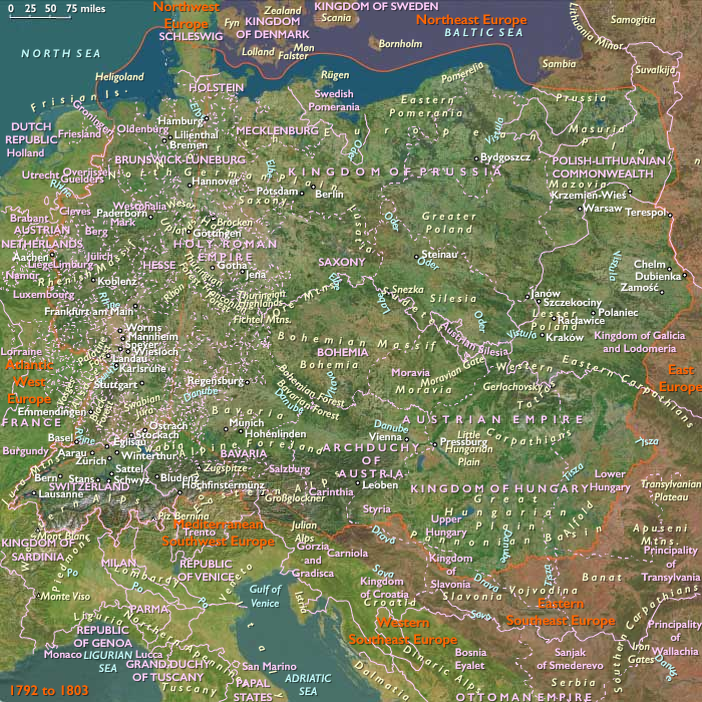
Elector Maximilian III Joseph dies in 1777, ending the direct line of the Wittelsbachs; his successor to the Duchy of Bavaria is the Elector Palatine Charles IV Theodore of the Sulzbach line.
Charles, duke of Zweibrucken, heir presumptive of the Elector Palatine, protests the cession of Lower Bavaria to Austria by Charles Theodore’s secret treaty with Holy Roman Emperor Joseph II, in exchange for which he is to receive the Austrian Netherlands.
Maximilian's consort Maria Anna Sophia of Saxony opens negotiations with Prussia to secure Bavaria's independence and the succession of the Wittelsbach branch Palatinate Zweibrücken-Birkenfeld in Bavaria after Charles Theodore's death.
Count Karl-Wilhelm Finck von Finckenstein, Prussian First Minister under Frederick the Great, believes that Austria's acquisitions in Bavaria would rebalance the gain of Silesia to Prussia three decades earlier, thus reestablishing Austria's hegemony in German-speaking lands and undermining Prussia's own position.
He therefore constructs an alliance with Saxony and both countries declares war on Austria in July 1788, ostensibly to defend the rights of Charles II August, Duke of Zweibrücken, Charles Theodore's heir, and thus initiating the War of Bavarian Secession.