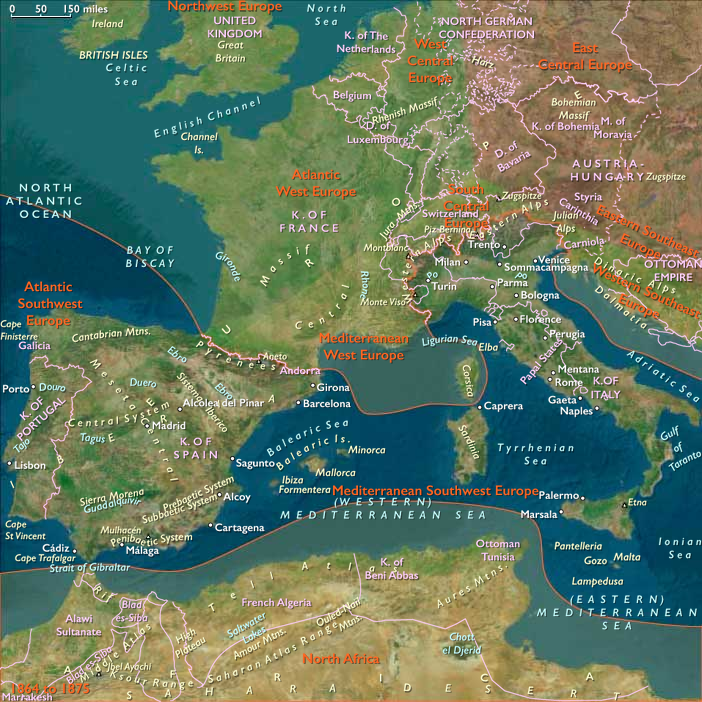
Italy's politics after unification had favored radical socialism due to a regionally fragmented right, as conservative Prime Minister Marco Minghetti has only held on to power by enacting revolutionary and socialist-leaning policies to appease the opposition such as the nationalization of railways.
In 1876, Minghetti is ousted and replaced by socialist Agostino Depretis, who begins the long Socialist Period, marked by corruption, government instability, poverty, and use of authoritarian measures by the Italian government.
Depretis begins his term as Prime Minister by initiating an experimental political idea called Trasformismo (transformism).
The theory of trasformismo is that a cabinet should select a variety of moderates and capable politicians from a non-partisan perspective.
In practice, trasformismo is authoritarian and corrupt.
Depretis had pressured districts to vote for his candidates if they wished to gain favorable concessions from Depretis when in power.
The results of the 1876 election result in only four representatives from the right being elected, allowing the government to be dominated by Depretis.
Despotic and corrupt actions are believed to be the key means in which Depretis manages to keep support in southern Italy.
Depretis puts through authoritarian measures, such as the of banning public meetings, placing "dangerous" individuals in internal exile on remote penal islands across Italy, and adopting militarist policies.
Depretis enacts controversial legislation for the time, such as abolishing arrest for debt, making elementary education free and compulsory while ending compulsory religious teaching in elementary schools.