Manuel José Arce
Salvadoran general; president of the Federal Republic of Central America
Years: 1787 - 1847
General Manuel José Arce y Fagoaga (January 1, 1787, San Salvador—December 14, 1847, San Salvador) is a decorated general and president of the Federal Republic of Central America from 1825 to 1829.
Related Events
Filter results
Showing 8 events out of 8 total
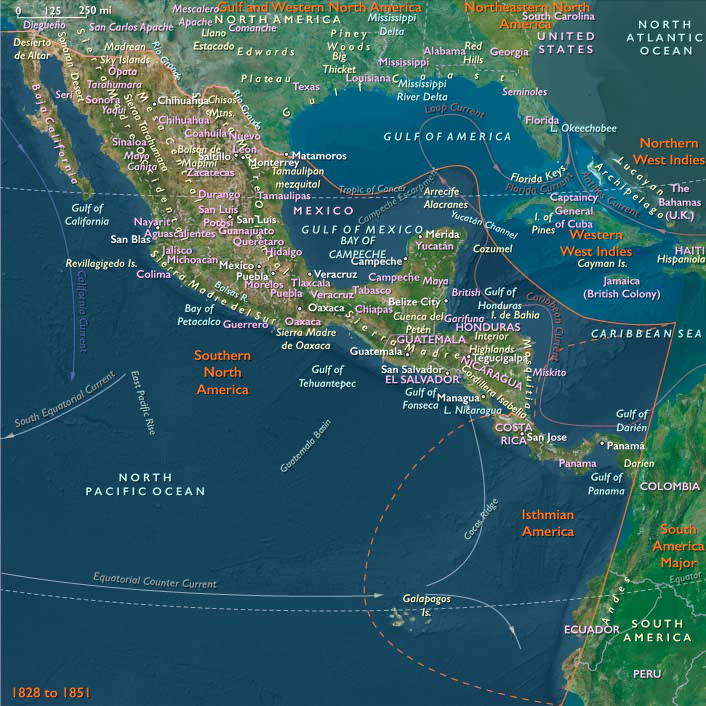
Manuel Jose Arce in 1825 becomes the first president of the Central American Federation.
Simón Bolívar’s vision of a Gran Colombia is crippled in 1826 by the Congress of Panama, which he has organized so that Latin American countries could become closer and develop a unified policy towards Spain.
The Congress of Panama (often referred to as the Amphictyonic Congress, in homage to the Amphictyonic League of Ancient Greece), and held in Panama City from June 22 to July 15 of 1826, the meeting proposes creating a league of American republics, with a common military, a mutual defense pact, and a supranational parliamentary assembly.
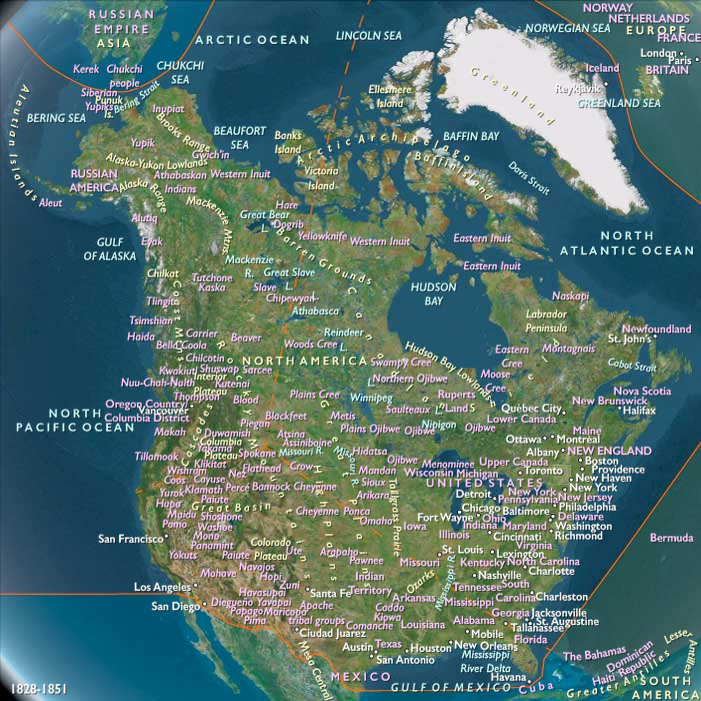
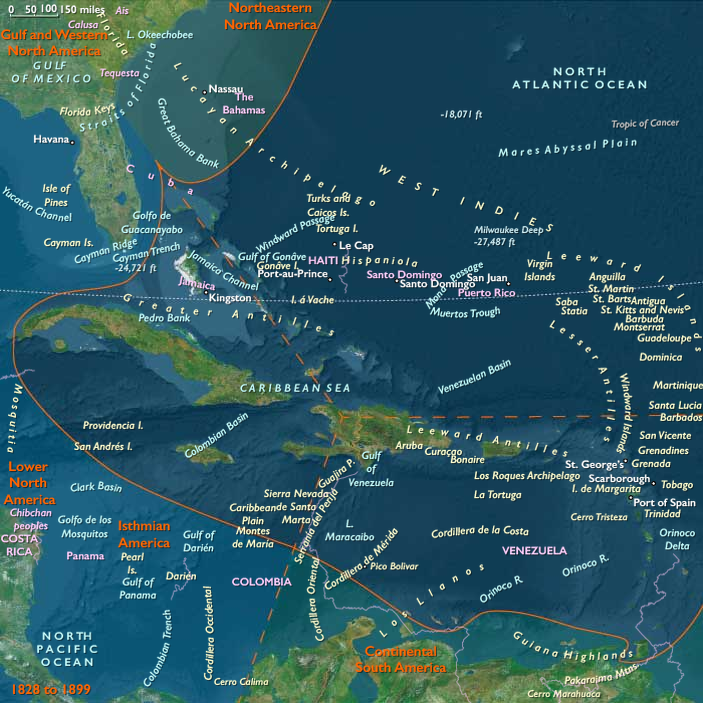
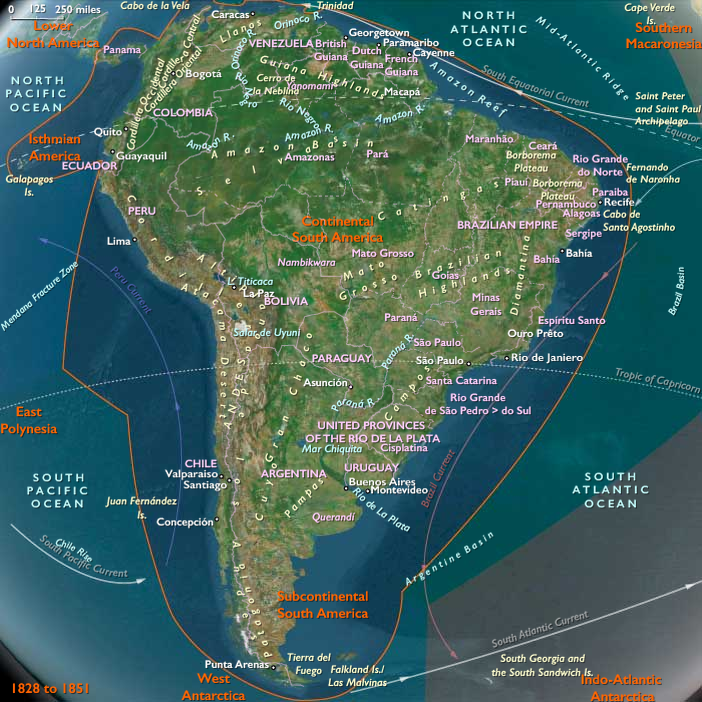
It is attended by representatives of Gran Colombia (comprising the modern-day nations of Colombia, Ecuador, Panama, and Venezuela), Peru, the United Provinces of Central America (Guatemala, El Salvador, Honduras, Nicaragua, and Costa Rica), and Mexico.
Chile and the United Provinces of South America (Argentina) decline to attend, out of mistrust of Bolívar's enormous influence.
The Empire of Brazil does not send delegates, because it expects a hostile reception from its Hispanic neighbors due to its ongoing war with Argentina over modern Uruguay.
The isolationist Paraguay (which had refused previous delegates from Bolívar) had not been invited.
Haiti has actively assisted the independence movements of many Latin American countries—and secured a promise from the great liberator, Simón Bolívar, that he will free the enslaved after winning independence from Spain—the nation of former slaves is excluded from the hemisphere's first regional meeting of independent nations.
In the end, the grandly titled "Treaty of Union, League, and Perpetual Confederation" that emerges from the Congress is ultimately only ratified by Gran Colombia, and Bolívar's dream will soon founder irretrievably with civil war in that nation, the disintegration of Central America, and the emergence of national rivalries.
The Congress of Panama also has political ramifications in the United States.
President John Quincy Adams and Secretary of State Henry Clay had wanted the U.S. to attend the Congress—it had only been invited due to pressure on Bolívar—but, as Hispanic America has outlawed slavery, politicians from the Southern United States have held up the mission by not approving funds or confirming the delegates.
Despite their eventual departure, of the two U.S. delegates, one (Richard Clough Anderson, Jr.) dies en route to Panama, and the other (John Sergeant) only arrives after the Congress has concluded its discussions.
Thus Great Britain, which attends with only observer status, manages to acquire many good trade deals with Latin American countries.
Honduras had been among the least-developed and least-populated provinces at the time of Central American independence (1823).
In 1824 its population was estimated at just over one hundred and thirty-seven thousand.
Despite its meager population, Honduras produces two of the most prominent leaders of the federation, the liberal Francisco Morazán (nicknamed the "George Washington of Central America") and the conservative Jose Cecilio del Valle.
In 1823 del Valle had been narrowly defeated by liberal Manuel Jose Arce for election as the federation's first president.
Morazán overthrows Arce in 1829 and is elected president of the federation in 1830, defeating del Valle.
The beginning of Francisco Morazán's administration in 1830 sees some efforts to reform and promote education.
Success is limited, however, because of lack of funds and internal fighting.
In the elections of 1834, del Valle defeats Morazán, but del Valle dies before taking office, and the legislature offers Morazán the presidency.
With clerical support, a conservative uprising begins in Guatemala in 1837, and within a year the federation has begun to dissolve.
On May 30, 1838, the Central American Congress removes Morazán from office, declares that the individual states can establish their own governments, and on July 7 recognizes these as "sovereign, free, and independent political bodies."
Local rivalries and ideological disputes have produced political chaos and disrupted the economy.
The British have taken advantage of the chaotic condition to reestablish their control over the Islas de la Bahía.
As a result, Honduras wastes little time in formally seceding from the federation once it is free to do so.
Independence is declared on November 15, 1838, and in January 1839, an independent constitution is formally adopted.
Morazán now rules only El Salvador, and in 1839 his forces there are attacked by a Honduran army commanded by General Francisco Ferrera.
Ferrera was defeated but returns to attack again in the summer, only to suffer another defeat.
The following year, Morazán himself will be overthrown, and two years later he will be shot in Costa Rica during a final, futile attempt to restore the United Provinces of Central America.
Central American liberals are optimistic for their Federation, which they believe will evolve into a modern, democratic nation, enriched by trade passing through it between the Atlantic and the Pacific oceans.
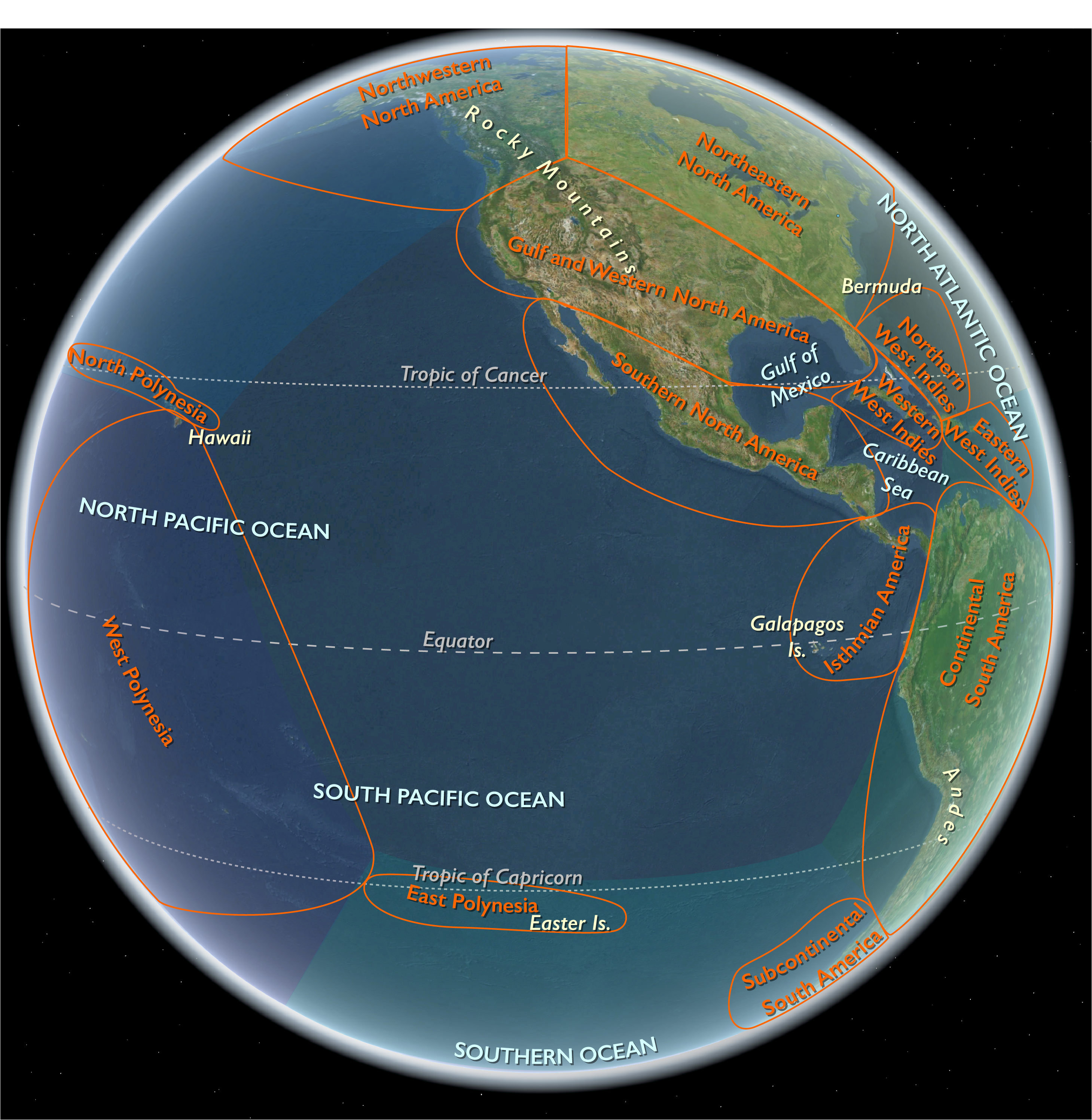
These aspirations are reflected in the emblems of the federal republic: the flag shows a white band between two blue stripes, representing the land between two oceans.
The coat of arms shows five mountains (one for each state) between two oceans, surmounted by a Phrygian cap, the emblem of the French Revolution.
In practice, however, the federation faces insurmountable problems.
As a governor of Mexico, Vicente Filisola had occupied Guatemala City after the formation of Federal Republic of Central America and had been successful in annexing El Salvador in 1823, causing an uprising there.
In compliance with the Mexican constitution, Filisola had convened the Central American congress, which had forthwith declared its independence from Mexico.
Filisola had not been able to maintain a fighting force, and his troops gad been sent back to Mexico by the residents of Guatemala City, who paid for their transportation.
The liberal democratic project is strongly opposed by conservative factions allied with the Roman Catholic clergy and the wealthy landowners.
Transportation and communication routes between the states are extremely deficient.
The bulk of the population lacks any sense of commitment towards the broader federation, perhaps owing to their continued loyalty to the Roman Catholic Church in Spain.
The federal bureaucracy in Guatemala City has proven ineffectual, and Manuel José Arce’s four-year-old government is overthrown in 1829.
José Francisco Barrundia, former leader of the Revolutionary Party of Guatemala that had fought for independence, is appointed interim president, and
Francisco Morazán Quesada is elected President of Central America in a general election that brings the Liberal party to power in the republic.
Morazán enacts many reforms, including freedom of speech, of the press, and of religion; equality of people of all classes before the law; and trial by jury.
The Conservatives object to all this.
The separation of Church and State, including allowing secular marriage and divorce and an end to government enforced tithing, makes much of the clergy an enemy of Morazán and the Liberals.
The first decades of Honduran independence will be neither peaceful nor prosperous.
The country's political turmoil will attract the ambitions of individuals and nations within and outside of Central America.
Even geography contributes to its misfortunes.
Alone among the Central American republics, Honduras has a border with the three potential rivals for regional hegemony—Guatemala, El Salvador, and Nicaragua.
This situation is exacerbated by the political division throughout the isthmus between liberals and conservatives.
Any liberal or conservative regime sees a government of the opposite ideology on its borders as a potential threat.
In addition, exiled opposition figures tend to gather in states whose governments share their political affiliation and to use these states as launching pads for efforts to topple their own governments.
For the remainder of the century, Honduras's neighbors will constantly interfere in its internal politics.