The Middle East (1996–2007): From Stalled Peace to New Conflicts
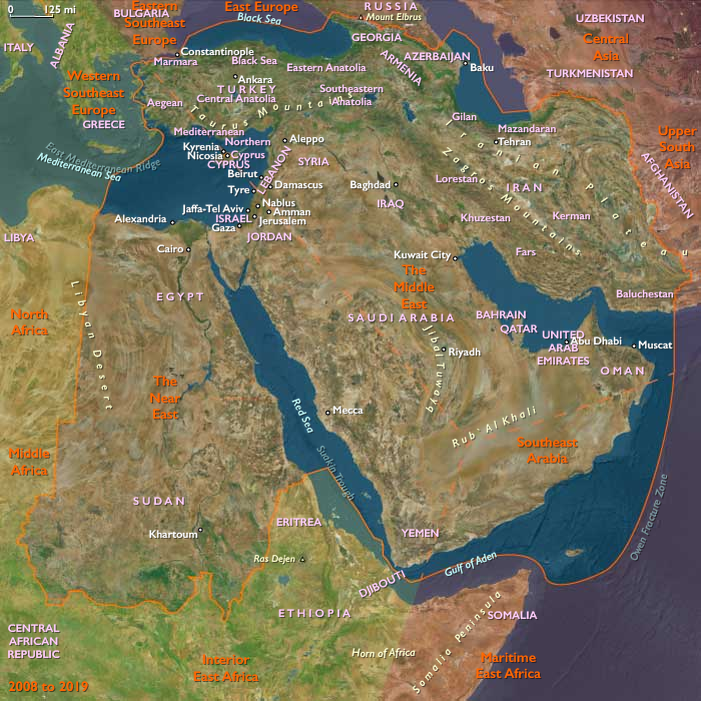
Between 1996 and 2007, the Middle East experiences persistent turbulence, characterized by stalled peace initiatives, intensified internal conflicts, geopolitical realignments, and the profound repercussions of global events such as the September 11, 2001, terrorist attacks and the subsequent U.S.-led invasion of Iraq. This era reshapes the region profoundly, setting the stage for renewed tensions, sectarian divisions, and shifting power balances.
Stalled Peace and Intensified Conflict: Israel, Palestine, and Lebanon
The optimism sparked by the Oslo Accords of the early 1990s steadily diminishes amid violence and political stalemate. Israeli Prime Minister Yitzhak Rabin’s assassination in 1995, followed by a series of Israeli and Palestinian leadership changes, contributes to a breakdown in trust. The second Palestinian intifada erupts in September 2000 after Ariel Sharon visits the Temple Mount/Haram al-Sharif, triggering widespread unrest. Subsequent years see escalating violence, suicide bombings, and harsh Israeli military reprisals.
In 2005, under Prime Minister Ariel Sharon, Israel unilaterally withdraws from Gaza, dismantling settlements but retaining control over its borders. This withdrawal, rather than promoting peace, eventually strengthens Hamas, which wins the Palestinian legislative elections in 2006, deepening divisions between Gaza (under Hamas) and the West Bank (under the Fatah-led Palestinian Authority).
In Lebanon, tensions flare dramatically in 2006 when Hezbollah captures two Israeli soldiers, sparking a destructive 34-day conflict. The war devastates Lebanon's infrastructure, kills over a thousand Lebanese civilians, and highlights Hezbollah's military capabilities and resilience. This conflict underscores persistent instability and the increasing influence of Iran via its Lebanese proxy.
The September 11 Attacks and the War on Terror
The terrorist attacks of September 11, 2001, dramatically transform U.S. involvement in the Middle East. The subsequent "War on Terror" begins with the invasion of Afghanistan in late 2001, but swiftly impacts the entire Middle East. States such as Saudi Arabia, Qatar, Bahrain, and Kuwait find themselves balancing cooperation with the U.S. against growing domestic opposition to American presence in the region.
Increased scrutiny on Saudi Arabia, due to many attackers' Saudi origins, pressures the kingdom to confront internal extremist elements. Radical Islamist groups and their sympathizers grow increasingly hostile to regional governments closely aligned with the West.
The 2003 Iraq War and Regional Aftershocks
In March 2003, a U.S.-led coalition invades Iraq, toppling the regime of Saddam Hussein within weeks. The stated objective—eliminating Iraq’s alleged weapons of mass destruction—proves unfounded. The invasion dismantles the Iraqi army and governmental structures, creating a security vacuum that rapidly descends into insurgency, sectarian violence, and civil conflict.
Sectarian divisions between Sunni and Shi’a communities erupt violently, exacerbated by the power vacuum and Iranian-backed Shi’a militias. Al-Qaeda in Iraq (later evolving into the Islamic State of Iraq) emerges, exploiting Sunni grievances against the newly empowered Shi’a majority government. By 2006–2007, Iraq faces intense sectarian violence, prompting U.S. forces to implement the "surge" strategy, temporarily stabilizing the situation but at great cost.
Iran: Rising Regional Influence
Iran benefits geopolitically from the Iraq war. With Saddam Hussein’s Sunni-led regime gone, a predominantly Shi’a government comes to power in Baghdad, substantially enhancing Iranian influence. Iran actively supports Shi’a militias, extending its strategic depth into Iraq. Simultaneously, under President Mahmoud Ahmadinejad (elected in 2005), Iran intensifies its nuclear program, generating international concern and leading to escalating sanctions and tensions with the West and Israel.
Syria Under Bashar al-Assad
In 2000, following Hafez al-Assad’s death, his son Bashar al-Assad assumes power in Syria. Initially perceived as a reformer, Bashar quickly reverts to authoritarian policies, maintaining a tight grip through security forces. Despite pressure following the assassination of former Lebanese Prime Minister Rafic Hariri in 2005—widely attributed to Syrian involvement—Damascus retains significant influence in Lebanese politics. Under international pressure, Syria withdraws its military from Lebanon in 2005, ending nearly three decades of occupation, though continuing covert influence through Hezbollah and other political allies.
Lebanon's Internal Struggles and Foreign Influence
Following Syrian withdrawal, Lebanon faces deepening internal division between pro-Western groups and pro-Syrian factions led by Hezbollah. The 2005 assassination of Rafic Hariri polarizes the country into two opposing political coalitions: the pro-Western, Sunni-led March 14 alliance, and the pro-Syrian, Hezbollah-led March 8 alliance. Political paralysis and periodic violence become common, threatening Lebanon’s fragile stability and sovereignty.
Gulf States: Economic Expansion and Geopolitical Importance
The Gulf Cooperation Council (GCC) states, notably Qatar, Bahrain, Kuwait, and especially the United Arab Emirates, experience massive economic growth due to soaring oil prices in the mid-2000s. Dubai emerges as a global financial and commercial hub, investing heavily in infrastructure and tourism. Abu Dhabi and Qatar similarly leverage immense hydrocarbon wealth, enhancing their global diplomatic and economic profiles.
Saudi Arabia grapples with internal challenges, including extremist threats and domestic demands for reform, while maintaining close strategic relations with the U.S. Bahrain and Qatar host large American military bases, underscoring their strategic roles.
Turkey: Internal Change and Regional Ambitions
Turkey under the Justice and Development Party (AKP), led by Prime Minister Recep Tayyip Erdoğan from 2003, experiences significant political, economic, and diplomatic transformation. Turkey pursues European Union membership negotiations (officially beginning in 2005), while simultaneously asserting itself as a regional mediator in Middle East conflicts, including between Syria and Israel.
Domestically, Erdoğan's government implements economic reforms leading to unprecedented growth but also faces criticism for growing authoritarian tendencies and contentious Kurdish policies, as clashes with the Kurdistan Workers' Party (PKK) continue sporadically.
South Caucasus: Armenia, Azerbaijan, and Georgia
In the Caucasus, Armenia and Azerbaijan remain locked in a stalemate over Nagorno-Karabakh, with periodic skirmishes along their shared border, though no resolution emerges during this period.
Georgia sees significant change under President Mikheil Saakashvili, who leads the pro-Western "Rose Revolution" in 2003. His reforms, aimed at reducing corruption and seeking NATO and EU integration, lead to increasing tensions with Russia, which supports separatist movements in Abkhazia and South Ossetia.
Legacy of Instability and Realignment (1996–2007)
The era from 1996 to 2007 leaves a mixed legacy in the Middle East. While economic prosperity enriches some Gulf states, the broader region experiences severe instability due to unresolved conflicts, failed interventions, and persistent authoritarianism. The second intifada, the Iraq War, and Hezbollah-Israel conflicts underscore unresolved territorial and sectarian tensions, fueling deep-seated grievances.
The period sees increased Iranian influence, enhanced sectarian divisions, and expanded American military presence, reshaping geopolitical alignments. The turbulence further weakens hopes for lasting peace, laying the groundwork for ongoing conflicts and instability that continue into the next decades.