Magnus IV of Sweden
King of Sweden and King of Norway
Years: 1316 - 1374
Magnus Eriksson (spring 1316 – 1 December 1374) as Magnus IV is king of Sweden (1319–1364), including Finland, as Magnus VII King of Norway (1319–1343), including Iceland and Greenland, and also rules Scania (1332–1360).
By adversaries, he has also been called Magnus Smek (English equivalent: Magnus the Caresser).
Referring to Magnus Eriksson as Magnus II is inaccurate.
The Swedish Royal Court officially lists three Swedish kings before him by this name.
Related Events
Filter results
Showing 10 events out of 21 total
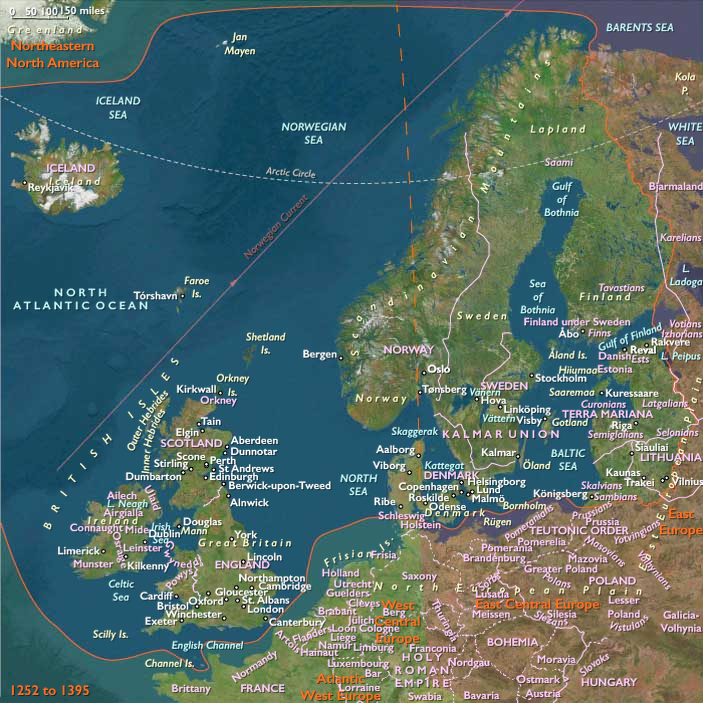
North Europe (1252–1395 CE): Hanseatic Gateways and North Sea Kingdoms
From the ice-bright fjords of Norway to the forested lakes of Finland, from the North Sea harbors of England and Flanders to the timbered ports of Riga and Reval, North Europe in the Lower Late Medieval Age formed a wide arc of coasts and islands bound by ships, winds, and trade. Here, between the Atlantic and the Baltic, urban leagues rose from the cold seas, monarchies forged fragile unions, and frontier societies balanced fishing, farming, and fur in the early chill of the Little Ice Age.
The century after 1250 opened with northern expansion and ended with consolidation. The Baltic world—a mosaic of Scandinavians, Germans, Finnic and Slavic peoples—became Europe’s northern frontier of Christianization, commerce, and state-building. Sweden, extending its reach eastward through the crusades of the mid-13th century, established control over Finland, fortifying Turku and Viipur and planting Latin Christianity along the Gulf of Bothnia. The monarchy strengthened under Magnus Ladulås (r. 1275–1290) but waned amid noble regencies in the 14th century, setting the stage for the Kalmar Union—the later federation of Sweden, Denmark, and Norway that would dominate the north.
Denmark, seated astride the Øresund, rebuilt its Baltic power under Valdemar IV Atterdag (r. 1340–1375). Control of the herring fisheries of Scania and the Sound tolls enriched the crown and the cities of Copenhagen, Malmö, and Helsingør. Across the sea, Norway governed a vast but thinly peopled realm of coasts and islands. The Black Death(1349–1350) cut its population by more than half, reducing royal revenues and leaving the country increasingly dependent on Danish and German merchants. Bergen, however, flourished as a hub of the stockfish trade, exporting dried cod to Lübeck, London, and Bruges, and connecting the Arctic fisheries to the Hanseatic world.
At the same time, Iceland, though under Norwegian rule since 1262, maintained its Althing and sagaliterary traditions, while the Faroe, Shetland, and Orkney islands slipped gradually from Norwegian into Scottish influence. The North Atlantic economy survived on wool, fish, and the resilience of small coastal communities accustomed to harsh climate and long isolation.
Along the southern Baltic, German and Scandinavian merchants transformed the sea into a common highway of trade. The Hanseatic League, led by Lübeck, united more than a hundred cities in a federation of markets and maritime law. Its cogs sailed from Bremen and Hamburg eastward to Visby on Gotland, Riga, Reval (Tallinn), and Novgorod, carrying salt, grain, and cloth north, and returning with timber, furs, tar, and iron. The Livonian Order, a crusading branch of the Teutonic Knights, ruled Estonia and Latvia, founding cathedral towns and fortresses while exacting tribute from the Baltic peoples.
Farther inland, Lithuania expanded westward and southward into Ruthenia, while its Baltic coast remained contested with the Teutonic Knights. The Christianization of Lithuania (1387) and the Union of Krewo (1385) bound it to Poland, drawing the last pagan kingdom of Europe into Latin Christendom. In the far east, the mercantile republic of Novgorod controlled Karelia and the White Sea routes, its boyars growing rich from the fur trade of the Finnic and Sami forests. Tribute flowed from hunters to Novgorod’s markets, then by Hanseatic kontors at Peterhof into the western economy. The Teutonic city of Königsberg (Kaliningrad), founded in 1255, served as a bridge between crusading Prussia and commercial Prussia—half monastery, half market.
The onset of the Little Ice Age after 1300 cooled the Baltic and Atlantic alike. Shorter growing seasons strained grain harvests in Finland and northern Norway, but the sea yielded abundance. The colder waters brought herring and cod in profusion, feeding both local diets and international trade. Mixed economies—small farms, herding, fishing, and trapping—buffered rural societies against famine, while urban ports prospered on maritime redundancy. When one route failed, another port took its place: the resilience of Riga, Reval, and Stockholm mirrored the flexibility of London, Bergen, and Bruges across the North Sea.
In the British Isles, royal wars redefined the landscape. England, unified under the Plantagenets, expanded through the conquest of Wales (1282) but met resistance in Scotland, where William Wallace and Robert the Bruce secured independence after the victory at Bannockburn (1314), later recognized by treaty (1328). The outbreak of the Hundred Years’ War (1337) with France redirected English ambition southward, turning Bordeaux into the principal export port for claret and wool. England’s Model Parliament (1295) and the development of a tax-granting Commons gave its monarchy new fiscal strength, even as plague and war ravaged its towns.
Scotland, emerging from the Wars of Independence, consolidated monarchy under David II and Robert II, fostering Gaelic and Lowland synthesis in court and church. Ireland, fragmented between Anglo-Norman lordships and resurgent Gaelic dynasties, saw the English Pale contract as plague and political crisis reduced royal control. The North Sea economy tied these islands to continental markets through Bristol, Hull, and King’s Lynn, whose fleets traded wool, cloth, wine, and salt fish.
The Hanseatic merchants at London’s Steelyard dominated export finance, while the Calais Staple, established after the English conquest of Calais in 1347, centralized wool trade under royal oversight. Across the channel, Flemish weavers in Bruges and Ghent transformed English wool into Europe’s finest cloth. The same winds that carried wool to Flanders brought herring fleets to Denmark and stockfish convoys to Norway—threads of a single northern economy spun from the sea.
Faith and culture intertwined with commerce. In Uppsala, Turku, and Trondheim, new cathedrals rose from stone quarried from frozen ground; in Westminster and York, Gothic vaults embodied royal piety. Monasteries along the North Sea coast—Lindisfarne, Iona, Bergen, and Nidaros—served as beacons of continuity. In the plague’s aftermath, lay devotion deepened: confraternities tended the sick, while mystics such as Julian of Norwich and Birgitta of Sweden voiced personal revelations of divine mercy amid mortality.
By 1395 CE, North Europe had become a maritime and mercantile sphere of its own. Novgorod still commanded the fur frontier though shadowed by Muscovy’s rise; Sweden and Denmark vied for Baltic supremacy; Livonia and Prussia were knit into the Christian north under the crusading orders; and across the North Sea, England, Scotland, and the Low Countries balanced war with prosperity. Hanseatic fleets and Atlantic merchants together shaped a new northern commonwealth of ports and peoples—resilient, self-confident, and poised to lead Europe’s maritime expansion in the centuries ahead.
Northeast Europe (1252 – 1395 CE): Hanseatic Gateways, Swedish and Danish Expansion, and Novgorod’s Northern Reach
Geographic and Environmental Context
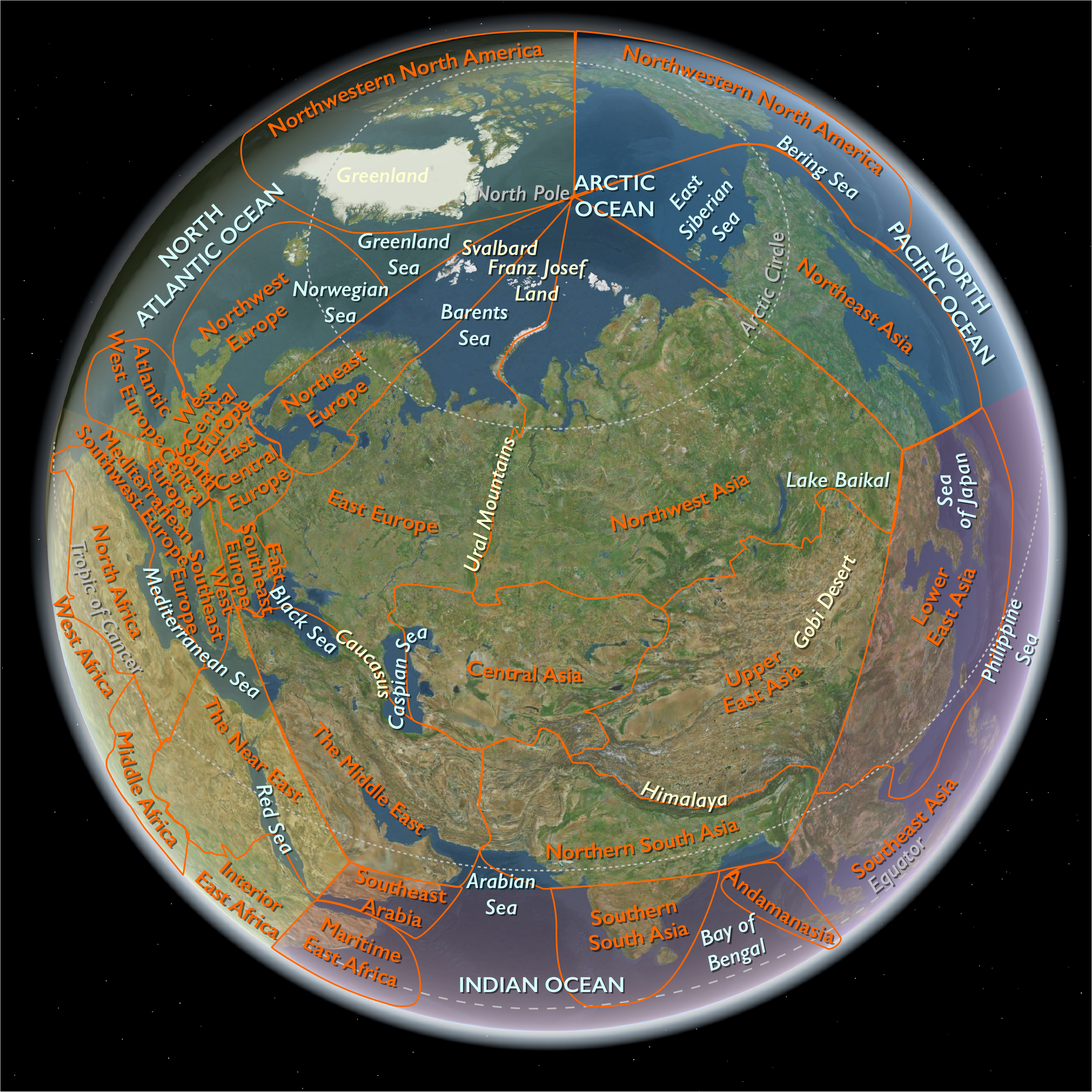
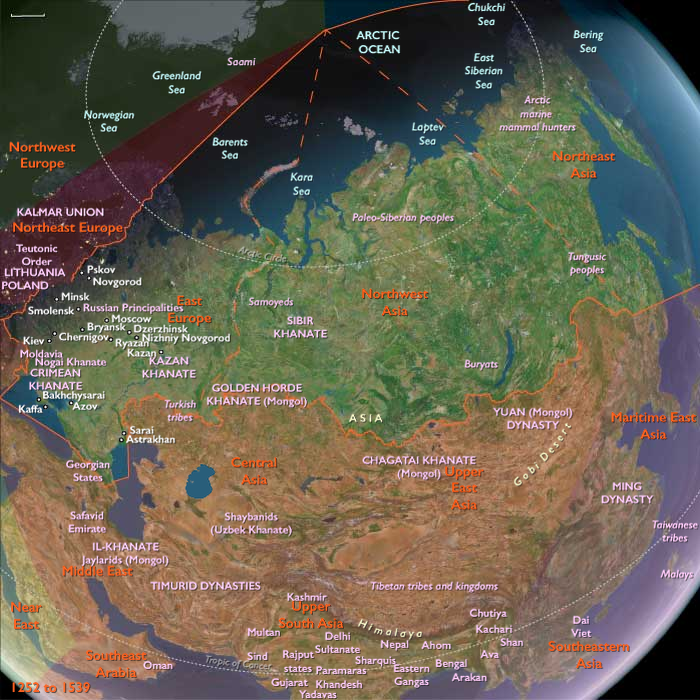
Northeast Europe includes Sweden, Finland, Denmark’s eastern reaches (including Copenhagen and Zealand), Norway’s southeast (Oslofjord), the Baltic States (Estonia, Latvia, Lithuania’s Baltic coast), and the Russian enclave of Kaliningrad.
-
Anchors: the Baltic Sea and its gulfs (Bothnia, Finland, Riga), forest–lake mosaics inland, and trade hubs like Stockholm, Visby, Riga, Tallinn (Reval), and Novgorod.
-
The region served as a northern crossroads between Scandinavia, Rus’, the Hanseatic League, and the Holy Roman Empire.
Climate and Environmental Shifts
-
The onset of the Little Ice Age (c. 1300) shortened growing seasons, cooled the Baltic, and shifted fishing patterns (notably herring).
-
Finland’s inland farmers and Sami reindeer–fishing communities adapted to longer winters; coastal traders thrived on intensified Hanseatic commerce.
Societies and Political Developments
-
Sweden & Finland:
-
Sweden extended dominion eastward into Finland after the Second Swedish Crusade (c. 1249); castles at Turku and Viipuri anchored control.
-
Swedish monarchy consolidated after the Folkunga dynasty and reforms of Magnus Ladulås (r. 1275–1290); by the 14th c., internal noble conflicts and regencies weakened the crown.
-
In 1397, shortly beyond our range, the Kalmar Union would unite Sweden, Denmark, and Norway.
-
-
Denmark & Norway:
-
Denmark dominated southern Scandinavia and the Sound tolls; under Valdemar IV (r. 1340–1375) it revived Baltic power.
-
Norway’s resources centered on fish and timber; Oslo was a royal seat, but plague (1349–50) devastated population and curtailed royal revenues.
-
-
Baltic States:
-
Livonian Order (branch of Teutonic Knights) ruled Estonia and Latvia after the collapse of native polities; Riga and Reval (Tallinn) prospered as Hanseatic cities.
-
Lithuania’s expansion pressed into coastal Samogitia and Courland; Christianization (1387) integrated Lithuania into Latin Europe.
-
-
Novgorod & Kaliningrad:
-
Novgorod retained control over Karelia and the White Sea, extracting tribute in furs from Finnic and Sami communities; Kaliningrad/Königsberg (founded by the Teutonic Knights in 1255) became a major crusading and Hanseatic hub.
-
Novgorod balanced between Hanseatic trade and Lithuanian–Muscovite frontiers.
-
Economy and Trade
-
Agriculture: rye, barley, oats, and livestock herding; limited by short growing seasons in Finland and Karelia.
-
Fur economy: Sami, Finnic, and Novgorodian hunters supplied sable, squirrel, and marten; exported via Novgorod and Hanseatic kontors.
-
Fishing: herring booms in Scania fueled Danish toll revenues and Hanseatic trade.
-
Timber, tar, hemp, flax, and iron exports from Sweden and Finland supplied European markets.
-
Hanseatic League: Visby (Gotland), Riga, Reval, and Novgorod’s Peterhof kontor became central nodes of the Hanseatic trading system.
-
Imports: salt, cloth, wine, and silver coinage (Lübeck, Prussian mints).
Subsistence and Technology
-
Plough agriculture: heavy ploughs and strip fields in southern Sweden; slash-and-burn (svedjeland) in Finnish forests.
-
Castles & towns: stone fortresses (Turku, Reval, Riga, Stockholm); urban guilds organized artisans and trade.
-
Shipping: cog ships carried bulk trade across the Baltic; local clinker-built vessels continued for fishing and cabotage.
-
Reindeer pastoralism: Sami herding, trapping, and fishing persisted alongside tribute obligations to Novgorod and Sweden.
Movement and Interaction Corridors
-
Baltic Sea routes: Hanseatic cogs linked Lübeck to Riga, Reval, Stockholm, Visby, and Novgorod.
-
Novgorod–White Sea–Karelia: tribute and fur trade routes tied Finnic peoples to Novgorodian merchants.
-
Danish Sound tolls: controlled passage between North Sea and Baltic.
-
Land corridors: overland routes connected Prussia and Livonia to Poland–Lithuania and to Muscovite Rus’.
Belief and Symbolism
-
Christianization:
-
Teutonic–Livonian crusades imposed Latin Christianity on Baltic peoples; monastic houses in Riga, Tallinn, and Königsberg anchored faith.
-
Sweden extended Latin Christianity into Finland with bishoprics at Turku.
-
-
Orthodoxy: remained dominant in Novgorod and Karelia.
-
Syncretism: Sami and Finnic animist practices persisted beneath Christian overlays; sacred drums and offering sites honored animal spirits.
-
Royal ideology: Scandinavian kings patronized cathedral-building (Uppsala, Turku) to legitimate rule.
Adaptation and Resilience
-
Trade redundancy: Hanseatic routes allowed grain, salt, and cloth to flow in when harvests failed.
-
Mixed economies: farming, fishing, and fur-trapping buffered ecological shocks.
-
Frontier tribute: Novgorod extracted furs from forest zones even as plague reduced labor in towns.
-
Political layering: Scandinavian monarchies, crusading orders, and city leagues balanced, ensuring continuity amid Black Death depopulation.
Long-Term Significance
By 1395, Northeast Europe was a Hanseatic–crusading frontier integrated into broader European commerce:
-
Novgorod thrived on the fur trade while under pressure from Muscovy and Lithuania.
-
Sweden and Denmark contested Baltic supremacy, with the Kalmar Union on the horizon.
-
Livonia and Prussia consolidated under the Teutonic and Livonian Orders.
-
Hanseatic merchants dominated Baltic exchange, knitting Scandinavia and Rus’ into Europe’s economic system.
At the same time, a movement to make Magnus King of Sweden proves successful, and both the kings of Sweden and of Denmark are elected to the throne by their respective nobles.
Thus, with his election to the throne of Sweden, both Sweden and Norway are united under King Magnus VII.
In 1363, Haakon VI marries Margaret, the daughter of King Valdemar IV of Denmark.
Upon the death of Haakon VI, in 1379, his son, Olaf IV, is only ten years old.
Olaf had already been elected to the throne of Denmark, as Olaf II, on May 3, 1376.
Thus, upon Olaf's accession to the throne of Norway, Denmark and Norway enter personal union.
Olaf's mother and Haakon's widow, Queen Margaret, manages the foreign affairs of Denmark and Norway during the minority of Olaf.
Three-year-old Magnus Eriksson, whose paternal uncle was King Birger of Sweden, and whose maternal grandfather was King Haakon V of Norway, inherits the crown of Norway and is in 1319 elected king of Sweden.
As Magnus VII, King of Norway, he is the first king to unite the crowns of Sweden and Norway.
Northeast Europe (1324–1335 CE): Lithuanian Power, Swedish Territorial Expansion, and Social Progress
Introduction
Between 1324 and 1335 CE, Northeast Europe experienced significant developments characterized by the continued strength of Lithuania, consolidation of crusader states, and notable territorial and social changes in Sweden. Crusader states maintained their dominance amidst persistent Baltic tensions, while Sweden made important territorial gains and progressive social reforms, notably the abolition of slavery.
Lithuanian Strength and Persistent Resistance
During this period, Lithuania continued to emerge as a regional power, effectively resisting crusader incursions and challenging their territorial ambitions. Lithuanian leaders conducted frequent military raids against the Teutonic Knights and the Livonian Confederation, disrupting crusader settlements and fortifications, and firmly resisting forced Christianization efforts. Lithuania's resilience significantly influenced regional power dynamics, ensuring ongoing military preparedness among crusader authorities.
Swedish Expansion and Social Reforms
In a significant territorial acquisition, King Magnus IV of Sweden and Norway purchased the strategically vital southern province of Scania from Denmark in 1332, greatly strengthening Swedish control over the Baltic region and enhancing its economic and political influence.
Moreover, Sweden enacted a major social reform in 1335, becoming one of the first European realms to abolish slavery officially. This progressive measure marked a critical shift in social policy, reflecting evolving attitudes toward personal liberty and human dignity within the Scandinavian context.
Stability in Danish Estonia and the Livonian Confederation
Danish governance over Estonia, centered around Reval (Tallinn), remained stable, with effective administrative oversight and economic growth facilitated by strong military presence and robust fortifications such as the prominent fortress of Castrum Danorum on Toompea Hill.
Similarly, the German-administered Livonian Confederation, headquartered in Riga, enjoyed political and economic stability, reinforced by extensive trade networks, efficient administration, and strengthened ecclesiastical structures. Both territories experienced relative prosperity, despite ongoing regional tensions.
Teutonic Control and Germanization of Prussia
In Prussia, the Teutonic Knights continued consolidating their territorial control, aggressively fortifying strategic sites, notably Königsberg. The Germanic cultural and linguistic influence intensified, driven by the continued influx of settlers from German states, ensuring long-term stability through cultural assimilation and robust defensive infrastructure.
Persistent Baltic Tensions
Localized resistance continued among the remaining Baltic tribes such as the Curonians and isolated Prussian groups, necessitating ongoing military vigilance and occasionally leading to minor uprisings. While major rebellions had largely ceased, this persistent resistance continued to influence regional stability and crusader policies.
Economic Development and Urban Prosperity
The crusader-controlled territories saw significant economic and urban growth. Reval (Tallinn), Riga, and Königsbergthrived as key commercial and cultural centers. Maritime commerce through Visby on Gotland further connected Northeast Europe to broader European trade networks, enhancing regional prosperity and integration.
Ecclesiastical Influence and Cultural Integration
Ecclesiastical structures, particularly those led by the Teutonic Order, expanded their cultural and religious influence. Monastic communities played critical roles in educational and cultural assimilation, embedding Latin Christianity deeply into the governance and daily life of local populations.
Geopolitical Rivalries and Strategic Alignments
This era witnessed increasing geopolitical complexity, marked by Lithuanian assertiveness, Swedish territorial expansion, and ongoing tensions between crusader states and neighboring Russian principalities. These dynamics created shifting alliances and heightened military preparedness, influencing regional interactions significantly.
Legacy of the Era
The period from 1324 to 1335 CE was pivotal in shaping Northeast Europe, featuring notable territorial acquisitions such as Sweden’s purchase of Scania, progressive reforms like Sweden’s abolition of slavery, and sustained Lithuanian resistance. These developments laid the groundwork for lasting political and cultural shifts, profoundly impacting the region's historical trajectory for centuries to follow.
Magnus of Sweden and Norway purchases the southern province of Scania from the Danes in 1332.
Northwest Europe (1324–1335 CE): Power Dynamics, Cultural Flourishing, and Economic Vitality
Scotland and England: Formalizing Peace and Scottish Sovereignty
The era marked a formal recognition of Scottish sovereignty through the Treaty of Edinburgh–Northampton in 1328, which ended decades of conflict and officially acknowledged Scotland's independence under Robert the Bruce. Bruce's reign continued to consolidate Scottish national identity, further reinforced by diplomatic recognition and internal stability. Meanwhile, England under Edward III began focusing increasingly on issues of governance and continental ambitions, temporarily alleviating direct pressures on Scotland. However, the peace would be short-lived, as in 1333 Edward III overturned the treaty, initiating the Second War of Scottish Independence, a conflict set to last intermittently until 1357.
Ireland: Gaelic Resurgence and Norman Retraction
Ireland experienced ongoing Gaelic resurgence, as indigenous Irish lords further reclaimed territories from declining Norman control. Norman colonies continued to shrink and become isolated around coastal regions and the Pale, highlighting the resilience of Gaelic political structures in regions such as Ulster and Connacht. Increasing fragmentation within Norman territories underscored their weakening grip on Ireland.
Denmark: Royal Instability and Noble Ascendancy
Denmark remained embroiled in internal turmoil as Christopher II struggled to assert royal authority against powerful nobles. Economic hardships and continuous conflicts forced Christopher into significant concessions, weakening the monarchy's central power. By 1332, Christopher II’s inability to stabilize his kingdom led to his temporary deposition and an interregnum period, during which noble factions increasingly dominated governance.
Norway: Union with Sweden and Continued Stability
Norway maintained political stability under the rule of Magnus IV, who simultaneously governed as king of Sweden and Norway after 1319. This union brought regional stability and increased political cohesion between the two kingdoms, allowing for continued economic growth and stronger centralized administration. Magnus's reign provided a stable backdrop for cultural and economic developments.
Iceland: Peak of Literary Achievement
Iceland continued its remarkable literary and cultural production, exemplified by the ongoing composition of significant texts such as Njal's Saga, completed around this period, and the legendary Völsunga saga, composed in the late thirteenth century and still widely circulated. The Hauksbók manuscript continued to be expanded, preserving and celebrating Icelandic heritage and cultural identity amidst growing Norwegian influence.
Economic Expansion and Urban Prosperity
Economic growth across Northwest Europe continued unabated, notably fueled by the wool trade, fishery exports, and timber trade. Urban centers including London, Bruges, Bergen, and Dublin flourished, benefiting merchants and facilitating architectural and infrastructural development. This period solidified these cities as crucial hubs in broader European economic networks.
Religious Influence and Intellectual Advances
Religious orders, particularly the Dominicans and Franciscans, significantly contributed to scholarly and theological discourse. Intellectual traditions established by scholars like Roger Bacon and Robert Grosseteste continued to flourish, shaping educational curricula and advancing scholastic thought throughout Northwest Europe. These religious and scholarly activities profoundly impacted medieval intellectual and cultural landscapes.
Artistic and Architectural Innovations
The era witnessed notable artistic and architectural achievements, particularly marked by the emergence of the Perpendicular Gothic architectural style in England around 1330. This style allowed immense window spaces and unified interior designs, which would become prevalent in hundreds of parish churches throughout the region. Construction projects continued at cathedrals such as York Minster, where the expansive nave and impressive Chapter House symbolized the architectural and artistic ambitions of the time. Literature, notably romances such as Havelok the Dane, reflected societal ideals, governance, and daily life, enriching the cultural tapestry of the region.
Legacy of the Era
By 1335 CE, Northwest Europe had solidified key aspects of its political, cultural, and economic identities. Scotland faced renewed challenges despite initially securing independence, Ireland retained its Gaelic heritage amid Norman decline, Denmark navigated turbulent shifts in royal power, Norway and Sweden maintained their stabilizing union, and Iceland continued its remarkable cultural flourishing. Collectively, these developments laid significant foundations for future stability and growth across the region.
Northwest Europe (1336–1347 CE): Warfare, Plague, and Cultural Innovation
England and Scotland: Renewed Conflict and Strategic Battles
The era was marked by renewed conflict in the ongoing Second War of Scottish Independence. King Edward III of England intensified his campaign to dominate Scotland, achieving a notable victory at the Battle of Halidon Hill in 1333, leading to English occupation of strategic locations like Berwick-upon-Tweed. However, the Scottish resistance, led notably by figures like Sir Andrew Murray, continued to undermine English advances, sustaining Scottish determination to maintain sovereignty.
Ireland: Continued Gaelic Resurgence
Ireland saw a continued decline of Norman influence as indigenous Gaelic lords further reclaimed their traditional territories. The Gaelic revival became particularly evident in regions like Ulster, where Irish chieftains, including the powerful O'Neill dynasty, asserted greater control and autonomy. Norman territories became increasingly limited and isolated to coastal regions, notably the Pale around Dublin, marking a significant shift toward indigenous political power structures.
Denmark: Persistent Political Fragmentation
Denmark remained politically unstable following the temporary deposition of Christopher II. The kingdom experienced a prolonged interregnum characterized by powerful noble factions vying for control. These internal disputes weakened central authority, further fragmenting the kingdom and leading to ongoing economic hardship and political instability.
Norway and Sweden: Continued Stability under Magnus IV
Under the unified rule of Magnus IV, the joint kingdoms of Norway and Sweden enjoyed ongoing stability and economic prosperity. Magnus's reign enabled continued trade expansion, notably in fisheries and timber exports, reinforcing economic links with broader European markets. His administration also supported the development of centralized governance, enhancing stability across both kingdoms.
Iceland: Literary and Cultural Flourishing
Iceland continued to produce significant literary works during this period. Texts such as the revered Njal's Saga and the legendary Völsunga saga remained influential, reflecting Icelandic cultural identity and historical tradition. Manuscript production flourished, preserving and disseminating these important literary traditions even amid growing Norwegian political influence.
The Onset of Economic and Social Crisis
The period witnessed the early stages of significant economic and social crises. While the early 1330s had seen continued prosperity, the late 1330s and early 1340s began experiencing disruptions due to warfare and trade interruptions. The looming threat of disease and increased warfare expenditures strained economies, heralding more profound disruptions soon to come.
The Emergence of the Black Death
In 1347, the catastrophic Black Death arrived in Europe, initially landing in Mediterranean ports. Although its devastating impact in Northwest Europe would become fully evident only after 1348, its arrival signaled an impending profound demographic, economic, and social transformation that would redefine European society and culture.
Religious Orders and Intellectual Life
Dominican and Franciscan orders continued their significant contributions to theological and intellectual discourse, maintaining influential roles in education and scholarship throughout Northwest Europe. These religious orders fostered intellectual traditions and scholarly debate, enriching the cultural and intellectual landscape despite emerging societal disruptions.
Artistic and Architectural Innovations
The Perpendicular Gothic architectural style continued to gain prominence, influencing church architecture profoundly. Structures characterized by large traceried windows and unified interior designs became increasingly prevalent. Cathedrals such as York Minster saw ongoing construction, notably in its grand nave and Chapter House, symbolizing the era's ambitious architectural and artistic vision. Literary works like Havelok the Dane remained culturally significant, reflecting social values and ideals of governance.
Legacy of the Era
By 1347 CE, Northwest Europe stood on the threshold of transformative change. The region grappled with renewed military conflicts, emerging economic pressures, and the first signs of the catastrophic plague. Nevertheless, significant cultural, literary, and intellectual advancements continued, providing resilience and continuity during a period of impending crisis.
Northwest Europe (1348–1359 CE): Plague, Turmoil, and Enduring Resilience
The Black Death: A Catastrophic Pandemic
In 1348, the catastrophic Black Death reached Northwest Europe, transforming the region profoundly. Initially arriving through trade routes from southern Europe, the plague quickly spread through major ports and inland towns, resulting in unprecedented mortality rates. By 1351, it is estimated that approximately one-third to one-half of the population in England, Scotland, and Ireland had perished, significantly altering demographic structures and social dynamics. The pandemic severely disrupted agriculture, trade, and economic stability, triggering prolonged labor shortages and widespread social upheaval.
England and Scotland: Political Instability and Continued Conflict
Despite the devastation of the Black Death, the Second War of Scottish Independence persisted, though on a diminished scale. Scotland, under King David II, sought to reclaim territories occupied by England, but in 1346, David was captured at the Battle of Neville's Cross. The subsequent decade was marked by ongoing negotiations for David's release and continued sporadic border conflicts, further exacerbating regional instability.
In England, the social disruption caused by the plague intensified economic pressures on feudal lords. With reduced labor availability, serfs and peasants began demanding improved conditions and wages, prompting the early stirrings of social unrest and laying the groundwork for future revolts.
Ireland: Gaelic Consolidation and English Retrenchment
In Ireland, the Black Death similarly caused severe population decline, weakening the already limited Norman presence further. Gaelic chieftains, notably the powerful O'Neill dynasty in Ulster, continued to consolidate their control, benefiting from the destabilization of English authority within the Pale and other coastal enclaves. The diminished Norman power and influence allowed Gaelic culture and governance to solidify their resurgence.
Denmark: Internal Conflict and Power Struggles
Denmark remained fragmented and politically unstable throughout this period. With the monarchy weakened by internal disputes and economic decline exacerbated by the plague, the kingdom experienced intensified rivalry among noble factions. These internal struggles continued to hinder central authority, preventing meaningful consolidation of royal power and prolonging political uncertainty.
Norway and Sweden: Stability Tested
Under the rule of Magnus IV, the kingdoms of Norway and Sweden faced challenges posed by the Black Death, which severely disrupted trade, particularly fisheries and timber exports. Economic hardship and depopulation strained the previously stable administration of Magnus IV. While the unified kingdom maintained general political coherence, the pandemic posed significant administrative and economic challenges that tested the resilience of the monarchy and its governance structures.
Iceland: Cultural Continuity amid Crisis
In Iceland, the Black Death had a devastating demographic impact, significantly reducing the already small population and intensifying economic hardships. Despite these difficulties, Icelandic literary culture and intellectual traditions endured, as manuscripts continued to be produced and preserved. The resilience of cultural practices, such as saga writing and manuscript illumination, provided continuity and identity amid widespread societal distress.
Religious Responses and Intellectual Shifts
The widespread devastation led religious institutions to face new challenges and opportunities. The Dominican and Franciscan orders expanded their roles, providing pastoral care and spiritual consolation amid crisis. Theological reflection intensified as religious leaders sought to interpret the plague's meaning, influencing intellectual discourse profoundly and reinforcing their roles within devastated communities.
Artistic and Architectural Adaptations
Despite widespread societal turmoil, cultural expression in art and architecture persisted. The continued development of the Perpendicular Gothic style became even more prevalent, particularly in England, exemplified by ongoing projects such as York Minster. The period also witnessed innovative artistic responses to the plague, including macabre themes that appeared in illuminated manuscripts and church decorations, reflecting the era's intense preoccupation with mortality.
Legacy of the Era
By 1359 CE, Northwest Europe had begun to navigate the profound aftermath of the Black Death. Although the pandemic had irrevocably altered demographic, economic, and social landscapes, the region demonstrated notable resilience. Political instability and social unrest coexisted with enduring cultural, literary, and intellectual developments, laying foundations for significant transformations in European society in the following decades.