Ludwig II of Bavaria
King of Bavaria
Years: 1845 - 1886
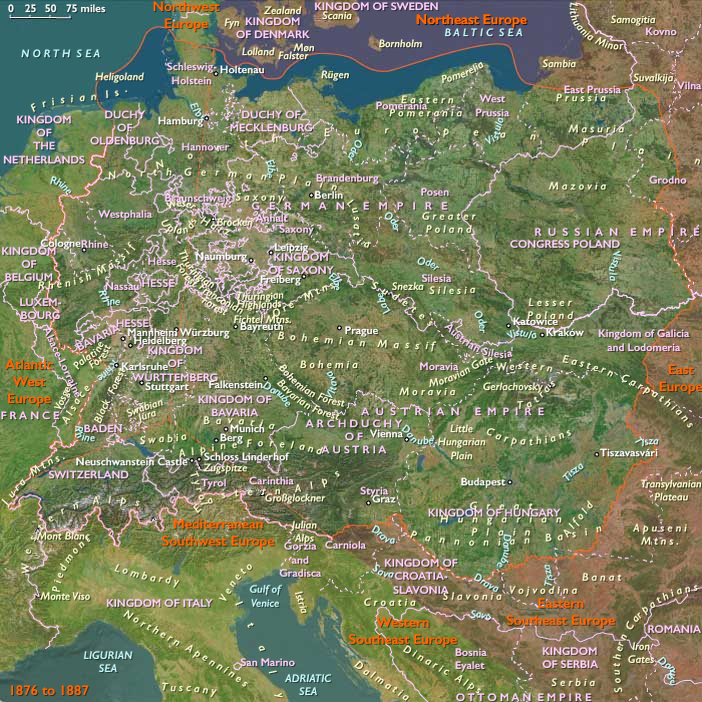
Ludwig II (Ludwig Otto Friedrich Wilhelm; sometimes rendered as Louis II in English) (25 August 1845 – 13 June 1886) is King of Bavaria from 1864 until shortly before his death.
He is sometimes called the Swan King (English) and der Märchenkönig, the Fairy tale King (German).
Additional titles are Count Palatine of the Rhine, Duke of Bavaria, Franconia and in Swabia.
Ludwig is sometimes also called "Mad King Ludwig", though the accuracy of that label has been disputed.
His younger brother, Otto, is considered insane, thus the claim of hereditary madness is convenient.
Because Ludwig is deposed on grounds of mental incapacity without any medical examination, questions about the medical "diagnosis" remain controversial.
Adding to the controversy are the mysterious circumstances under which he dies.
King Ludwig and the doctor assigned to him in captivity at Castle Berg on Lake Starnberg are both found dead in the lake in waist-high water, the doctor with unexplained injuries to the head and shoulders, the morning after the day Ludwig is deposed.
Ludwig is best known as an eccentric whose legacy is intertwined with the history of art and architecture.
He commissions the construction of two extravagant palaces and a castle, the most famous being Neuschwanstein, and is a devoted patron of the composer Richard Wagner.
King Ludwig is generally well-liked and even revered by many Bavarians today, many of whom note the irony of his supposed madness and the fact that his legacy of architecture and art and the tourist income they generate help to make Bavaria the richest state in Germany.