Lucius Verginius Rufus
Roman commander of upper Germany and consul
Years: 15 - 97
Lucius Verginius Rufus (CE 15-97; sometimes incorrectly called Lucius Virginus Rufus), is a Roman commander of upper Germany during the late 1st century.
He is three times consul (in 63, 69, and 97), born near Comum, the birthplace of the two Plinys.
Related Events
Filter results
Showing 10 events out of 10 total
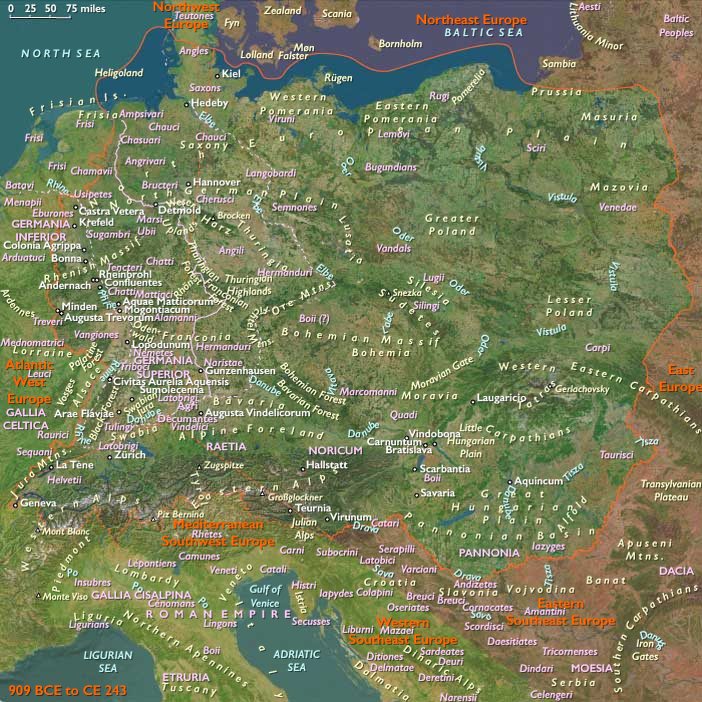
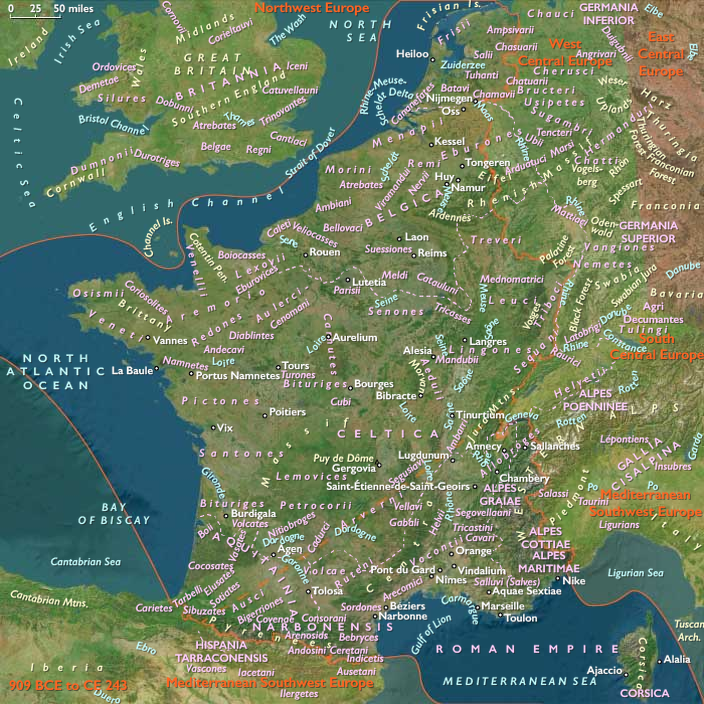
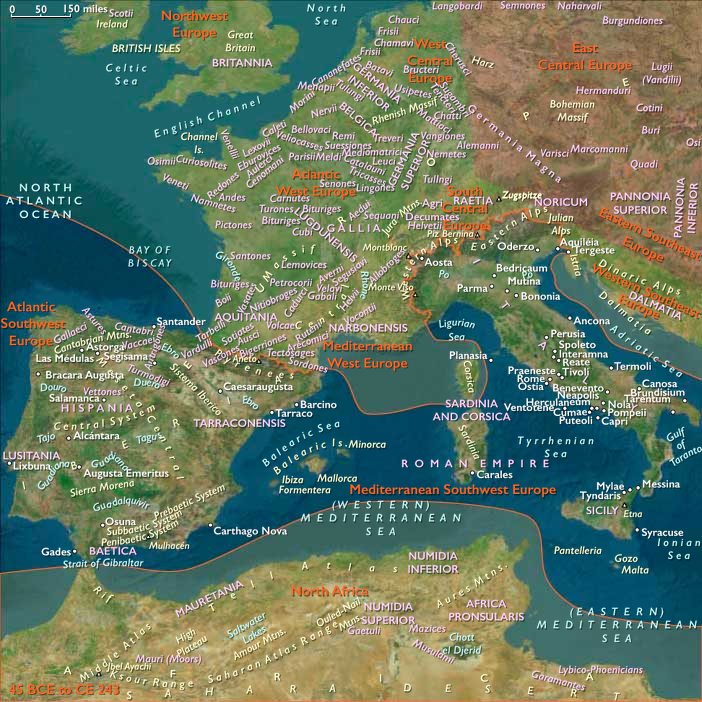
Caius Julius Vindex, governor of Gallia Lugdunensis, rebels against Nero's tax policy in late 67 or early 68, Lucius Verginius Rufus, the governor of Germania Superior, is ordered to put down Vindex's rebellion.
In an attempt to gain support from outside his own province, Vindex calls upon Servius Sulpicius Galba, the governor of Hispania Tarraconensis, to join the rebellion and further, to declare himself emperor in opposition to Nero.
Verginius' forces easily defeat those of Vindex at the Battle of Vesontio in May 68, and the latter commits suicide.
However, after putting down this one rebel, Verginius' legions attempt to proclaim their own commander as emperor.
Verginius refuses to act against Nero, but the discontent of the legions of Germany and the continued opposition of Galba in Spain does not bode well for Nero.
This turn of events had given the German legions not the reward for loyalty that they had expected but rather accusations of having obstructed Galba's path to the throne.
Their commander, Rufus, had immediately been replaced by the new emperor.
The loss of political confidence in Germania's loyalty has also resulted in the dismissal of the Imperial Batavian Bodyguards and rebellion.
The respected Galba, noted for his integrity and extreme thriftiness, appears to have quickly stabilized a dangerous situation, but he does not remain popular for long.
On his march to Rome, he had either destroyed or taken enormous fines from towns that did not accept him immediately.
In Rome, Galba has canceled all the reforms of Nero, including benefits for many important persons.
Like his predecessor, Galba has a fear of conspirators and has executed many senators and equites without trial.
The Praetorian Guard are not happy either.
After his safe arrival in Rome, Galba had refused to pay them the rewards that the prefect Nymphidius had promised them in the new emperor's name.
Moreover, in the start of the civil year of 69 on January 1, the legions of Germania Inferior had refused to swear allegiance and obedience to Galba, and on the following day had acclaimed Vitellius, their governor, as emperor.
Hearing the news of the loss of the Rhine legions, Galba panics.
He adopts a young senator, the late Piso's brother, Lucius Calpurnius Piso Licinianus, as his successor.
By doing this, he offends many people, and above all Otho, an influential and ambitious man who desires the honor for himself.
Otho bribes the fickle Praetorian Guard, already very unhappy with the emperor, to his side.
When Galba hears about the coup d'état he goes to the streets in an attempt to stabilize the situation.
It proves a mistake, because he can attract no supporters.
Shortly afterwards, the Praetorian Guard kills him in the Forum.
Otho is recognized as emperor by the Senate the same day.
The new emperor is saluted with relief.
Aulus Vitellius, consul in 48, and Proconsul of Africa in either 60 or 61, in which capacity he is said to have acquitted himself with credit, has, to the general astonishment, been appointed legate of Germania Inferior.
Vitellius has meanwhile made himself popular with his subalterns and with the soldiers by outrageous prodigality and excessive good nature, which soon proves fatal to order and discipline.
He owes his elevation to the throne to Caecina and Fabius Valens, commanders of two legions on the Rhine.
Through these two men a military revolution is speedily accomplished; they refused to renew their vows of allegiance to Emperor Galba on January 1, 69, and early in 69 Vitellius is proclaimed emperor at Cologne.
More accurately, he is proclaimed Emperor of the armies of Germania Inferior and Superior.
The armies of Gaul, Brittania and Raetia side with them shortly afterwards.
By the time that they march on Rome, however, it is Otho, and not Galba, whom they have to confront.
Otho, although ambitious and greedy, does not have a record for tyranny or cruelty and is expected to be a fair emperor; however, trouble is marching down on Italy from Germany in the form of Vitellius, who has behind him the finest legions of the empire, composed of veterans of the Germanic Wars, such as I Germanica and XXI Rapax.
These will prove to be his best arguments in his bid for power.
Otho is not keen to begin another civil war and sends emissaries to propose a peace and convey his offer to marry Vitellius' daughter.
It is too late to reason; Vitellius' generals have half of his army heading to Italy.
After a series of minor victories, Otho is defeated on April 16, 69, in the Battle of Bedriacum, near present Cremona in northern Italy.
Rather than flee and attempt a counterattack, Otho decides to put an end to the anarchy and commits suicide.
He had been emperor for a little more than three months.
On the news of Otho's suicide, Vitellius is recognized as emperor by the Senate.
Granted this recognition, Vitellius sets out for Rome.
Vitellius faces problems from the start of his reign.
The city is left very skeptical after Vitellius chose the anniversary of the Battle of the Allia (in 390 BCE), a day of bad auspices according to Roman superstition, to accede to the office of Pontifex Maximus.
Events will seemingly prove them right.
With the throne tightly secured, Vitellius engages in a series of feasts, banquets (Suetonius refers to three a day: morning, afternoon and night) and triumphal parades that drive the imperial treasury close to bankruptcy.
Debts are quickly accrued and moneylenders start to demand repayment.
Vitellius shows his violent nature by ordering the torture and execution of those who dare to make such demands.
With financial affairs in a state of calamity, Vitellius takes the initiative of killing citizens who name him as their heir, often together with any co-heirs.
Moreover, he engages in a pursuit of every possible rival, inviting them to the palace with promises of power only to have them assassinated.
Suetonius, whose father had fought for Otho at Bedriacum, gives an unfavorable account of Vitellius' brief administration: he describes him as unambitious and notes that Vitellius showed indications of a desire to govern wisely, but that Valens and Caecina encouraged him in a course of vicious excesses which threw his better qualities into the background.
Vitellius is described as lazy and self-indulgent, fond of eating and drinking, and an obese glutton, eating banquets four times a day and feasting on rare foods he would send the Roman navy to procure.
For these banquets, he had himself invited over to a different noble's house for each one.
He is even reported to have starved his own mother to death—to fulfill a prophecy that he would rule long if his mother died first.
Other writers, namely Tacitus and Cassius Dio, disagree with some of Suetonius' assertions, even though their own accounts of Vitellius are scarcely positive ones.
Despite his short reign he makes two important contributions to Roman government which outlasted him.
Tacitus describes them both in his Histories: Vitellius ends the practice of Centurions selling furloughs and exemptions of duty to their men, a change Tacitus describes as being adopted by 'all good emperors'.
He also expands the offices of the Imperial Administration beyond the imperial pool of Freedmen allowing those of the Equites to take up positions in the Imperial Civil service.
Vitellius also bans astrologers from Rome and Italy from October1, 69.
Some astrologers respond to his decree by anonymously publishing a decree of their own: "Decreed by all astrologers in blessing on our State Vitellius will be no more on the appointed date."
In response, Vitellius executes any astrologers he encounters.
The legions stationed in the African province of Egypt and the Middle East provinces of Iudaea (Judea/Palestine) and Syria have meanwhile acclaimed Titus Flavius Vespasianus as emperor.
Before the eastern legions can reach Rome, the Danubian legions of the provinces of Raetia and Moesia also acclaim Vespasian as Emperor in August, and led by Marcus Antonius Primus invade Italy.
In October, the forces led by Primus win a crushing victory over Vitellius' army at the Second Battle of Bedriacum.
Vitellius, surrounded by enemies, makes a last attempt to win the city to his side, distributing bribes and promises of power where needed.
He tries to levy by force several allied tribes, such as the Batavians, only to be refused.
The Danube army is now very near Rome.
Realizing the immediate threat, Vitellius makes a last attempt to gain time and sends emissaries, accompanied by Vestal Virgins, to negotiate a truce and start peace talks.
Tacitus' Histories state that Vitellius awaited Vespasian's army at Mevania.
The terms of resignation had actually been agreed upon with Marcus Antonius Primus, the commander of the sixth legion serving in Pannonia and one of Vespasian’s chief supporters, but the praetorians refused to allow him to carry out the agreement, and forced him to return to the palace, when he was on his way to deposit the insignia of empire in the Temple of Concord.
Messengers arrive the following day with news that the enemy is at the gates of the city.
Vitellius goes into hiding and prepares to flee, but decides on a last visit to the palace, where he is caught by Vespasian's men and killed.
In seizing the capital, they burn down the temple of Jupiter.
Vitellius’s body is thrown into the Tiber according to Suetonius; Cassius Dio's account is that Vitellius was beheaded and his head paraded around Rome, and his wife attended to his burial.
"Yet I was once your emperor," were his last words.
His brother Sabinus and son are also killed.
On receiving the tidings of his rival's defeat and death at Alexandria, the new emperor at once forwards supplies of urgently needed grain to Rome, along with an edict or a declaration of policy, in which he gives assurance of an entire reversal of the laws of Nero, especially those relating to treason.
While in Egypt he visits the Temple of Serapis, where reportedly he experiences a vision.
Later he is confronted by two laborers who are convinced that he possesses a divine power that can work miracles.
The Senate acknowledges Vespasian as emperor on the following day, December 21, 69.
The district known as Sequania had formed part of Belgica under Augustus..
After the death of Vitellius, the inhabitants refuse to join the Gallic revolt against Rome instigated by Gaius Julius Civilis and Julius Sabinus, and drive back Sabinus, who has invaded their territory.
A triumphal arch at Vesontio (Besançon), which in return for this service is made a colony, possibly commemorates this victory.
Domitian has apparently been unable to gain support among the aristocracy, despite attempts to appease hostile factions with consular appointments.
His autocratic style of government has accentuated the Senate's loss of power, while his policy of treating patricians and even family members as equals to all Romans has earned him their contempt.
Domitian’s excesses of the past several years have inspired conspiracies of the sort Domitian had feared in the first place.
He manages to survive them all until September 18, 96, when the autocratic emperor is assassinated under instructions from court officials in the pay of his wife, the Empress Domitilla, in part because of his liaison with his niece, Titus’ daughter Flavia Julia.
After Domitian's assassination, the senators of Rome rush to the Senate house, where they immediately pass a motion condemning his memory to oblivion.
Under the rulers of the successor Nervan-Antonian dynasty, senatorial authors will publish histories that elaborate on the view of Domitian as a tyrant.
The Fasti Ostienses, the Ostian Calendar, records that the same day the Senate proclaimed Marcus Cocceius Nerva emperor.
Despite his political experience, this is a remarkable choice.
Nerva is old and childless, and has spent much of his career out of the public light, prompting both ancient and modern authors to speculate on his involvement in Domitian's assassination.
According to Cassius Dio, the conspirators approached Nerva as a potential successor prior to the assassination, suggesting that he was at least aware of the plot.
He does not appear in Suetonius' version of the events, but this may be understandable, since his works were published under Nerva's direct descendants Trajan and Hadrian.
To suggest the dynasty owed its accession to murder would have been less than sensitive.
On the other hand, Nerva lacks widespread support in the Empire, and as a known Flavian loyalist, his track record would not have recommended him to the conspirators.
The precise facts have been obscured by history, but modern historians believe Nerva was proclaimed Emperor solely on the initiative of the Senate, within hours after the news of the assassination broke.
The decision may have been hasty so as to avoid civil war, but neither appears to have been involved in the conspiracy.
After the election of Nerva by the senate, the new emperor chooses as his co-consul for 97 the elderly Lucius Verginius Rufus, who is enticed out of retirement.
Rufus, after declining his troops’ acclamation of him as emperor after his defeat of Vindex at the beginning of the revolt known as Year of the Four Emperors, has lived calmly for thirty years at his estate at Alsium, on the coast of Etruria, where he studies, composes poems, and has a literary salon.
However, when Rufus is to hold a speech, he drops a book he is carrying, and while bending down to pick it up, slips and breaks his hip.
He dies not long afterward and is given a state funeral.
At the public burial with which he is honored, the historian Tacitus (now consul) delivers the funeral oration.
Pliny the Younger, his neighbor and ward, has recorded the lines which Verginius had ordered to be engraved upon his tomb: Hic situs est Rufus, pulso qui Vindice quondam Imperium asseruit non sibi sed patriae ("Here lies Rufus, who after defeating Vindex, did not take power, but gave it to the fatherland").
As modern medicine has discovered recently, falls by the elderly involving a broken hip are more likely preceded, rather than followed, by the fracture.