The disintegration of the Roman empire now begins to appear to be irreversible.
The remarkable Galla Placidia, the thrice-widowed daughter of the Emperor Theodosius I and granddaughter of Emperor Valentinian I, had after the death of her third husband, the Emperor Constantius III, in 421 broken with her brother, Western Emperor Honorius, and gone to the court of her nephew Theodosius II, Roman emperor of the East.
She had taken with her her daughter Justa Grata Honoria and her son Valentinian, born to Galla and Constantius in the Western Roman capital of Ravenna.
Honorius, one of the weakest of the Roman emperors, had died at the age of thirty-eight on August 27, 423.
Theodosius, the remaining Theodosian ruler, had hesitated for some time in announcing his uncle's death.
In the interregnum, Honorius' patrician at the time of his death, Castinus, had elevated Joannes, or John, a senior civil servant, as emperor.
(The historian Procopius will later praise his mildness, intelligence, and general ability.)
Unlike the Theodosian emperors, Joannes tolerates all Christian sects.
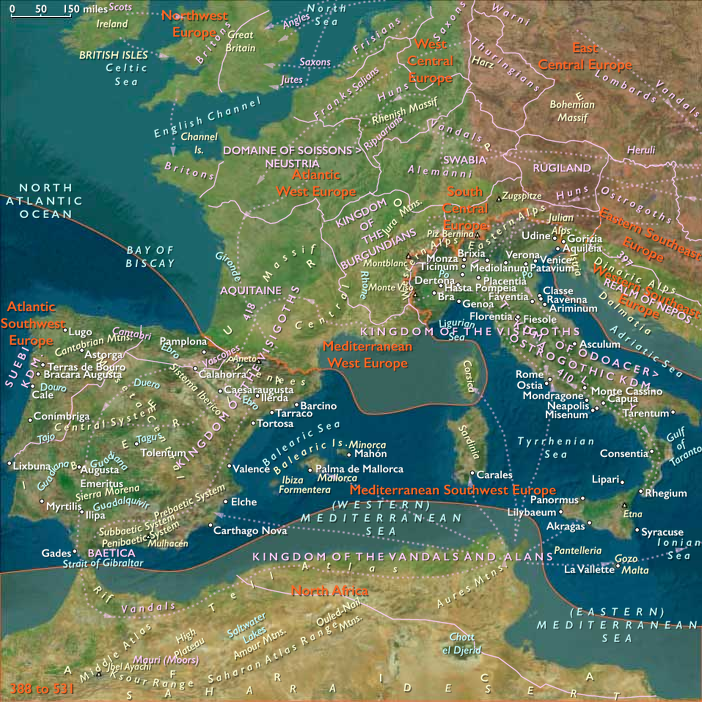
His control over Gaul is insecure: his pretorian prefect of that region is slain at Arles in an uprising of the soldiery there.
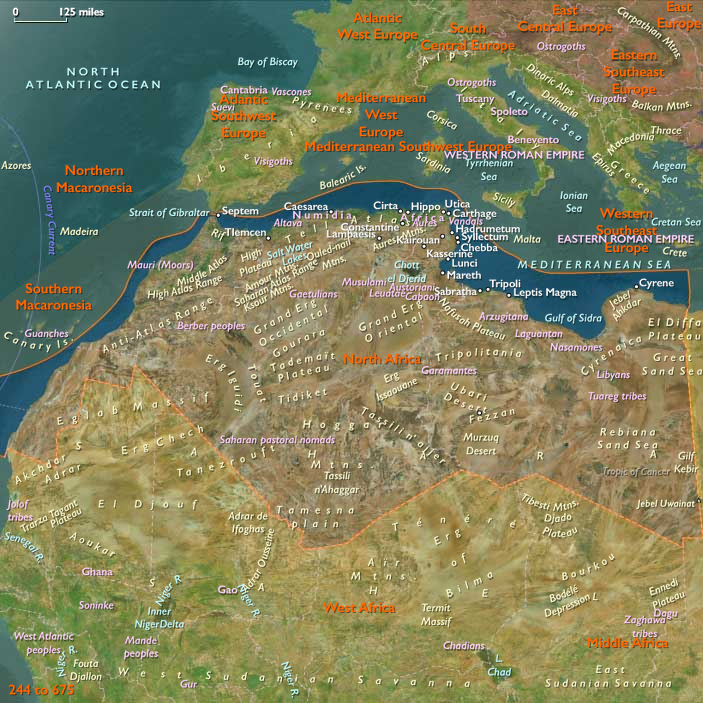
Meanwhile, Comes Bonifacius, in control of the African provinces, is holding back the grain fleet from Rome.
Joannes hopes that he can come to an agreement with Theodosius, but on October 23, 424, the Eastern Emperor, undoubtedly influenced by Galla, nominates his five-year-old nephew Valentinian as Caesar of the west and betroths him to his own daughter Licinia Eudoxia, who is two years old.
Mobilizing an expeditionary force under command of the Alan patrician and magister militum Ardabur and his son Aspar, Theodosius II prepares for war.