Leonid Brezhnev
Soviet politician who leads the Soviet Union
Years: 1906 - 1982
Leonid Ilyich Brezhnev (December 6, 1906 – November 10, 982) is a Soviet politician who leads the Soviet Union as General Secretary of the governing Communist Party (1964–1982) and as Chairman of the Presidium of the Supreme Soviet (1977–1982).
His eighteen-year term as general secretary is second only to Joseph Stalin's in duration.
While Brezhnev's rule is characterized by political stability and notable foreign policy successes, it is also marked by corruption, inefficiency, and rapidly growing technological gaps with the West.
Brezhnev was born into a Russian worker's family in Kamenskoye, Yekaterinoslav Governorate, Russian Empire.
Upon the Soviet Union's formation in the aftermath of the 1917 October Revolution, Brezhnev joins the Soviet Communist party's youth league in 1923.
He becomes an official party member in 1929.
When Germany invades the Soviet Union in 1941, he joins the Red Army as a commissar and s through the ranks to become a major general during the Second World War.
Brezhnev is promoted to the Central Committee in 1952 and becomes a full member of the Politburo in 1957.
In 1964 he ousts Nikita Khrushchev and takes over as First Secretary of the CPSU, the most powerful position in the Kremlin.
Brezhnev's conservative, pragmatic approach to leadership significantly stabilizes the position of the Soviet Union and its ruling party.
Whereas Khrushchev regularly enacts policies without consulting the rest of the Politburo, Brezhnev is careful to minimize dissent among the Party membership by reaching decisions through consensus.
Additionally, while pushing for détente between the two Cold War superpowers, he achieves Soviet nuclear parity with the United States and legitimizes his country's hegemony over Eastern Europe.
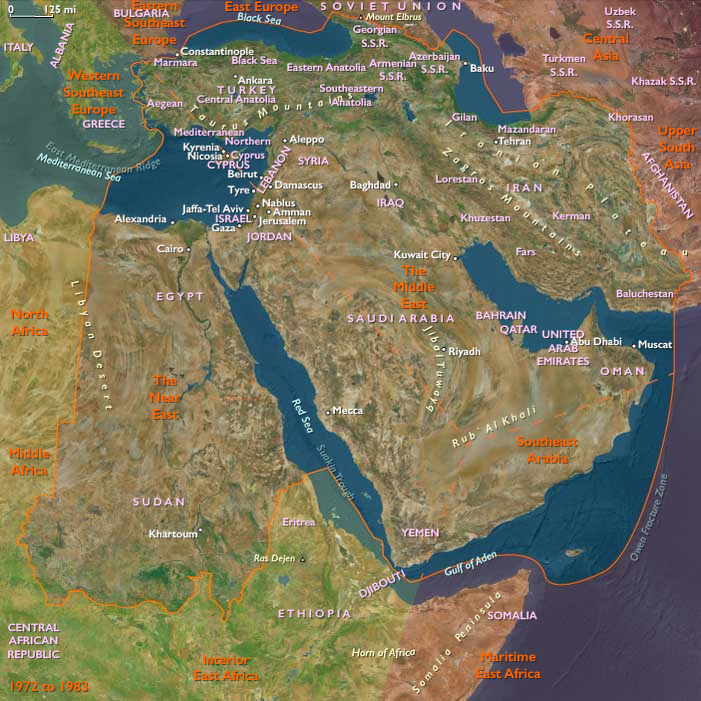
Furthermore, the massive arms buildup and widespread military interventionism under Brezhnev's regime significantly expands the Soviet Union's global influence (particularly in the Middle East and Africa).
Conversely, Brezhnev's hostility to political reform ushers in an era of societal decline known as the Brezhnev Stagnation.
In addition to pervasive corruption and falling economic growth, this period is characterized by an increasing technological gap between the Soviet Union and the United States.
Upon coming to power in 1985, Mikhail Gorbachev denounces Brezhnev's government for its pervasive inefficiency and inflexibility before implementing policies to liberalize the Soviet Union.
After 1975, Brezhnev's health rapidly deteriorates and he increasingly withdraws from international affairs.
Following years of declining health, he dies on November 10, 1982 and is succeeded as general secretary by Yuri Andropov.