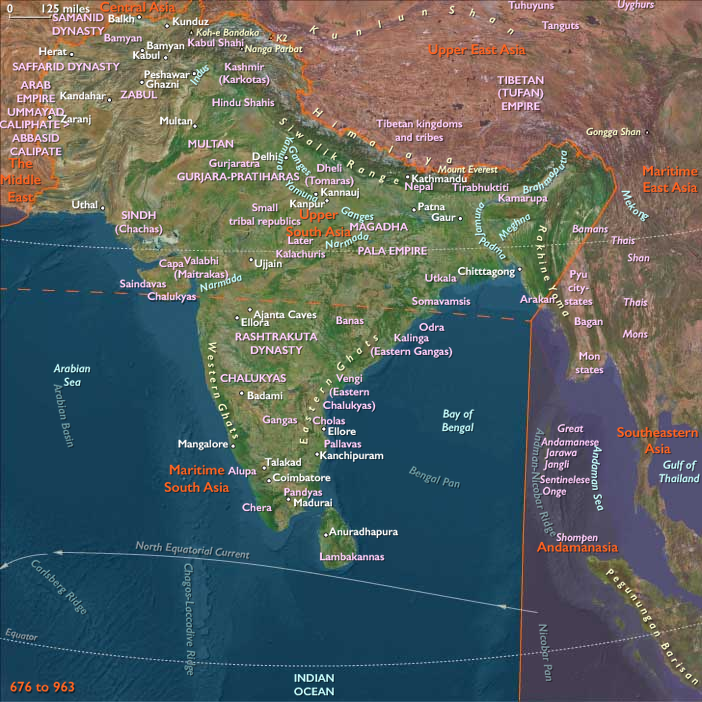
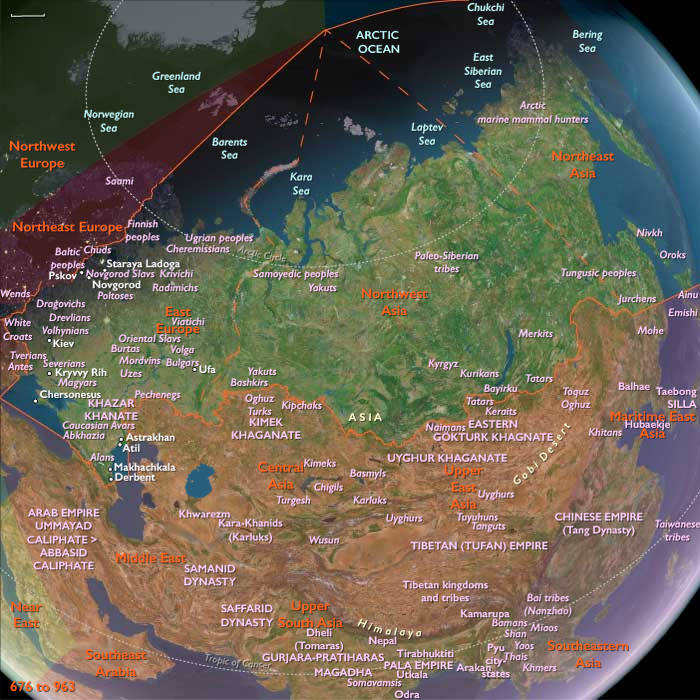
Bengal had become shrouded in obscurity after the reign of Shashanka, King of Gauda, ended in 626, and has been shattered by repeated invasions.
During the reign of Manava, Bengal had been invaded and divided between Harsha Vardhana and Bhaskaravarman.
Jayavardhana of the Shaila Dynasty from Central India had invaded Bengal in 730 and killed the king of the Pundra Kingdom.
Yasovarman (725–752) of Kannauj had killed the king of Magadha and Gauda.
Later Lalitaditya Muktapida of Kashmir, who defeated Yasovarmana, had invaded Bengal.
Sri Harsha of Kamarupa had conquered Anga, Vanga, Kalinga and Odra.
The social and political structure of Bengal has been devastated.
The various independent chieftains of Bengal, disgusted at the situation and tired of the ceaseless political chaos and anarchy (known as matsyanyaya), have selected a person named Gopala to put an end to this sorry state of affairs.
Gopala, already a leading military general, had made a mark as an effective ruler.
In the Khalimpur copper plate inscription (dated to the thirty-second regnal year of Dharmapala), Gopala's father Vapyata is described as a noted military chief of his time and his grandfather Dayita Vishnu is described as a learned man of no military distinctions.
This election of Gopala is probably the only democratic election to have taken place in medieval India.