Atlantic West Europe, 268–279: Gallic Empire's Zenith and Initial Decline
Political and Military Developments
-
Stability under Postumus (268–269):
-
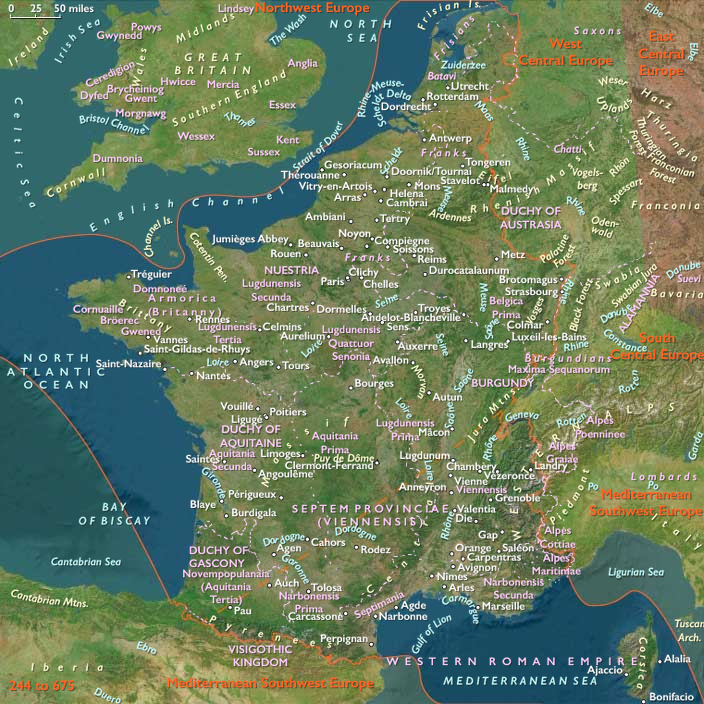
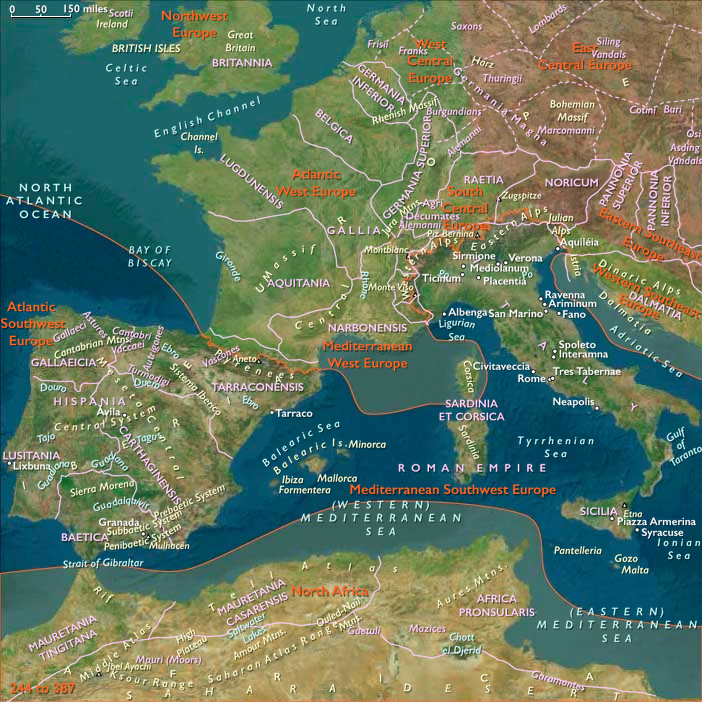
Emperor Postumus continued to successfully defend Atlantic West Europe against incursions by Germanic tribes, primarily Franks and Alamanni, fortifying Rhine defenses.
-
However, Postumus was assassinated by his own troops in 269 after quelling a rebellion led by his rival, Laelianus, in Mainz.
-
Succession Instability (269–274):
-
Postumus's death triggered succession crises. Briefly, emperors Victorinus (269–271) and subsequently Tetricus I (271–274) struggled to maintain control.
-
Tetricus I moved the Gallic Empire’s administrative center to Bordeaux due to security concerns, indicating vulnerability in the Rhine regions.
-
Reintegration into Roman Empire (274):
Economic and Social Developments
Cultural and Religious Developments
Significance
The period from 268 to 279 marked the Gallic Empire's final years, highlighting regional instability but also resilience. Reintegration with Rome under Aurelian initiated a brief stabilization, yet the trends toward local governance and Christian expansion set enduring patterns for Atlantic West Europe's future development.