Kublai Khan
Emperor of China, Founder of the Yuan Dynasty, Khagan of the Mongol Empire
Years: 1215 - 1294
Kublai Khan (September 23, 1215 – February 18, 1294), born Kublai and also known by the temple name Shizu, is the fifth Khagan (Great Khan) of the Ikh Mongol Uls (Mongol Empire), reigning from 1260 to 1294, and the founder of the Yuan Dynasty in China.
Kublai is the second son of Tolui and Sorghaghtani Beki, and a grandson of Genghis Khan.
He succeeds his older brother Möngke as Khagan in 1260, but has to defeat his younger brother Ariq Böke in a succession war lasting until 1264.
This episode marks the beginning of disunity in the empire.
Kublai's real power is limited to China and Mongolia, though as Khagan he still has influence in the Ilkhanate and, to a far lesser degree, in the Golden Horde.
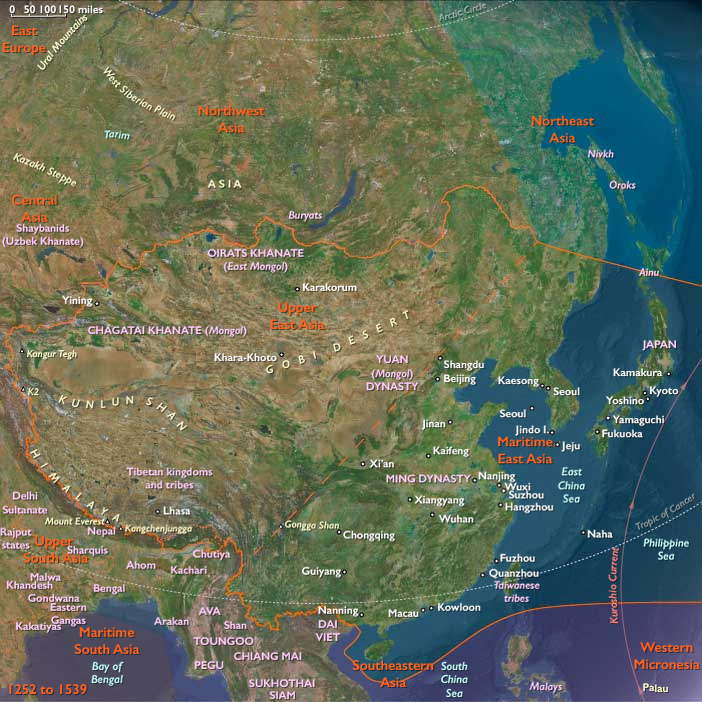
If one counts the Mongol Empire at this time as a whole, his realm reaches from the Pacific to the Black Sea, from Siberia to modern day Afghanistan – one fifth of the world's inhabited land area.
In 1271, Kublai establishes the Yuan Dynasty, which rules over present-day Mongolia, China, Korea, and some adjacent areas, and assumes the role of Emperor of China.
By 1279, the Yuan forces have overcome the last resistance of the Southern Song Dynasty, and Kublai becomes the first non-Chinese Emperor to conquer all of China.
He is also the only Mongol khan after 1260 to win new conquests.
The summer garden of Kublai Khan at Xanadu is the subject of Samuel Taylor Coleridge's 1797 poem Kubla Khan.
This poem and Marco Polo's earlier book bring Kublai and his achievements to the attention of a wider audience, and today Kublai is a well-known historical figure.