The Middle East: 880–891 CE
Abbasid Decline and Regional Fragmentation
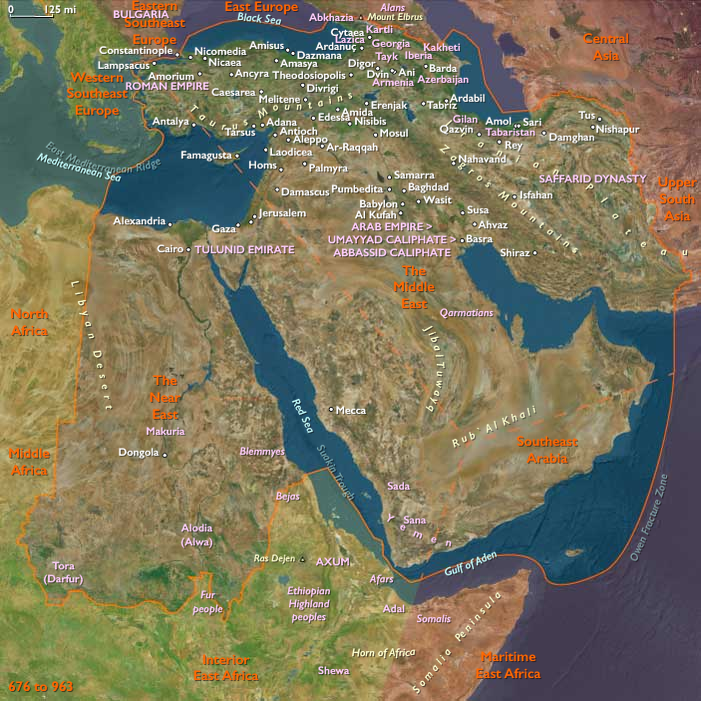
The era from 880 to 891 CE witnesses continued fragmentation within the Abbasid Caliphate, characterized by persistent rebellions, decentralization of authority, and the rise of semi-independent regional powers.
Continuation and Suppression of the Zanj Rebellion
The Zanj Rebellion, a significant uprising led by Ali ibn Muhammad near Basra, continues to severely disrupt Abbasid governance and trade. Initially a movement by enslaved peoples imported from across the Islamic Empire, the Zanj rebels had seized considerable territory, even founding a fortified capital city, Al-Mukhtara. By 883 CE, however, Abbasid forces, under the capable and ruthless general Al-Muwaffaq, brother of Caliph al-Mu'tamid, decisively suppress the rebellion after sustained, grueling campaigns. The fall of Al-Mukhtara in 883 CE marks the brutal conclusion of this uprising, resulting in extensive casualties and economic devastation in southern Iraq.
Caliph al-Mu'tadid and the Recentralization Efforts
Following Al-Muwaffaq's successes, his son, Abu'l-Abbas Ahmad, known as al-Mu'tadid, emerges as a strong figure at the Abbasid court. Ascending formally to the caliphate in 892 CE, his early influence begins to be felt strongly during this era, as he energetically seeks to recentralize Abbasid power, reorganize the administration, and assert imperial authority against various semi-autonomous provincial governors.
Independent Regional Powers
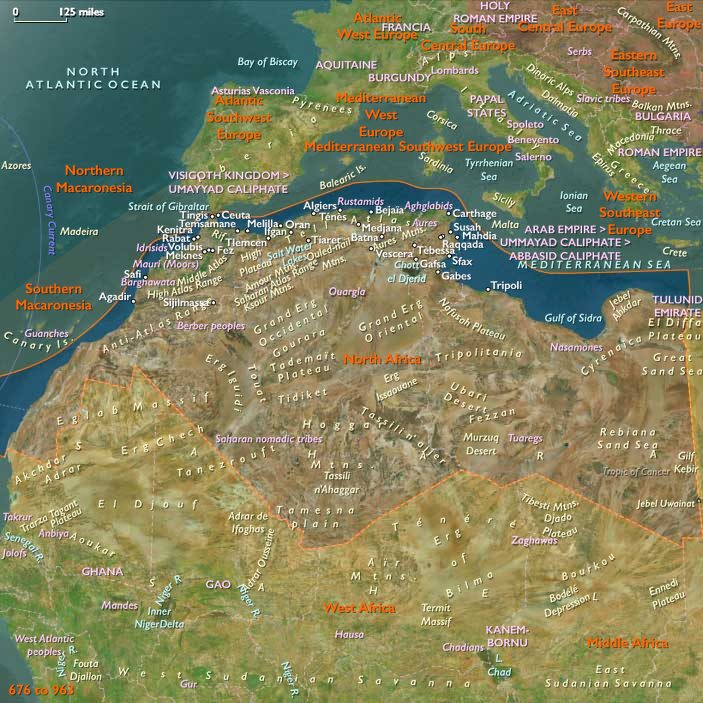
This era further sees the growing independence of regional dynasties from the Abbasid central authority. The Saffarids, under the ambitious and militarily capable leadership of Ya'qub ibn al-Layth and his successor, Amr ibn al-Layth, dominate eastern Iran and Afghanistan after decisively overthrowing the Tahirids in 873 CE. Meanwhile, the Tulunid dynasty, under Ahmad ibn Tulun and subsequently his son Khumarawayh, firmly consolidates control over Egypt and extends influence into Syria, transforming their domains into prosperous and semi-autonomous states, largely independent from Abbasid authority
Cultural and Economic Continuity Amidst Political Instability
Despite political turbulence, intellectual and cultural life across the Abbasid domains remains vibrant. Baghdad, though politically weakened, continues to be an intellectual beacon, fostering scholarship in philosophy, medicine, astronomy, and literature. Economic activities persist, bolstered by regional dynasties investing in infrastructure, agriculture, and trade, reflecting the enduring resilience of Abbasid cultural traditions even amid political decline.
The period 880–891 CE thus exemplifies a pivotal transitional phase, highlighting both the significant weakening of Abbasid central control and the simultaneous rise of strong regional dynasties, setting the stage for profound shifts in the Middle Eastern geopolitical landscape.