Khoca Mimar Sinan
Ottoman architect and civil engineer
Years: 1490 - 1588
Khoca Mimar Sinan Ağa (c. 1490 - 1588) is the chief Ottoman architect and civil engineer for sultans Suleiman I, Selim II, and Murad III.
He is responsible for the construction of more than three hundred major structures, and other more modest projects, such as his Koran schools (sibyan mektebs).
Trained as a military engineer, he rises through the ranks to become first an officer and finally a Janissary commander, with the honorific title of ağa.
He learns his architectural and engineering skills while on campaign with the Janissaries, becoming expert at constructing fortifications of all kinds, as well as military infrastructure, such as roads, bridges and aqueducts.
At about the age of fifty, he is appointed as chief royal architect, applying the technical skills he had acquired in the army to the "creation of fine religious buildings" and civic structures of all kinds.
He remains in this post for almost fifty years.
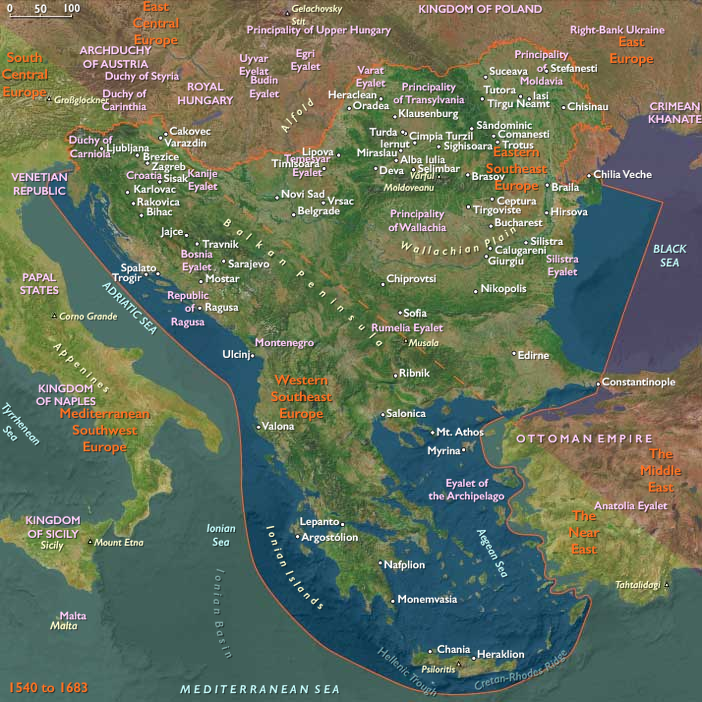
His masterpiece is the Selimiye Mosque in Edirne, although his most famous work is the Suleiman Mosque in Istanbul.
He heads an extensive governmental department and trains many assistants who, in turn, distinguish themselves, including Sedefhar Mehmet Ağa, architect of the Sultan Ahmed Mosque.
He is considered the greatest architect of the classical period of Ottoman architecture, and has been compared to Michelangelo, his contemporary in the West.
Michelangelo and his plans for St. Peter's Basilica in Rome are well-known in Istanbul, since Leonardo da Vinci and he had been invited, in 1502 and 1505 respectively, by the Sublime Porte to submit plans for a bridge spanning the Golden Horn.