Julius Nyerere
1st President of Tanzania
Years: 1922 - 1999
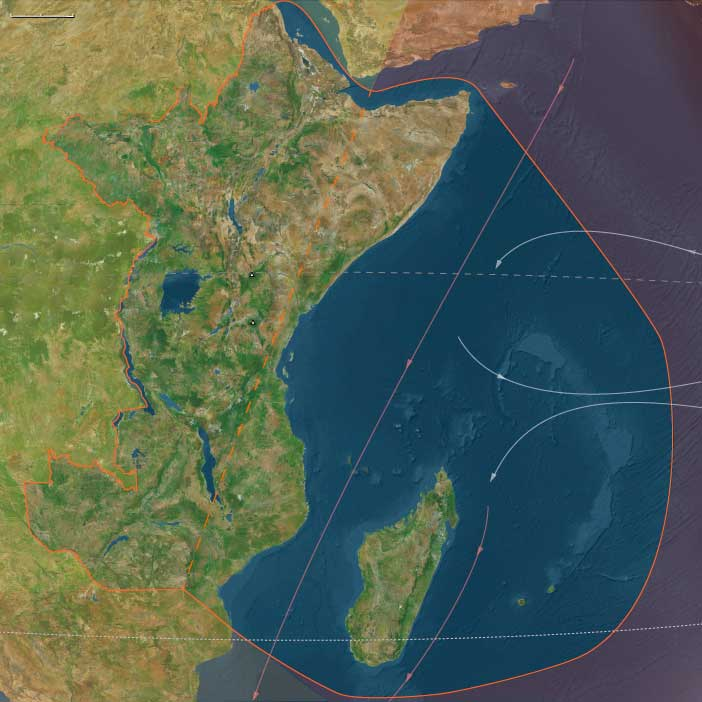
Julius Kambarage Nyerere (13 April 1922 – 14 October 1999) is a Tanzanian politician who serves as the first President of Tanzania and previously Tanganyika, from the country's founding in 1961 until his retirement in 1985.
Born in Tanganyika to Nyerere Burito (1860–1942), Chief of the Zanaki, Nyerere is known by the Swahili name Mwalimu or 'teacher', his profession prior to politics.
He is also referred to as Baba wa Taifa (Father of the Nation).
Nyerere receives his higher education at Makerere University in Kampala and the University of Edinburgh.
After he returns to Tanganyika, he works as a teacher.
In 1954, he helps form the Tanganyika African National Union.
In 1961, on independence, Nyerere is elected Tanganyika's first Prime Minister, and following the declaration of a republic in 1962, the country's first President.
In 1964, Tanganyika becomes politically united with Zanzibar and is renamed to Tanzania.
In 1965, a one-party election returns Nyerere to power.
During the first years, Nyerere creates a single-party system and uses "preventive detention" to eliminate trade unions and opposition.
Nyerere issues the Arusha Declaration, which outlines his socialist vision of ujamaa that come to dominate his policies.
The policies lead to a collapsing economy, systematic corruption, and unavailability of goods.
In the early 1970s, Nyerere orders his security forces to forcibly transfer much of the population to collective farms and, because of opposition from villagers, often burns villages down.
The campaign pushes the nation to the brink of starvation and makes it dependent on foreign food aid.
In 1985, after more than two decades in power, he relinquishes power to his hand-picked successor.
Nyerere leaves Tanzania as one of the poorest, least developed, and most foreign aid-dependent countries in the world, although much progress in services such as health and education has nevertheless been achieved.
He remains the chairman of the Chama Cha Mapinduzi.
He dies of leukemia in London in 1999.