Julius Caesar
Roman general, politician and writer
Years: 100BCE - 44BCE
Gaius Julius Caesar (July 100 BCE – 15 March 44 BCE) is a Roman general and statesman and a distinguished writer of Latin prose.
He plays a critical role in the gradual transformation of the Roman Republic into the Roman Empire.
In 60 BCE, Caesar, Crassus and Pompey form a political alliance that is to dominate Roman politics for several years.
Their attempts to amass power through populist tactics are opposed by the such members of the Roman Senate as Cato the Younger, with the frequent support of Cicero.
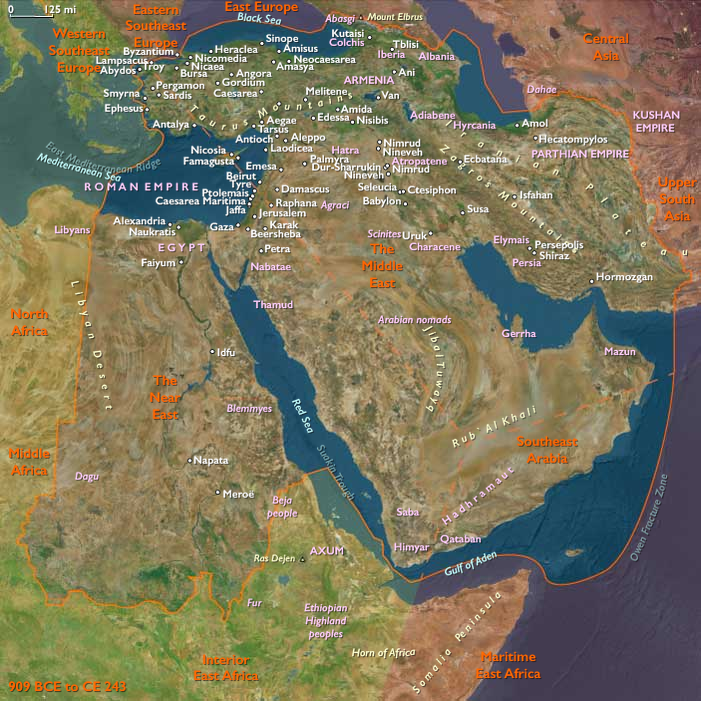
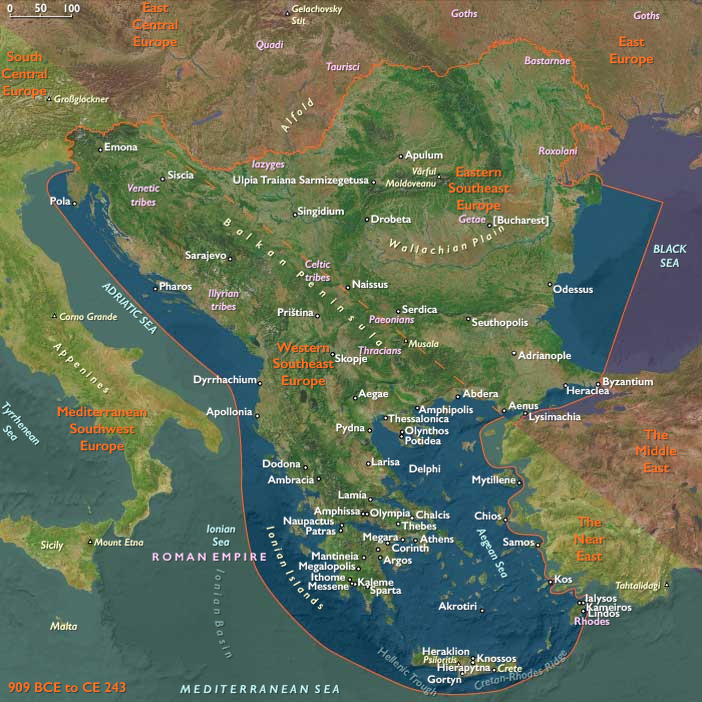
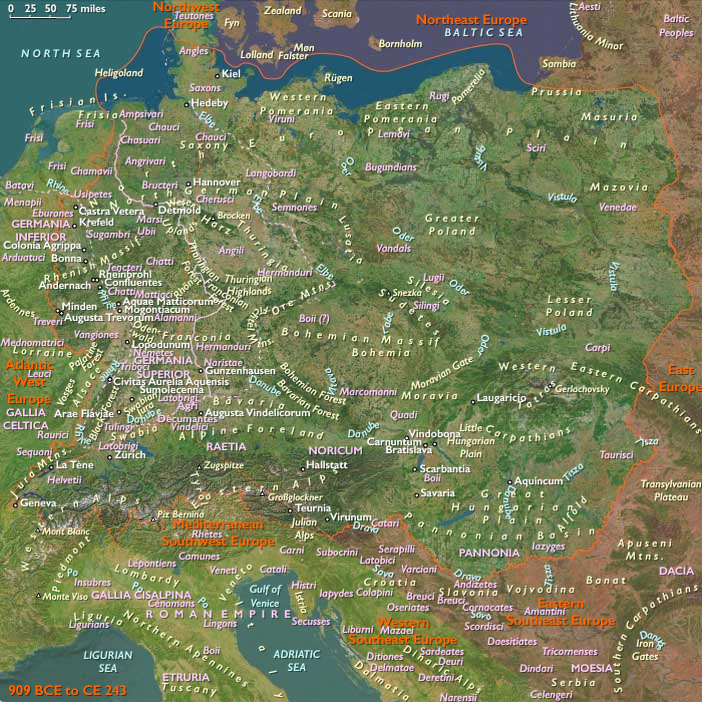
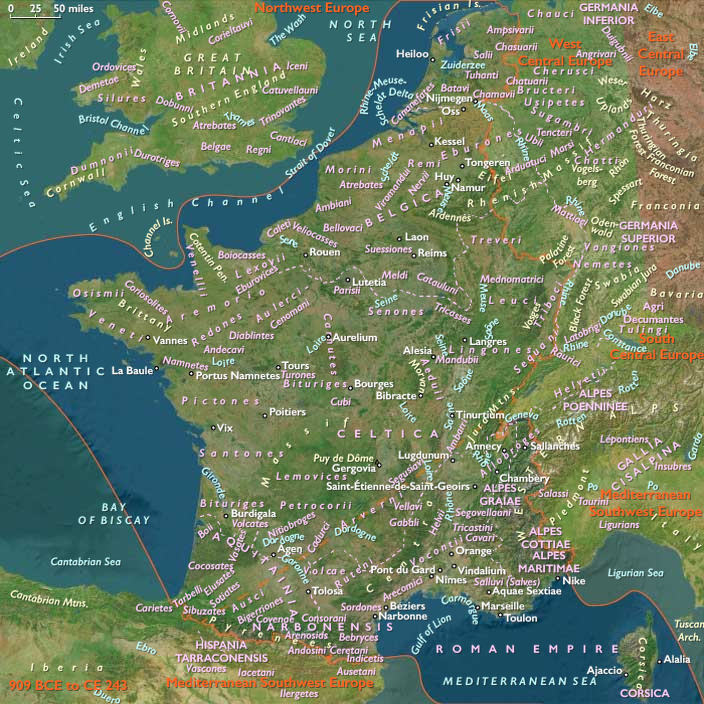
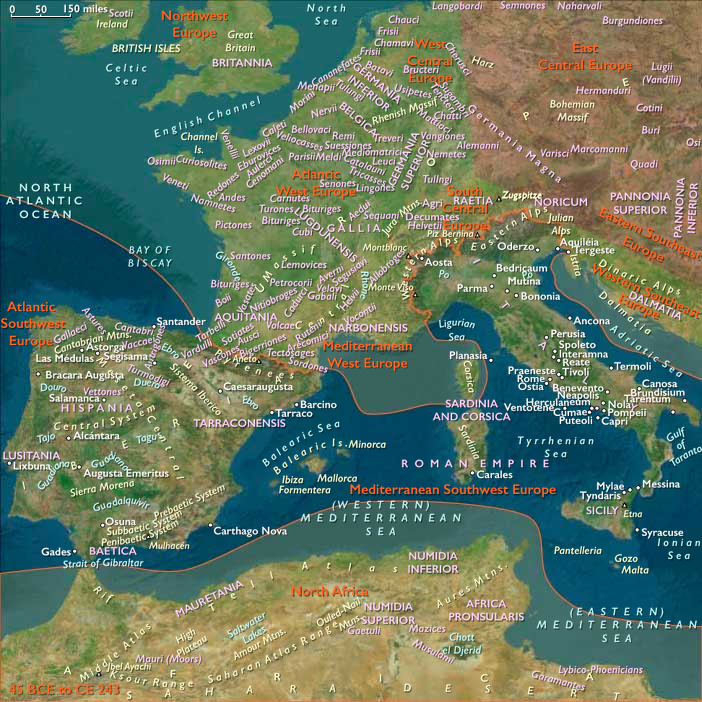
Caesar's conquest of Gaul, completed by 51 BCE, extends Rome's territory to the English Channel and the Rhine.
Caesar becomes the first Roman general to cross both when he builds a bridge across the Rhine and conducts the first invasion of Britain.
These achievements grant him unmatched military power and threaten to eclipse Pompey's standing.
The balance of power is further upset by the death of Crassus in 53 BCE.
Political realignments in Rome finally lead to a standoff between Caesar and Pompey, the latter having taken up the cause of the Senate.
Ordered by the Senate to stand trial in Rome for various charges, Caesar marches from Gaul to Italy with his legions, crossing the Rubicon in 49 BCE.
This sparks a civil war from which he emerges as the unrivaled leader of the Roman world.
After assuming control of government, he begins extensive reforms of Roman society and government.
He centralizes the bureaucracy of the Republic and is eventually proclaimed "dictator in perpetuity".
A group of senators, led by Marcus Junius Brutus, assassinate the dictator on the Ides of March (15 March) 44 BCE, hoping to restore the constitutional government of the Republic.
However, the result is a series of civil wars, which ultimately lead to the establishment of the permanent Roman Empire by Caesar's adopted heir Octavius (later known as Augustus).
Much of Caesar's life is known from his own accounts of his military campaigns, and other contemporary sources, mainly the letters and speeches of Cicero and the historical writings of Sallust.
The later biographies of Caesar by Suetonius and Plutarch are also major sources.