A number of revolts break out in caliphal territory in which some of the pre-Islamic religions of Iran are involved.
These are perhaps in reaction to the 'Abbasids' policy of disassociation from their “extremist” supporters.
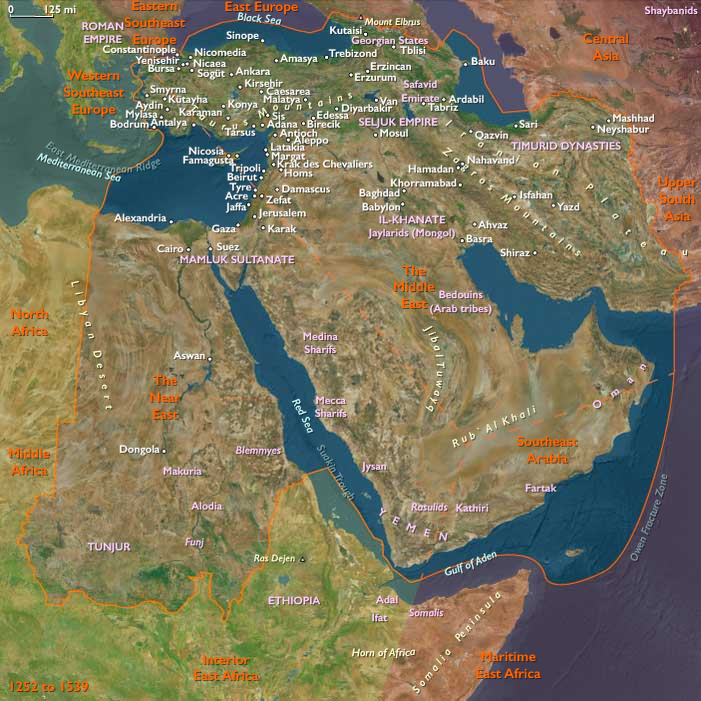
In 755 in Khorasan, a certain Sunpadh, described as a magi (here probably meaning a follower of the Mazdakite heresy, not an orthodox Zoroastrian), revolts, demanding vengeance for the murdered Abu Muslim, his close friend.
Sunpadh also preaches a syncretism melding Islam and Zoroastrianism.
In combination with his unusual and heretical vow to advance towards the Hejaz and raze the Ka’aba, this leads to the belief that he was in fact a Zoroastrian, rather than a Muslim.
The enraged Sunpadh swears to march on Mecca and destroy the Kaaba.
Sunpadh further preaches that "Abu Muslim has not died, and when Mansur meant to slay him, he chanted God's great name, turned into a white dove and flew away. Now he is standing with Mahdi and Mazdak in a castle of copper and they shall emerge by and by."
His doctrine receives wide support among Persian Shi'i Muslims, Zoroastrians and Mazdakites and revolts occurre in Ray, Herat and Sistan.
Within only seventy days, Sunpadh's forces are however defeated by one of Caliph al-Mansur's generals, Juhar ibn Murad.
Sunpadh then flees to Khurshid of Tabaristan, but there he is murdered by one of Khurshid's cousins, because he had failed to show the man proper respect.